Kazakh citizens go to China to visit their relatives, planning to come home after a few days. Some never return. Attorney Umarova asks for help via video.

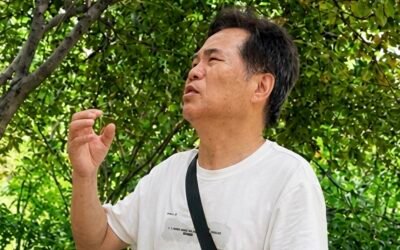
Attorney Umarova with “orphan” children
Massimo Introvigne
Muslim Ethnic Kazakhs are routinely arrested in Xinjiang as “extremists” in need to spend some time in the “transformation through education” camps. The CCP doesn’t deeply care if some have a double passport, Kazakh and Chinese. But at least Kazakh citizens who visit their relatives in Xinjiang are safe, right? Wrong. If the relatives are “extremists” or, worse still, if the Kazakh citizens have seen something they were not supposed to see, including police brutality, they can be prevented from leaving China. Some ended up in the camps themselves. Others had their passports confiscated, and were told they should stay in China quietly, or else.

Some of these Kazakhs left their children in Kazakhstan, believing they will return back home after a few days or weeks. When they do not come back, their children become “CCP orphans.” Aiman Umarova is the most well-known human rights lawyer in Kazakhstan. In 2018, she received in Washington DC from the hands of First Lady Melania Trump one of the U.S. Department of State yearly International Women of Courage awards. She has decided to represent for free the “CCP orphans” and to launch an appeal to women and men of integrity to help her get their parents home.
The case of the video refers to four children, whose father (a Chinese citizen who was in Kazakhstan where he and his wife were seeking Kazakh citizenship) went to Xinjiang three years ago and was blocked there, with his passport confiscated. Their mother went to Xinjiang trying to get her husband back one and a half year ago and in turn never came back.
“Relatives took them – Umarova told Bitter Winter – but these relatives are poor, and already have three children of their own. Seven children live in a room of thirty square meters [322 square feet]. Nobody helps them.” “We have many similar situations, said Umarova. I am representing the children in Kazakhstan, but we need international help.”

Update (April 13, 2019): The relatives hosting the children have also shared a video showing the conditions in which they live.

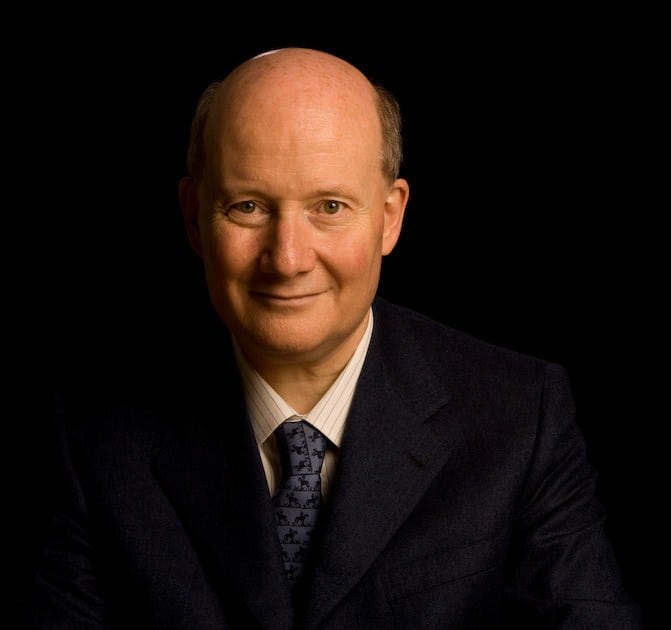
Massimo Introvigne (born June 14, 1955 in Rome) is an Italian sociologist of religions. He is the founder and managing director of the Center for Studies on New Religions (CESNUR), an international network of scholars who study new religious movements. Introvigne is the author of some 70 books and more than 100 articles in the field of sociology of religion. He was the main author of the Enciclopedia delle religioni in Italia (Encyclopedia of Religions in Italy). He is a member of the editorial board for the Interdisciplinary Journal of Research on Religion and of the executive board of University of Pennsylvania Press’ Nova Religio. From January 5 to December 31, 2011, he has served as the “Representative on combating racism, xenophobia and discrimination, with a special focus on discrimination against Christians and members of other religions” of the Organization for Security and Co-operation in Europe (OSCE). From 2012 to 2015 he served as chairperson of the Observatory of Religious Liberty, instituted by the Italian Ministry of Foreign Affairs in order to monitor problems of religious liberty on a worldwide scale.