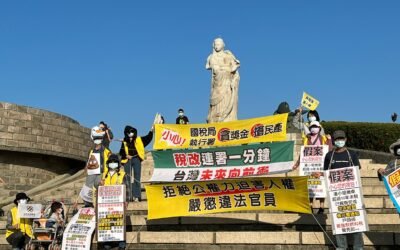
New, alternative, and minority religions are persecuted and marginalized in several countries.
by Márk Nemes
A paper presented at the webinar “Spreading the Truth About the Tai Ji Men Case” co-organized by CESNUR and Human Rights Without Frontiers on March 24, 2025, United Nations International Day for the Right to the Truth Concerning Gross Human Rights Violations and the Dignity of the Victims.
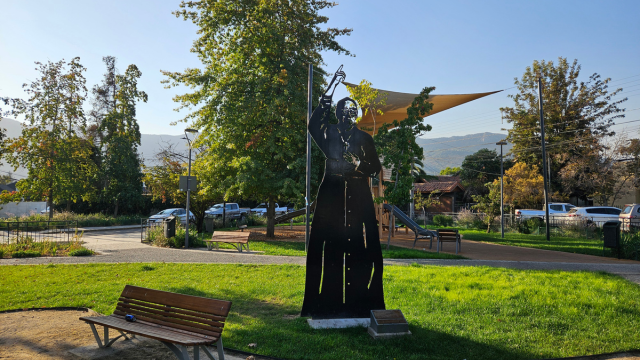
Since 2010, March 24 has been recognized as the International Day for the Right to the Truth Regarding Gross Human Rights Violations and the Dignity of Victims. This yearly observance honors the memory of Mgr. Óscar Arnulfo Romero, who was assassinated on March 24, 1980, and was later canonized by the Catholic Church in 2018. Mgr. Romero was deeply involved in exposing the human rights abuses affecting the most vulnerable populations in El Salvador. On 23 March 1980, he directly addressed the Salvadorian police in his sermon with the following words: “In His name and in the name of our tormented people who have suffered so much and whose laments cry out to heaven, I implore you, I beg you, I order you: Stop the repression!” Mgr. Romero’s words hold their meanings well, even in 2025, as state repression and political, anti-religious, and anti-cult ill intent against vulnerable religious communities have not decreased since.
This year, I am honored to be part of this webinar and bring attention to the observable cross-cultural parallels of this globally recognizable trend against new, alternative, and minority religions. To stay within the allotted time, I will only focus on three of the most striking and urgent cases: the continuous liquidation efforts against Jehovah’s Witnesses based on incorrect representations, the politically motivated dissolution efforts against the Family Federation in Japan, and the unreasonable tax claims against Tai Ji Men, based on a misinterpretation of donation activities. In each case, there are observable signs of gross human rights violations, based on false or inadequately explored claims, as well as systematic overreactions to misunderstood traits of minority spiritual practices.
In the case of Jehovah’s Witnesses, persecution efforts have a long history, reaching back to the late 19th century. However, contemporary oppositional trends are fundamentally different from those employed in the 1940s West or the 1960s Eastern Bloc. Based on the Witnesses’ opposition to blood transfusion, armed service, and regularly misunderstood methods of maintaining moral unity (i.e., the practice of public disassociation and “shunning”), there have been several instances of de-registration, targeted persecution, revoking citizenship under ambiguous claims of “extremism” labeling the movement as a “western spy front,” or a “non-patriotic disruptor.” The worrisome element is that these attitudes are not limited to post-socialist countries like Russia, Tajikistan, and Turkmenistan (where such activities have a history) or newly East African nations shaping their fragile national identity, such as Eritrea. The trampling on foundational human rights—such as religious expression, personal conviction, fair trials, and the right to assembly—also appears in more democratic settings, including South Korea and, more recently, Japan, Czechia and Norway (although in the latter country the de-registration of the Jehovah’s Witnesses was revoked on appeal this month).

The Family Federation for World Peace and Unification faces somewhat similar challenges in Japan. Since the 2010s, there has been a shift toward more restrictive policies alongside a growing environment of “suspicion” toward anything that is considered “too religious” and “too conservative” for the Japanese public eye. Unfortunately, the Family Federation fits into both of these categories. Such developments have only worsened since the 2022 assassination of former Prime Minister Shinzo Abe, whose murderer was portrayed in sensationalist media as a former member of the Family Federation. This claim was factually untrue (the assassin’s mother was and remains a member of the Federation, but he never joined it), anti-cult activists quickly capitalized on the idea that disruptions of public order should be blamed on new religious movements.
In this case, it was argued that the assassin’s anger was somewhat justified and derived from the fact that Abe was friendly to the Family Federation, an anti-social organization that had ruined the killer’s mother by asking for excessive donations. Also utilizing the fading memories of the 1995 sarin gas attack of Aum Shinrikyo, anti-cult outlets called for regulation to maintain what they call “public welfare.” In the name of “public welfare” and maintaining “social norms,” the Japanese legal framework offers tools to eradicate a religion if that “disrupts the lives of the majority of citizens.”
There is no need to underline that this reasoning innately contains the abuse of power, as it strips away any semblances of safety from minority religious communities, whose protection and defense for equal rights are maintained and assured by the said majority. Unfortunately, this occurred in Japan in 2023, as the Ministry of Education, Culture, Sports, Science, and Technology requested the dissolution of the Church, citing claims of “harming public welfare,” “disrupting peaceful life,” and “not obeying social norms.” The case is largely based on testimonies by “deprogrammed” ex-members, meaning that by completely disregarding Article 5 of the Universal Declaration of Human Rights, the Ministry apparently condones abductions, unjust incarcerations, and, in some cases, even torture of UC members who kept their religious convictions, even if deprogramming was declared illegal by Japan’s Supreme Court in 2015.
The Tai Ji Men case fits into this cross-cultural trend and, in some respects, could be seen as an earlier and more-sided example of state harassment against minority religions. Utilizing political pressure, followed by bureaucratic loopholes and fabricated tax claims, the Taiwanese state has shown a total disregard for the spiritual dimension of donation practices, master-disciple relations, and the material necessities of a qigong and self-cultivation group, which, in a supposedly democratic setting, cannot be considered either rational or maintainable.
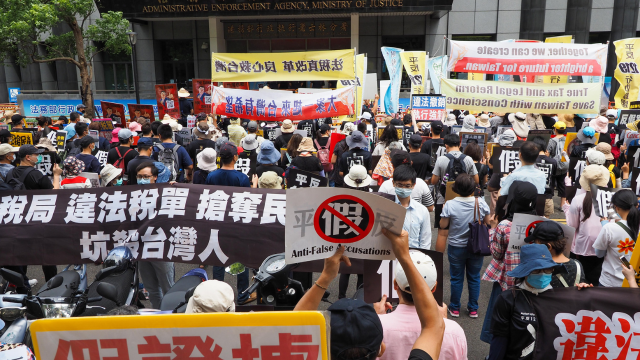
Arbitrarily seizing property, which is considered sacred land for the dizi and necessary source for their spiritual activities, constitutes a severe violation of Articles 12 and 17 of the Universal Declaration of Human Rights, as well as Article 18, as it effectively prevents the dizi from practicing their spiritual path. Similarly, tax claims for the donations the Shifu (Grand Master) received from the dizi (disciples) in the much-mentioned “red envelopes” are also unreasonable, especially considering that the Taiwanese National Taxation Bureau only initiated these claims after 1996 and did not revoke the claims after the total exoneration of the Shifu, his wife, and two dizi by the Supreme Court in 2007. This verdict also implicitly reaffirmed the tax-free status of these donations by emphasizing that the Tai Ji Men defendants had never committed tax evasion, a decision that is still entirely disregarded by the mentioned Bureau.
In summary, the Tai Ji Men case can be seen as an earlier and ongoing worrisome development, in line with an, unfortunately, growing number of FoRB violations worldwide. Alongside Jehovah’s Witnesses, the Family Federation, and many other minority religions in vulnerable positions, Tai Ji Men—a spiritual movement that has established a presence outside of Taiwan as well—has every right to be protected from repression and persecution according to the guidelines and imperatives set forth in the Universal Declaration of Human Rights.

Márk Nemes is a historian and a graduate in the academic study of religions. He received his doctorate in philosophy at the University of Szeged’s PhD program in 2025 and works as a researcher at the Hungarian Academy of Arts’ Research Institute of Art Theory and Methodology. As an awardee of the Hungarian National Eötvös Scholarship, he served as a visiting researcher at CESNUR from 2023 to 2024. For the past 10 years, he has focused on researching new, alternative, and emergent forms of religiosity in Hungary, Iceland, the US and most recently, in Italy. Since 2025, he serves as the Deputy Director of CESNUR