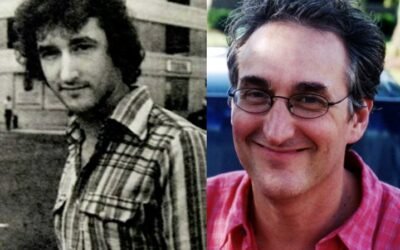
“Devil in a Lawyers Suit” is about David Bitel, who died of cancer before trial when he was facing 21 charges of sexual abuse.
by Massimo Introvigne
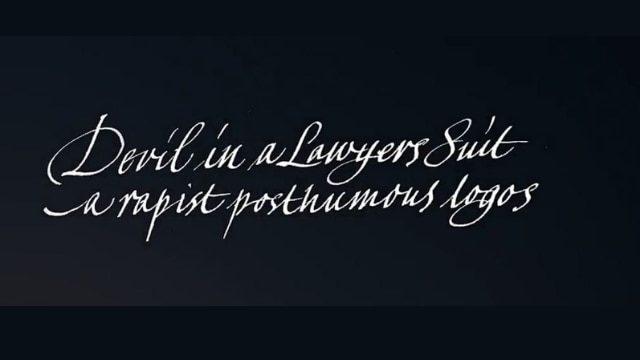
When as a refugee you enter the office of a famous lawyer who you hope will represent you in your asylum case, you may expect a difficult interview or a request for a retainer you cannot afford. What you do not expect is that the highly respected lawyer will rape you.
Yet, a new movie submitted to the Sundance Festival Bitter Winter offers from today as a world premiere claims, this is precisely what happened to refugees and immigrants to Australia who entered the office of David Bitel, perhaps the most prominent immigration law lawyer in his country, who died of cancer in 2016 just before a trial where he should have been tried for 21 charges of sexual assaults against six male clients. Prosecutors implied this was just the tip or the iceberg, and the attorney was also suspected of engaging in sexual tourism to several Asian countries, where he reportedly slept with minor children.
The film “Devil in a Lawyers Suit” is directed by attorney Mark Tarrant and young filmmaker Otto Alexander (Otto Khoo). It was Tarrant who traveled to Kathmandu to find evidence of Bitel’s crimes, and relentlessly asked for justice for the victims. Bitel was arrested in 2012, then released and committed to a trial he would never face because of his premature death.

The film tells the story of two immigrants, Mahesh Gautam from Nepal and Imran Khan from Pakistan, who claimed they were compelled by Bitel to have sex with him and told that was their ticket to remain in Australia. At one stage, Mahesh preferred to go back to Nepal, but met Tarrant there and returned to testify against Bitel. He is a Christian, while Imran is a Muslim. Both decided to tell their stories on camera for the movie.
As Australian media remarked, Bitel’s death in 2016, before he could stand trial, deprived victims of their justice. The movie is based on the indictment of Bitel and the testimonies of the witnesses. It is true that there is no final court decision confirming that he was guilty, and that in the absence of a final verdict everybody has the right to the benefit of the doubt. It is also the case that the accusations for which he was committed to trial were backed by multiple witnesses.

The movie is also an indictment of the Australian legal profession and institutions. Bitel was a prominent immigration lawyer. He was during his career the president of the Refugee Council of Australia, the chairman of the Australian Refugee Foundation and the Refugee Advice and Casework Service, the secretary general of the International Commission of Jurists (Australian Section), and a judicial member of the Equal Opportunity Division of the New South Wales Administrative Decisions Tribunal. He was also on the Law Society of New South Wales’ Human Rights Committee.
What the movie finds astonishing is that, even when charges against him were filed, Bitel was allowed to continue practicing law and kept being honored by law societies in Australia and internationally. It is not that he was declared innocent. Charges against him were just ignored, just as they are in obituaries still available on the web today.
The problems his victims had for years in being taken seriously, although they finally were, emphasize the vulnerable conditions of refugees. The movie makes a powerful case that the devil may, indeed, wear a lawyers expensive suit.
[The movie was removed after the premiere]

Massimo Introvigne (born June 14, 1955 in Rome) is an Italian sociologist of religions. He is the founder and managing director of the Center for Studies on New Religions (CESNUR), an international network of scholars who study new religious movements. Introvigne is the author of some 70 books and more than 100 articles in the field of sociology of religion. He was the main author of the Enciclopedia delle religioni in Italia (Encyclopedia of Religions in Italy). He is a member of the editorial board for the Interdisciplinary Journal of Research on Religion and of the executive board of University of California Press’ Nova Religio. From January 5 to December 31, 2011, he has served as the “Representative on combating racism, xenophobia and discrimination, with a special focus on discrimination against Christians and members of other religions” of the Organization for Security and Co-operation in Europe (OSCE). From 2012 to 2015 he served as chairperson of the Observatory of Religious Liberty, instituted by the Italian Ministry of Foreign Affairs in order to monitor problems of religious liberty on a worldwide scale.