Earlier statements by Interior Minister Läänemets were somewhat mitigated after his meeting with President Karis. Exaggerations never help, but Patriarch Kirill poses real problems.
by Massimo Introvigne

Is the Russian Orthodox Church of the Moscow Patriarchate a terrorist organization? On April 11, Estonia’s Interior Minister Lauri Läänemets answered the question in the affirmative on television. He stated that he planned to have the Moscow Patriarchate officially declared a terrorist organization in Estonia and its activities banned there.
However, on April 22 Läänemets met on the issue with Estonian President Alar Karis, and both told the media that “Estonia will not close churches nor ban congregations,” although “religious freedom cannot justify war crimes” or their apology.
It seems that Estonia will not ban the Russian Orthodox Church of the Moscow Patriarchate as a whole as “terrorist,” which may indeed appear a questionable measure and affect the 150,000 members of the Estonian Orthodox Church of the Moscow Patriarchate (EOC-MP), who have different positions on political issues. However, it will intervene against single congregations that express support for the Russian invasion of Ukraine and Russia’s crimes against humanity there. Leaders of the EOC-MP have already indicated that, although they are in spiritual communion with the Moscow Patriarchate, they do not support its position on the war in Ukraine nor its doctrine of a “Russian world,” or “Russki mir,” that threatens the independence of Estonia and other countries.

Declaring the whole body of the Russian Orthodox Church of the Moscow Patriarchate a terrorist organization may create more problems than solutions, and it appears that Estonia’s Interior Minister somewhat backed off from his original statements.
On the other hand, Patriarch Kirill’s declarations in support of Putin’s aggression against Ukraine and the Russian President’s ideology have become increasingly obnoxious. One solution may be personal sanctions against Kirill, a proposal that has been repeatedly formulated in several countries.
Certainly not every Russian Orthodox believer is a “terrorist,” and there are those who silently dissent from Kirill’s positions. Kirill’s continuous justification of a war of aggression and crimes against humanity is, however, an entirely different matter. Even other Christian churches that have an understandable concern in maintaining the broadest ecumenical relations possible should now understand that regarding Kirill as a “normal” partner in the dialogue between churches is becoming an untenable position.
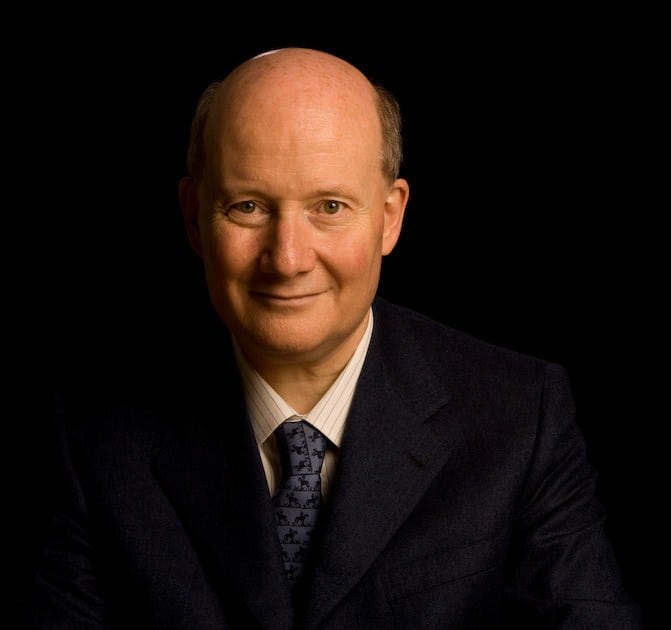
Massimo Introvigne (born June 14, 1955 in Rome) is an Italian sociologist of religions. He is the founder and managing director of the Center for Studies on New Religions (CESNUR), an international network of scholars who study new religious movements. Introvigne is the author of some 70 books and more than 100 articles in the field of sociology of religion. He was the main author of the Enciclopedia delle religioni in Italia (Encyclopedia of Religions in Italy). He is a member of the editorial board for the Interdisciplinary Journal of Research on Religion and of the executive board of University of California Press’ Nova Religio. From January 5 to December 31, 2011, he has served as the “Representative on combating racism, xenophobia and discrimination, with a special focus on discrimination against Christians and members of other religions” of the Organization for Security and Co-operation in Europe (OSCE). From 2012 to 2015 he served as chairperson of the Observatory of Religious Liberty, instituted by the Italian Ministry of Foreign Affairs in order to monitor problems of religious liberty on a worldwide scale.