While Qigong has been traditionally recognized in the Sinosphere as a healthy practice, groups perceived as not supporting the powers that be have been persecuted.
by Massimo Introvigne*
*A paper presented at the Third World Conference for Religious Dialogue and Cooperation, Kruševo, North Macedonia, June 24, 2025.

Introduction
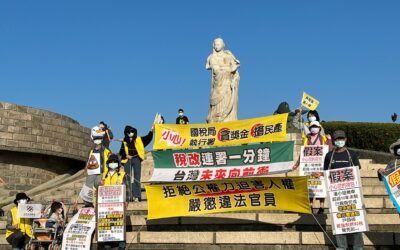
In 1996, Tai Ji Men, the largest Qigong menpai (similar to a school) in Taiwan, faced politically motivated suppression. Although the Supreme Court declared it innocent in 2007, the group still encounters harassment through fabricated tax bills.
I have no evidence to suggest that the repression of Tai Ji Men in Taiwan was influenced by mainland China’s campaign denouncing several Qigong-related new spiritual movements as “xie jiao,” a term historically used since the Middle Ages to describe “organizations spreading heterodox teachings.” Notably, this campaign began in the People’s Republic of China in 1996, the same year.
To enable a comparison with Taiwan, I will skip Chinese instances where political problems have played a significant role and focus on five cases: Zhonggong, Riyue Qigong, Xiang Gong, Bodhi Gong, and Human Universal Science.
Zhonggong
In December 2020, police officers in ten Chinese provinces surrounded and arrested citizens who gathered in public parks for Qigong exercises aimed at preventing COVID-19. These individuals were members of Zhonggong, which was founded in 1987 and officially banned as a xie jiao since 2000. The problem was that, according to the CCP, Zhonggong was supposed to have ceased to exist. It was officially declared liquidated several years earlier and entirely eradicated by 2016. It was presented as one of the few “success stories” in the long-term fight against xie jiao. Nonetheless, this so-called “success” does not appear to be definitive.
Zhang Hongbao was born in Harbin, Heilongjiang’s capital, on January 5, 1954. A respected member of the CCP and a high school teacher in Harbin, he was sent by the Party to Beijing in 1985 to pursue a college degree. Although he did not finish his academic studies, he enrolled in the Chinese Qigong Further Education Academy and became a skilled Qigong instructor. While studying mechanical engineering, Zhang developed a Qigong system, which he called Zhonggong, that integrated engineering terminology and automation theories with traditional Chinese martial arts, dietary practices, and healing methods.
Zhonggong was initially welcomed by the CCP. From 1987 onward, Zhang conducted seminars at various prestigious locations, including Beijing University, the China Academy of Sciences, the Central Party School of the CCP, the Ministry of Public Security, the Ministry of Justice, and the China Academy of Social Sciences. These events received favorable coverage in the Party’s newspaper, “People’s Daily.” A biography of Zhang by Ji Yi sold ten million copies, while Zhang asserted that Zhonggong boasted 38 million followers.
Zhonggong fell victim to its success, especially among high-ranking Communist Party officials. The Party began to view Zhonggong as a potential threat. Although Zhang had strong connections and promised to resist by hiring top Chinese lawyers, he realized his freedom in China was fading after hearing that around twenty women were prepared to testify they had been raped or sexually assaulted by him (a common accusation against xie jiao leaders in China). In December 1999, Zhonggong’s significant assets were seized.
In 2000, Zhang fled to the United States through Guam, where he secured asylum. He grew progressively engaged in militant anti-Communist efforts and passed away on July 31, 2006, at the age of 52, due to a collision between his car and a large truck on an Arizona highway. His supporters suspected foul play.

Following Zhang’s passing, Zhonggong encountered intense suppression, yet Zhang’s secretary, Zhang Xiao, reorganized the movement abroad, relocating its headquarters to Japan. She revitalized a secretive network in China, adopting various names for the organization. Amid the COVID-19 pandemic, Zhang Xiao introduced anti-COVID Qigong exercises. The CCP uncovered that her network was vast, featuring local centers in multiple provinces.
A high-profile case in Shandong province in 2021 involving Sun Xuhui, the head of another independent faction of the movement, brought to light the Ministry of Public Security’s worries regarding Zhonggong, which led to the formation of a dedicated task force to address this particular xie jiao.
Riyue Qigong
On June 15, 2020, the Intermediate People’s Court of Luohe City, Henan, sentenced Wen Jinlu, the 75-year-old founder of Riyue Qigong, to 19 years in prison for organizing and promoting a xie jiao and for rape. Six other leaders received sentences ranging from two years and ten months to three years and six months. Authorities estimated that the movement had approximately 130,000 followers.
Despite being arrested and sent to a reeducation camp in 2000, Wen reorganized Riyue Qigong, which he had founded in 1994, and continued to attract followers. In 2017, Henan’s Public Security conducted a raid, destroying the movement’s headquarters and arresting Wen along with 26 devotees. Eight female devotees testified that Wen had raped them, which resulted in his conviction for rape in addition to promoting a xie jiao.
Xiang Gong
In May 2021, multiple followers of the Buddhist master Tian Ruisheng were detained in Luoyang, Henan, for disseminating the teachings of the prohibited movement Xiang Gong, formerly known as “Buddha Qigong.” Xiang Gong is classified as one of the “harmful Qigong organizations,” facing the same measures as the xie jiao.
Tian Ruisheng, born in 1927, claimed that a wandering Buddhist monk healed him at age 12 and imparted secret healing techniques. In 1988, during China’s “Qigong boom,” Tian began teaching esoteric Buddhism and Qigong practices. Initially, the CCP reported positively on Tian and his teachings, and he had attracted over a million followers by the early 1990s. However, he mysteriously disappeared in 1995, with the CCP stating he died of liver cancer, a claim his followers contested, asserting he chose a life of seclusion.
Following this, Tian’s son, Tian Tongxin, assumed leadership of Xiang Gong. He was arrested for fraud in 1999. Despite numerous police efforts to suppress it, Xiang Gong maintains popularity within esoteric Buddhism and Qigong milieus.
Bodhi Gong
In June 2023, the China Anti-Xie-Jiao Association, an anti-cult organization under CCP control, initiated a nationwide campaign against Bodhi Gong, branding it as a xie jiao. Also referred to as Bodhi Meditation, Bodhi Gong was established by Di Yuming (Grandmaster JinBodhi) in 1991.
Born in 1965 in Hebei province, Di claimed to have studied Buddhism in Tibetan monasteries and asserted that he had healed from childhood illnesses through self-cultivation. He established Bodhi Gong in Beijing, which quickly gained popularity. Di later moved the movement’s headquarters to Dalian, then to Guangzhou, expanding to 26 provinces. In 1999, he moved to Canada to support international growth. Bodhi Gong launched centers in various countries, including the US, Taiwan, Hong Kong, and Korea.

Despite a crackdown in 2015 in China that led to the arrest of over 100 leaders, the movement continued. Trials persisted in 2023 and 2024, resulting in jail sentences for several members. Chinese authorities claim that the group’s branches in Taiwan and Malaysia conduct covert activities in China. However, evidence suggests that the group may now have fewer members within China than abroad.
Human Universal Science
Human Universal Science, founded by Zhang Weixiang, was a significant Qigong movement in China that faced severe repression as the year 2000 approached. Zhang claimed he received communications from the “Great Ancestors” and “alien astronauts,” establishing the movement in 1982. Although it gained considerable popularity, it was labeled a “xie jiao” and banned in 1999, which resulted in Zhang’s arrest in 2000. Following his release, Zhang’s health declined, and he passed away in 2006.
The movement continued across different factions, including the Datong Base Faction, led by Yang Fangping, who was arrested in 2023. Another faction, headed by Su Xiaoliang, underwent police raids in 2023, leading to Su’s arrest and subsequent sentencing in 2024. Despite the government’s suppression, Zhang’s teachings persist and flourish among various groups and on social media platforms, managing to evade authorities consistently.
Conclusion
Following 1999, not every Qigong group in Mainland China encountered repression. In Taiwan, Tai Ji Men faced a political crackdown in 1996 and continued tax harassment, while other Qigong groups largely remained unaffected.
Although some Marxist thinkers view Qigong negatively, it is not prohibited in China. However, versions of Qigong associated with religious movements that include unique teachings and a charismatic leader are prohibited. These movements could threaten the Communist Party’s control over ideological and political power.
Similarly, Tai Ji Men has faced persecution in Taiwan due to its strongly independent stance. Ultimately, the Qigong groups that experience repression in totalitarian regimes—and occasionally in democratic nations—are those that teach their members how the liberating power of Qi can lead to forms of independent thinking that authorities perceive as potentially dangerous.

Massimo Introvigne (born June 14, 1955 in Rome) is an Italian sociologist of religions. He is the founder and managing director of the Center for Studies on New Religions (CESNUR), an international network of scholars who study new religious movements. Introvigne is the author of some 70 books and more than 100 articles in the field of sociology of religion. He was the main author of the Enciclopedia delle religioni in Italia (Encyclopedia of Religions in Italy). He is a member of the editorial board for the Interdisciplinary Journal of Research on Religion and of the executive board of University of California Press’ Nova Religio. From January 5 to December 31, 2011, he has served as the “Representative on combating racism, xenophobia and discrimination, with a special focus on discrimination against Christians and members of other religions” of the Organization for Security and Co-operation in Europe (OSCE). From 2012 to 2015 he served as chairperson of the Observatory of Religious Liberty, instituted by the Italian Ministry of Foreign Affairs in order to monitor problems of religious liberty on a worldwide scale.