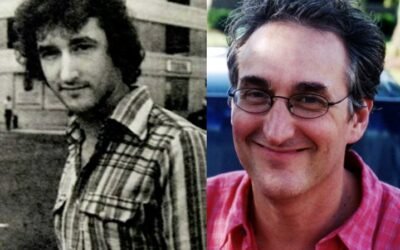
Dr. Wertham’s successful campaign to prohibit certain comics in the U.S. largely relied on mental manipulation theories.
by Massimo Introvigne

How “brainwashing” theories were used in the U.S. to ban certain categories of comics is described in Amy Kiste Nyberg’ seminal Seal of Approval: The History of the Comics Code (Jackson: University Press of Mississippi, 1998), which offers a revisionist interpretation of Seduction of the Innocent, a well-known book published in 1954 by the American psychiatrist Fredric Wertham.
By 1954, the superhero genre had somewhat declined, and horror titles were booming. According to Wertham, most comic books induce a sort of “negative conditioning,” i.e., “brainwashing,” in America’s youth, leading to juvenile delinquency, totalitarian politics, and sexual problems (including homosexuality).
Wertham’s book and his testimony before Congress led to the signing in 1954 of the Comics Code that included a ban on representing horror themes and characters in American comic books. Similar or more draconian results were achieved in the U.K. through the passage of the Children and Young Persons [Harmful Publications] Act and in France by the strict enforcement of the law of July 16, 1949, which had introduced a censorship on all juvenile publications. In Italy an earlier anti-comic offensive led by Catholic politicians generated a draft law which was defeated in Parliament after some prominent Catholic intellectuals, including conservative novelist Giovanni Guareschi, who happened to be a comic fan himself, came out against it.
Whilst Wertham has been normally depicted by scholars of comics as the ultimate champion of censorship and bigotry, Nyberg shows how the New York psychiatrist was a politically liberal doctor who based his anti-comic crusade on the Frankfurt-School-style criticism of popular culture, and on theories of “brainwashing.” Both superheroes and horror stories, Wertham concluded, were “brainwashing” minors into different forms of violence and totalitarianism. Nyberg, however, is no unconditional admirer of Wertham. In fact, she notes that in order to (partially) achieve his aims the liberal, left-wing Wertham deliberately presented his anti-comic criticism in a form divorced from its political premises, and allied itself with the religious and right-wing critics of both “brainwashing” and comics.
When, with the Comics Code, his campaign led to an almost total ban on horror comics, Wertham was not satisfied, since his criticism also included superhero comics, which returned to the dominant position they had enjoyed before World War II once the horror competition was eliminated. However, since to carry its campaign to the larger public of the 1950s America, Wertham had to downplay its philosophical roots in the left-wing Frankfurt School criticism of popular culture, he ended up focusing on horror comics more than he had originally intended, although he always maintained that superheroes were “brainwashing” readers, too.
Contrary to earlier opinions, recent scholars of comics no longer think that Wertham and the Comics Code administered a fatal blow to the U.S. comic industry. Sales did decline immediately after the Code came into effect, but started growing again in the late 1950s, with the return of the superheroes and the beginning of what was called the Silver Age. While other genres not affected by the Code (primarily funny animals and teen comics such as Archie) remained in business as usual, the pendulum simply switched back from horror to superheroes as the dominant presence in the market.
Vampires and other monsters were entirely forbidden by the Comics Code in the U.S., and disappeared from mainstream comics, although they occasionally showed up in humorous forms as opponents of Jerry Lewis or Bob Hope, and became a significant presence in comics sold in magazine format, ostensibly intended for adults and, unlike comic books, escaping the limitations of the Comics Code. Publisher Jim Warren launched the horror comic magazine with Creepy in 1964 (the very first issue featuring two vampire stories) and followed with Eerie (1965) and Vampirella (1969). The stories of Vampirella, a sexy female vampire from Planet Drakulon who tries not to harm the innocent and to fight evil as best as she can, continued into the 21st century.
Gold Key, a company not subscribing to the comics code, and protected by its fame of publisher of educational, quality comics, also capitalized on the success of the TV horror series Dark Shadows by introducing the corresponding comic, whose first issue was published in March 1969.
These developments eventually led to the revision of the Comics Code: as of 1971, vampires and other monsters were permitted again in comic books guaranteed by the code seal. By then, however, sales of comics in the U.S. and elsewhere were in a spectacular decline (with exceptions in Latin America and Latin Europe, where the crisis came much later).
Wertham and accusations of “brainwashing” did not kill the comics, nor were they the only responsible for decades of financial problems. Distribution problems and the competition of the TV for teen attention were at least as important as the Comics Code in creating difficulties.

In 1964, ten years after Dr. Wertham’s Seduction of the Innocent, Umberto Eco published one of its most famous nonfiction works, Apocalittici e integrati. The title of the English translation, Apocalypse Postponed, did not capture Eco’s original intention. The book, largely devoted to comics, settled Eco’s cultural accounts with the Frankfurt School and its approach to popular culture. Eco criticized the “apocalyptic” approach to comics, and denied that they were capable of causing a left-wing apocalypse by “brainwashing” the working classes into reactionary ideologies.
Eco’s aesthetic taste, which influenced the academic study of comics in several European countries for decades, was not particularly attracted to either superheroes or vampires (he very much preferred Tim Tyler’s Luck, The Peanuts, or Pogo): but he was not persuaded that Superman or Dracula comics may cause a cultural disaster among the working classes either. Eco also criticized the American scholars of comic art who were themselves comics fans and were, as such, too much “integrated” into the comics consumers community to keep the necessary critical distance. He focused only on aesthetics, dismissing early psychological studies as irrelevant. According to Eco, a genuinely social scientific approach to comics should be neither “apocalyptic” nor “integrated” and discuss the comics’ very real aesthetic values within an appropriate sociological and political context.
Just as he had insisted that comics did not “brainwash” working classes into slave-like allegiance to capitalism, in the late 1960s Eco led a campaign against the Italian statute regarding “brainwashing” (under the old Italian name of “plagio”) as a criminal offense, when the statute was used against holders of minority or fringe opinions in matter religious, political, or sexual. Eventually, efforts by Eco and other intellectuals, together with different arguments advanced from other quarters, influenced the decision by the Italian Constitutional Court of June 8, 1981, which declared the Italian statute against “plagio” as unconstitutional.
Although developments were partially different in the English-speaking world, as we have seen in a series on “brainwashing” published by Bitter Winter, by the early 1990s a majority of scholars of religion maintained that “brainwashing” was a pseudo-scientific concept used as a political tool against unpopular groups, utterly incapable of explaining complicate social processes. Just as very few scholars of religion would maintain today that new religious movements “brainwash” unwitting “victims” into conversion, the idea that comics, particularly horror comics, “brainwash” weaker members of our societies, including children and poorly literate blue-collar workers, into compliance with authoritarian powers has also been largely dismissed as mythological.
Eco’s insights about both the importance of comics as indicators of broader social phenomena, and the necessity of a critical assessments of them, remain valid to this date. Meanwhile, the scholarly study of comics has evolved into a recognized academic discipline. The idea that popular culture “brainwashes” the masses has almost disappeared, but it should be remembered as a testament to how “brainwashing” theories can be used against almost everything, with dangerous results and at the same time with no serious bases.

Massimo Introvigne (born June 14, 1955 in Rome) is an Italian sociologist of religions. He is the founder and managing director of the Center for Studies on New Religions (CESNUR), an international network of scholars who study new religious movements. Introvigne is the author of some 70 books and more than 100 articles in the field of sociology of religion. He was the main author of the Enciclopedia delle religioni in Italia (Encyclopedia of Religions in Italy). He is a member of the editorial board for the Interdisciplinary Journal of Research on Religion and of the executive board of University of California Press’ Nova Religio. From January 5 to December 31, 2011, he has served as the “Representative on combating racism, xenophobia and discrimination, with a special focus on discrimination against Christians and members of other religions” of the Organization for Security and Co-operation in Europe (OSCE). From 2012 to 2015 he served as chairperson of the Observatory of Religious Liberty, instituted by the Italian Ministry of Foreign Affairs in order to monitor problems of religious liberty on a worldwide scale.