Russia had declared two publications “extremist.” The ban violates article 18 of the International Covenant on Civil and Political Rights, the UN HRC said.
by Massimo Introvigne

As American scholar James T. Richardson has noted, the Jehovah’s Witnesses, once again in their history, are creating legal precedent by submitting a number of cases to the UN Human Rights Committee (HRC), which has jurisdictional powers with respect to the states that have signed and ratified the Optional Protocol to the International Covenant on Civil and Political Rights (ICCPR). These states include the Russian Federation (“Russia”).
On October 24, 2024, the HRC issued a decision recently communicated to the parties in the case “Vasilii Kalin, Robert But and Aleksandr Kreydenkov v. Russian Federation.” Kalin acted both as an individual and as Chairperson of the Administrative Centre of Jehovah’s Witnesses in Russia at the time of the facts discussed in the decision. But and Kreydenkov are Jehovah’s Witnesses from Belgorod, Russia.
The case concerned a decision rendered on March 4, 2015 by the Oktyabrskiy District Court of the city of Belgorod banning as extremist two brochures published and distributed by the Jehovah’s Witnesses, “Was Life Created?” and “The Son Is Willing to Reveal the Father,” based on a “linguistic religious expert examination” by personnel of the University of Belgorod. A third brochure, “Is Your Food Safe?,” had also been denounced as extremist by the local prosecutor but was not banned “because of technical defects in the expert examination” (HRC Decision, 2.4). Adding insult to injury, the Jehovah’s Witnesses were asked to pay the cost of the questionable expertise.
The experts and the District Court admitted there was nothing objectionable in the brochure “Was Life Created?.” It was, however, declared “extremist” because of a reference to yet another brochure, “A Book for All People,” which had previously been banned as extremist by Russian courts.
As for “The Son Is Willing to Reveal the Father,” the experts and the District Court concluded that it “did not contain ‘calls to hostile, violent actions against persons of any particular nationality, confession or social group.’” Nonetheless, it was banned as extremist because of three specific passages that allegedly contained “calls to incitement of discord and propaganda of the exclusivity and superiority of members of the religious organization of Jehovah’s Witnesses and the inferiority of a person based on her religious affiliation or attitude toward religion,” which are forbidden by the Russian law against extremism.
The first of the three passages criticized the doctrine of Trinity, which is not accepted by the Jehovah’s Witnesses. It concluded that “many we [Jehovah’s Witnesses] meet in field service do not know who God is. Their view of God may be obscured by false teachings.”
The second and third referred to the Jehovah’s Witness practice of removing unrepentant sinners from the congregation (a practice some religions refer to as excommunication) and limiting social contact with them (so-called “shunning”).
According to the District Court, the beliefs of Jehovah’s Witnesses were “extremist” since “As a result two groups of people are created: 1. the religious organization of the Jehovah’s Witnesses, who represent superiority and truth, 2. all other people, inferior ones, with whom there should be no association.” This is, of course, a distortion of the beliefs of the Jehovah’s Witnesses.

On June 11, 2015, the Belgorod Regional Court upheld the decision of the District Court. The Administrative Centre of the Jehovah’s Witnesses filed a cassation appeal to the Presidium of the Belgorod Regional Court, which was dismissed on September 8, 2015. The Administrative Centre’s cassation appeal to the Administrative Chamber of the Supreme Court was also dismissed by a single-judge decision on 25 December 2015.
During the proceedings at the UN HRC, Russia objected claiming that the possible domestic remedies had not been exhausted, as it was still possible to file an appeal for a supervisory review to the Presidium of the Supreme Court. The HRC agreed with the Jehovah’s Witnesses, based on precedent decisions of the European Court of Human Rights and of the same HRC, that this “extraordinary” appeal cannot be considered an “effective remedy” (HRC decision, 9.7 and 9.8).
On the substance of the matter, the HRC concluded that Russia had violated Article 18 of the ICCPR, which protects freedom of religion or belief, allowing only for limitations both “prescribed by law and necessary to protect public safety, order, health or morals or the fundamental rights and freedoms of others.” Russia claimed that by banning the brochures it was enforcing a limitation “prescribed by law,” i.e., its Federal Act on Combating Extremist Activity. The HRC countered that this Act “contains a vague and open-ended definition of ‘extremist activity’ that does not require any element of violence or hatred to be present. It also notes that no clear and precise criteria on how materials may be classified as extremist are provided in the law” (HRC decision, 10.6).
Enforcing the Act against the Jehovah’s Witnesses, the HRC noted, resulted also in a discrimination of the organization favoring other religions. For instance, the Russian Orthodox Church has numerous publications criticizing other religionists, including the Jehovah’s Witnesses, as “heretics,” which are not banned as extremist.

Russia, the HRC said, merely asserted that the brochures threatened the fundamental rights and freedoms of others, without proving it. “Without providing any concrete facts about how the two above-mentioned publications threatened the rights and freedoms of others, the domestic courts imposed the strictest available sanction namely, to ban the publications” (HRC decision, 10.7).
As for the content of the brochures, it expressed the interpretation of the Bible of the Jehovah’s Witnesses, who thus exerted their rights to freedom of religion and freedom of expression. The HRC referred to “its general comment No. 34 (2011) on freedoms of opinion and expression, in which it states that those freedoms are indispensable conditions for the full development of the person and essential for any society. They constitute the foundation stone for every free and democratic society” (HRC decision, 10.9). Also, “prohibitions of displays of lack of respect for a religion or other belief system, including blasphemy laws, are incompatible with the Covenant,” except if they incite violence or hatred, which admittedly was not the case of the brochures (HRC decision, 10.10).
The HRC concluded that Russia “is obligated” to remove the ban on the publications, compensate But and Kreydenkov who had the brochures they were in possession of seized in Belgorod, and take steps to make sure that further violations of art. 18 ICCPR would be avoided in the future—all this within 180 days and giving adequate publicity to the HRC decision (HRC decision, 12 and 13).
Whether Russia will comply with the HRC decision remains to be seen. At any rate, the decision is highly significant in two respects. First, it is the first HRC decision that address the ban of religious publications as extremist. Second, for the first time the HRC examines the matter of exclusion from a religious community and “shunning.” By condemning the decision of Belgorod’s Oktyabrskiy District Court as incompatible with art. 18 ICCPR, the HRC implicitly argues that the Jehovah’s Witnesses’ teachings and practice of shunning are part of the normal exercise of religious liberty and cannot be prohibited. This is a point other states, which pride themselves on being more democratic and respectful of religious liberty than Russia, would do well to consider.
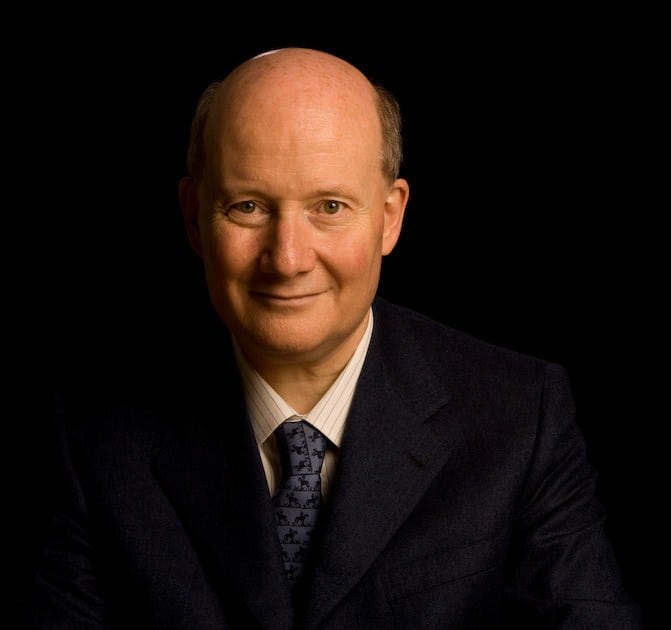
Massimo Introvigne (born June 14, 1955 in Rome) is an Italian sociologist of religions. He is the founder and managing director of the Center for Studies on New Religions (CESNUR), an international network of scholars who study new religious movements. Introvigne is the author of some 70 books and more than 100 articles in the field of sociology of religion. He was the main author of the Enciclopedia delle religioni in Italia (Encyclopedia of Religions in Italy). He is a member of the editorial board for the Interdisciplinary Journal of Research on Religion and of the executive board of University of California Press’ Nova Religio. From January 5 to December 31, 2011, he has served as the “Representative on combating racism, xenophobia and discrimination, with a special focus on discrimination against Christians and members of other religions” of the Organization for Security and Co-operation in Europe (OSCE). From 2012 to 2015 he served as chairperson of the Observatory of Religious Liberty, instituted by the Italian Ministry of Foreign Affairs in order to monitor problems of religious liberty on a worldwide scale.