An order by the U.S. District Court for the District of Columbia is enforced, just as the film “Colonel Kalsi” on a similar case is hailed in festivals.
by Massimo Introvigne
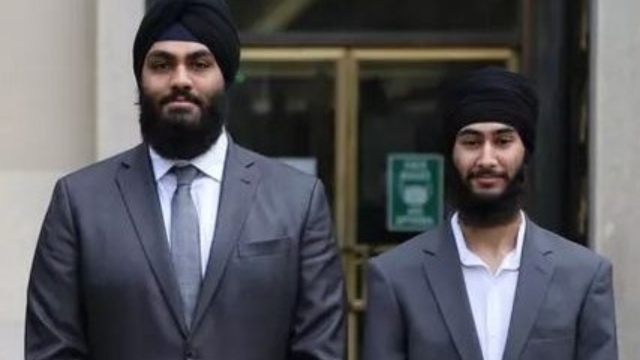
Jaskirat Singh is joining the Marines — and keeping his turban, his beard, and his kara iron bracelet too. He had to fight in court for this, together with two co-religionists, Milaap Singh Chahal and Aekash Singh. The three are members of the Sikh community, and the turban, the beard, and the kara are signs of their religious identity. They were told they should surrender them or abandon their dream of becoming Marines. They sued and won at the U.S. District Court for the District of Columbia, where an order was obtained in late April.
The decision is now being enforced with respect to Jaskirat Singh. The two other plaintiffs had decided in the meantime to join other military corps that already allowed Sikhs to keep their turbans and other distinctive signs. The judge told Jaskirat Singh that he should “roll, tie, or otherwise groom” his beard so that it is “no longer than two inches in length after grooming,” but can otherwise keep it together with his turban and kara,
One of those who supported the trio was Colonel Kamaljeet Singh Kalsi, of the Sikh Americans Veteran Alliance. Coincidentally, the 2022 film devoted to his own experience, “Colonel Kalsi: Beyond the Call” was being hailed in May in movie festivals throughout the United States.

Kalsi, a medical officer in the Army, was the first to serve with a turban but was ordered to take it off when he was sent to Afghanistan. He sued the Army and won. He is now a member of the President’s Advisory Commission on Asian Americans, Native Hawaiians, and Pacific Islanders, which has recommended that turbans, hijabs for women, and other distinctive religious signs should be allowed in all branches of the U.S. military.

The Marines were the last to be ordered to accommodate the Sikhs, but the ruling will also benefit other religious minorities.

Massimo Introvigne (born June 14, 1955 in Rome) is an Italian sociologist of religions. He is the founder and managing director of the Center for Studies on New Religions (CESNUR), an international network of scholars who study new religious movements. Introvigne is the author of some 70 books and more than 100 articles in the field of sociology of religion. He was the main author of the Enciclopedia delle religioni in Italia (Encyclopedia of Religions in Italy). He is a member of the editorial board for the Interdisciplinary Journal of Research on Religion and of the executive board of University of California Press’ Nova Religio. From January 5 to December 31, 2011, he has served as the “Representative on combating racism, xenophobia and discrimination, with a special focus on discrimination against Christians and members of other religions” of the Organization for Security and Co-operation in Europe (OSCE). From 2012 to 2015 he served as chairperson of the Observatory of Religious Liberty, instituted by the Italian Ministry of Foreign Affairs in order to monitor problems of religious liberty on a worldwide scale.