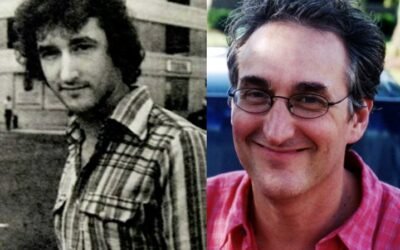
Mikis Hasson created in a jungle in Peru what is not a religious movement, but a neo-shamanic community.
by Susan J. Palmer
Article 1 of 3

TierraMitica (“Mythic Land” in Spanish) is a small communal society in Peru. It is tucked away in the San Martín high jungle area, one and a half hours by airplane from Lima, and 45 kilometers by jeep from the nearest town, Tarapoto. It is still an emerging, nascent commune, numbering around fifteen and twenty members who dedicate much of their time to collective art projects, sculpture, murals, paintings, statues, and fantasy architecture.
On first acquaintance, TierraMitica appears to be a new religious movement (NRM)—except that the TierraMiticans are not religious, their goals are not “spiritual,” and their founder, Mikis Hasson, makes no claims to be enlightened or divine. “Mikis” (as he is called by the TierraMiticans) might be categorized as a “neo-shaman” in that he draws on the indigenous mythology of Peru’s Shipibo tribe in his practice. Moreover, he corresponds to Mircea Eliade’s (1907–1986) classic typology of the medicine man or “shaman.” In Eliade’s words, the shaman “is not only a sick man; he is, above all, a sick man who has been cured, who has succeeded in curing himself.”
Mikis is perceived by his TierraMiticans as someone who, due to his health issues, has had many near-death experiences. These have taught him to appreciate life and given him unique insights. Unlike the disciples or devotees in NRMs, the TierraMiticans do not share spiritual beliefs or visions of the afterlife. Rather, they are united in a common philosophy, forged out of strategic responses to suffering and personal revelations experienced in Mikis Hasson’s group therapy sessions. Their common goal is the pursuit and attainment of “continuous happiness.”
Thus, TierraMitica fits the definition of commune as an “intentional society.” It is influenced by the neo-shamanic tradition and shaped by Hasson’s original theory and method of psychotherapy.

TierraMitica’s founder, Mikis Hasson, who is now 65, is a Greek citizen born in Athens in 1960 to Jewish parents. After studying psychology in Jerusalem and textile technology in Britain, Hasson returned to Greece to start his own textile business. When it failed, he worked as a manager for a group of large companies and enjoyed a meteoric rise in his business career, gaining wealth and recognition. By 2002, he was married with two sons, but that same year he suffered a stroke and was diagnosed with Hughes Syndrome, a rare immune system disease that causes clots, thrombosis, obesity, and strokes. Hughes Syndrome was first described by Professor Graham Hughes in 1983. Also known as “Antiphospholipid Syndrome” (APS), it is commonly referred to as “sticky blood.”
Hasson writes in his self-published 2014 biography, “Mythic Voyage”: “I am in hell. I lose my wife, I have to leave my home and boys, I weigh 165 kilos, I am clinically depressed, and the Greek economy collapses, starting with the stock market. All is lost…”
In 2002, Hasson launched his own “mythic voyage” by traveling to Cuba where he began to fast, managing to lose 65 kilos. Disengaging himself from work commitments, he decided to take a sabbatical and started by visiting the Kripalu yoga center in upstate New York. There he met the charismatic therapist Alberto Villoldo (Ph.D.), who directed the Four Winds neo-shamanic Light Body School. After two years of study with Villoldo, Hasson traveled to South America where he embarked on a spiritual quest that led to his encounter with “Grandmother” (the Spirit of Ayahuasca in the Shipibo tribe’s tradition), and to apprenticeships with various shamanic teachers, notably Don Felipe and Don Manuel (this and other information comes from interviews with Mikis Hasson, October 24, 2024).
The “Mythic Voyage” can mean three things. It can refer to Mikis Hasson’s personal quest for meaning and happiness, or to Hasson’s pre-2018 group therapy tours in the Amazon region. The Mythic Voyage is also the title of Mikis Hasson’s 2014 autobiography.

In 2008, Hasson organized his first Mythic Voyage on the Amazon River. Renting an antique converted steamboat, he led group therapy workshops that featured ayahuasca experiences, in which the participants were assisted by Shipibo “maestros” and “maestras.” The Shipibo are a tribe indigenous to the Amazon, whose 2000-year ancestral practices include the ritualistic use of ayahuasca. They have an ancient song tradition related to the ayahuasca spirit, and the maestras would chant during the ayahuasca ceremonies.
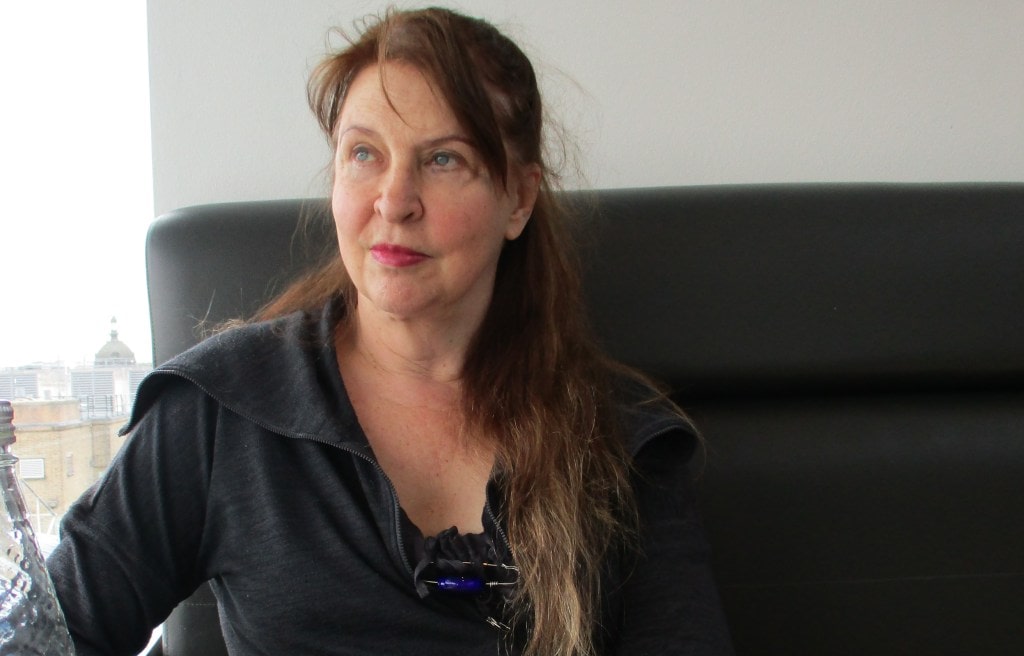
Susan J. Palmer is an Affiliate Professor in the Religions and Cultures Department at Concordia University in Montreal. She has directed the Children on Sectarian Religions and State Control project at McGill University, supported by the Social Sciences and the Humanities Research Council of Canada (SSHRC). She is the author of fourteen books, notably The New Heretics of France (Oxford University Press, 2012).