Ahmadis in Pakistan face daily persecution, legally permitted by the Constitution and Penal Code—but it must never be accepted as normal.
by A. Sahara Alexander
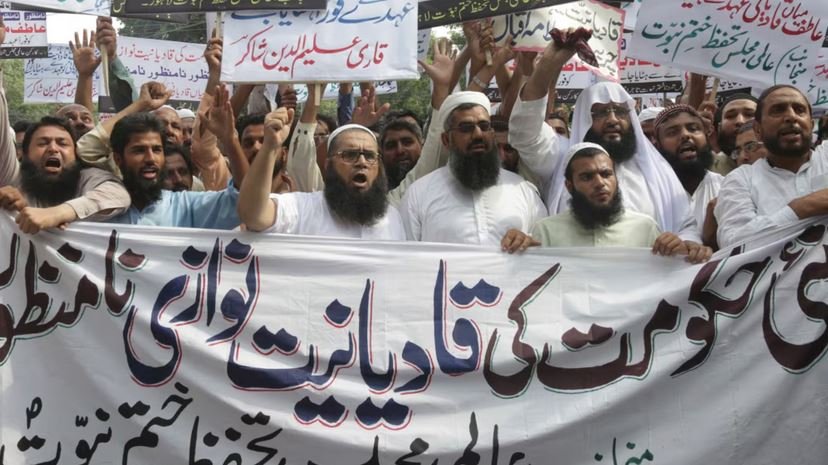
The Ahmadiyya Muslim Jama’at (AMJ) (“jama’at” being an Arabic term meaning “community”) represents one of the largest minority movements within Islam and has faced severe persecution in several countries, most notably in Pakistan.
In Pakistan, the movement encounters not only theological opposition from religious authorities—like the situation in several other Muslim-majority societies—but also formal legal restrictions imposed by the state. Pakistani legislation explicitly limits the religious expression of Ahmadis and prohibits them from identifying themselves as Muslims. In addition to these legal constraints, members of the Ahmadi community have frequently been the targets of mob violence. Organized groups or militant actors have attacked Ahmadi places of worship, homes, and businesses, and such incidents have at times resulted in injuries and fatalities among community members.
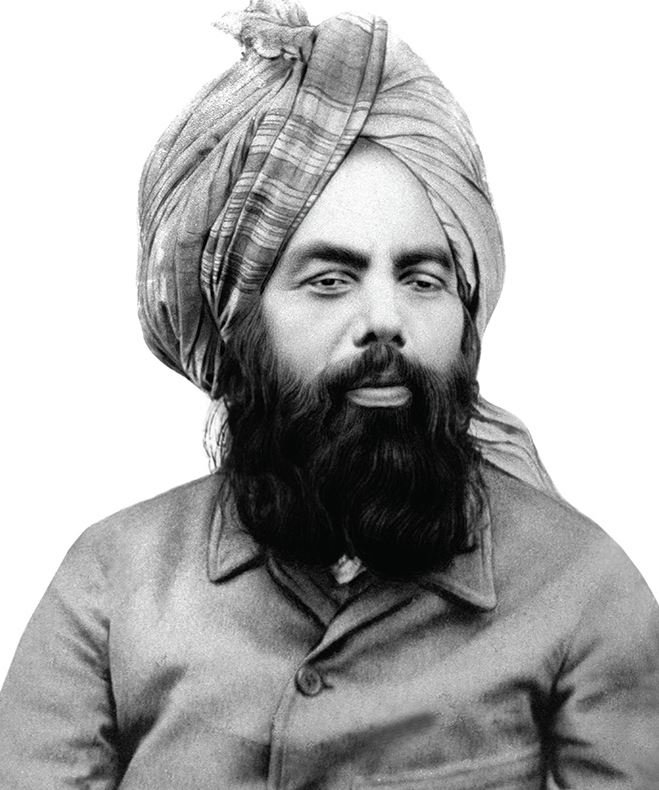
From the perspective of mainstream Islamic theology, the doctrines of the AMJ are in fact generally regarded as heterodox. The movement was founded by Mirza Ghulam Ahmad (1835–1908). Born in Qadian, in the Punjab region, he spent most of his life there. During a significant portion of his early career, he operated within the framework of Muslim orthodoxy as an apologist for Islam, particularly in debates with Christian missionaries and Hindu reform movements.
A turning point occurred in 1889, when he announced that he had received divine revelations and established a religious community around his teachings. In 1891, he further declared himself to be both the Masih (Messiah) and the Mahdi, the eschatological figure expected in Islamic tradition to appear in the end times and restore the true faith.
The theological controversy surrounding the Ahmadiyya movement primarily concerns the interpretation of the doctrine known as the “Seal of the Prophets,” which derives from the Qur’anic belief that Muhammad is the final prophet sent by God. The Ahmadiyya interpretation maintains that Mirza Ghulam Ahmad did not introduce a new prophetic law and therefore does not violate the finality of Muhammad’s prophethood. However, most Muslim scholars reject this interpretation and regard Ahmad’s claims as incompatible with orthodox Islamic doctrine.
As a result, many Muslims do not recognize Ahmadis as members of the Islamic community and instead classify the movement as heretical. In Pakistan, this theological dispute has been institutionalized in state law: legislation enacted during the twentieth century formally declares Ahmadis to be non-Muslims. It prohibits them from presenting themselves as adherents of Islam.
I. Constitutional and Legal Criminalization
The root of the community’s issues lies in the Second Amendment to Pakistan’s Constitution of 1974, which officially declared Ahmadis as “non-Muslims.” This was further reinforced by Ordinance XX of 1984, which makes it a criminal offense for Ahmadis to “pose as Muslims.” Under the Pakistan Penal Code, they are prohibited from:
- calling their places of worship “mosques.”
- performing the “Azan” (call to prayer).
- using Islamic greetings or displaying Quranic verses.
- identifying as Muslims, which can lead to immediate blasphemy charges.
II. Systematic Use of Blasphemy Laws
Pakistan’s rigorous blasphemy laws disproportionately target Ahmadis. While they represent a tiny fraction of the population, they often account for a high percentage of blasphemy accusations.
- Arbitrary arrests: dozens of community members are frequently detained for “blasphemous” acts, such as offering prayers or keeping religious literature.
- Vigilante violence: accusations often incite mob violence, leading to extrajudicial killings and lynching before cases even reach a courtroom.
III. Targeted Violence and Desecration
The community faces a persistent threat of physical violence from extremist groups.
Recent trends include:
- attacks on worship places: radical groups, sometimes with the reported complicity or inaction of local police, have demolished minarets and removed Islamic inscriptions from Ahmadi halls.
- Desecration of graves: there is a recurring issue where Ahmadi graves are vandalized, or bodies are exhumed because extremists object to the use of Islamic symbols or “Muslim” burial grounds for the community.
- Targeted killings: professionals, particularly doctors and lawyers from the community, have been targets of faith-based assassinations.
IV. Political and Civic Disenfranchisement
Ahmadis are effectively stripped of their right to participate in the democratic process through a “separate electorate” system.
- Voter registration: to register as a Muslim voter, one must sign a declaration denouncing the founder of the Ahmadiyya movement. Since Ahmadis believe they are Muslims and cannot sign such a document, they are forced onto a separate list for non-Muslims.
- Boycotts: most Ahmadis boycott the elections entirely rather than accept a state-mandated identity that contradicts their faith, leaving them without political representation.
- The forced placement of Ahmadis on a separate electoral roll and the requirement of a “faith declaration” to vote constitute a structural disenfranchisement affecting over 500,000 Ahmadis and amount to institutionalized religious discrimination. A 2025 court ruling disqualifying Ahmadis from inheriting property from Muslim family members further entrenches this exclusion.
V. Institutional and Social Discrimination
The persecution extends into daily life, affecting education, employment, and social standing:
- education & jobs: students often face bullying or expulsion if their faith is discovered, and many Ahmadis are denied government jobs or promotions.
- economic boycotts: frequent campaigns are calling for the boycott of Ahmadi-owned businesses, often fuelled by hate speech on social media.
- identification requirements: Obtaining a national ID card or passport requires a declaration of faith that forces Ahmadis to choose between their religious identity and their civil rights.
VI. Blasphemy Cases in Pakistan
A list of Human Rights Reports on Blasphemy documents the daring situation:
- Centre for Social Justice Pakistan
- Human Rights Commission of Pakistan
- Human Rights Watch
- USCIRF
- National Commission of Human Rights Pakistan
- CSOH
- Clooney Foundation for Justice
VII. Resources on the Persecution Against Ahmadis in Pakistan
Relevant sources for first-hand reporting, analysis, and commentary are:
- Persecution of the Ahmadiyya Muslim Community
- International Human Rights Committee
- Stop the Persecution
- “Bitter Winter”

Uses a pseudonym for security reasons.