Alexander Novopashin claims that the U.S. turned from an “anti-cult” to a “pro-cult” nation only when the Soviet Union fell.
by Massimo Introvigne

Alexander Novopashin, an archpriest of the Russian Orthodox Church from Novosibirsk, is known for three reasons. First, he is one of the most fanatical supporters of the Russian war of aggression against Ukraine, and has depicted the Ukrainians as Nazis, Satanists, and even cannibals. Second, he is one of the leading and most ferocious anti-cultists in Russia. Third, he has (perhaps inadvertently) revealed that all attempts by the French-financed European umbrella anti-cult federation FECRIS to imply (without clearly stating) that after the war in Ukraine its Russian affiliate organization, of which Novopashin is Vice President, was no longer part of the Federation are just a form of cosmetic propaganda. As late as December 2022, Novopashin emphatically proclaimed that he and his organization were still “representing FECRIS” in Russia.
Besides being anti-Ukrainian, Novopashin is aggressively anti-American. However, he has now advanced a novel theory about the relationship between the United States and “cults” (for those who read Bitter Winter only occasionally, we specify that for this magazine “cults” do not exist; “cult” is just a derogatory term used to slander religious movements some lobbies and governments do not like. “Criminal religious movements” that commit common crimes are found both among the oldest and the newest religious traditions, but calling them “cults” only creates confusion).
Novopashin has claimed in this month of April that the U.S. were once an anti-cult nation. Until the 1990s, he states, “The largest number of trials against cult leaders took place in America, the largest number of convictions were in America, the largest number of cults that were dispersed and whose leaders were imprisoned were found in America.” Novopashin does not offer any evidence of this statement. Certainly, the U.S. had an active anti-cult movement, and a few leaders of new religious movements who committed common crimes went to jail. On the other hand the two groups Novopashin regards as the epitome of “cultism”—the Jehovah’s Witnesses and the Church of Scientology—, as well as many others he calls “cults,” won several legal and administrative cases in the U.S. and were allowed to exist and prosper.
Novopashin argues that only after the fall of the Soviet Union made Russia permeable to “cults” did the U.S. decide to transform themselves from an anti-cult to a pro-cult country. “Cults” became “one of the instruments of the United States in reorganizing the world.” For example, “experts [by which he means Russian anti-cultist Alexander Dvorkin, the President of the Russian FECRIS, of which Novopashin is Vice President] have long been making a well-founded assumption about Scientology, which has long been working as a special unit of the U.S., intelligence service, sharing part of the information it obtains with the U.S. intelligence community, and in return receiving support from the State Department and other U.S. government bodies.”
In a somewhat primitive reconstruction of the controversies about “cults,” Novopashin explains that, after the fall of the Soviet Union, “the United States began to forbid Europeans to fully fight against cults and put serious pressure on Russia—they said, if Russia wanted to become a truly ‘civilized state,’ then it should not infringe on the rights of cults, should not persecute them, and should not ban their activities.” Concerning Europe, these are old FECRIS theories, fueled by a certain French anti-Americanism, about “cults” as “the American Trojan horse” used to control European countries.
Former U.S. Secretary of State Madeleine Albright is a bête noire of Russian propaganda for her support of a democratic Ukraine. Novopashin claims that, “Back in 1997, former US Secretary of State Madeleine Albright, while visiting Moscow, met with Patriarch Alexy II. She promised His Holiness the Patriarch to support the Russian Orthodox Church, but on the condition that the Russian Church would not interfere with the Western missionaries pouring into Russia, representing various destructive pseudo-religious associations. Naturally, His Holiness the Patriarch did not even begin to talk about this topic.”

“And the very next year, 1998, Novopashin concluded, the United States passed the International Religious Freedom Act. According to this law, any opposition to cults is immediately declared a ‘serious violation of freedom of religion,’ which may entail certain sanctions—political, economic.” Of course, the 1998 U.S. International Religious Freedom Act did not even mention “cults,” and promoted freedom for all religions.
The anti-American, anti-Ukrainian, and anti-cult paranoia go hand in hand in Russia. Novopashin’s theories could be dismissed as mere stupidity, if it was not for the fact that he is called to teach high-level bureaucrats and police officers, and there is some evidence that his rantings are taken seriously even in the Kremlin.
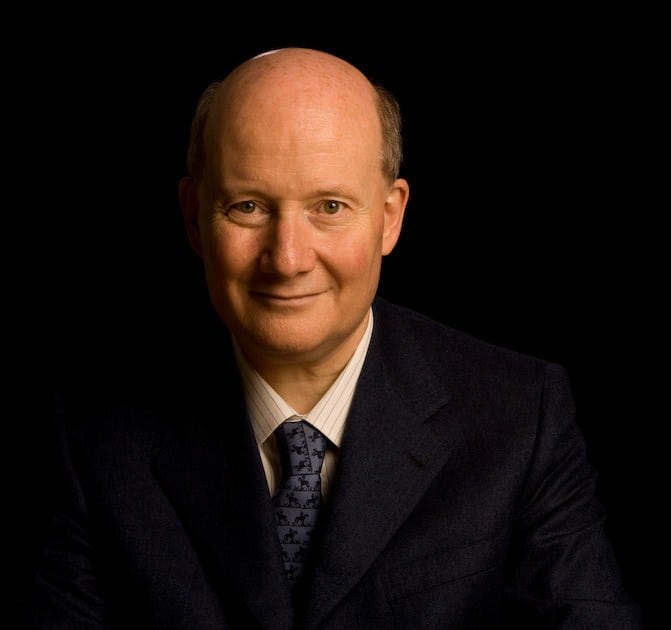
Massimo Introvigne (born June 14, 1955 in Rome) is an Italian sociologist of religions. He is the founder and managing director of the Center for Studies on New Religions (CESNUR), an international network of scholars who study new religious movements. Introvigne is the author of some 70 books and more than 100 articles in the field of sociology of religion. He was the main author of the Enciclopedia delle religioni in Italia (Encyclopedia of Religions in Italy). He is a member of the editorial board for the Interdisciplinary Journal of Research on Religion and of the executive board of University of California Press’ Nova Religio. From January 5 to December 31, 2011, he has served as the “Representative on combating racism, xenophobia and discrimination, with a special focus on discrimination against Christians and members of other religions” of the Organization for Security and Co-operation in Europe (OSCE). From 2012 to 2015 he served as chairperson of the Observatory of Religious Liberty, instituted by the Italian Ministry of Foreign Affairs in order to monitor problems of religious liberty on a worldwide scale.