Why, when, by whom, and how the assassination of a religion was prepared and perpetrated.
by Massimo Introvigne*
*A paper presented at the side event “The Eradication and Dissolution of a Religious Community of 600,000 Followers: The Case of the Unification Church in Japan,” 59th Session of the United Nations Human Rights Council, Geneva, June 16, 2025.

On March 25, the Tokyo District Court ordered the dissolution in Japan of the Unification Church (now called the Family Federation for World Peace and Unification). The decision has been appealed, but the climate of hostility against the church is overwhelming. A lie is being spread that being dissolved only means losing the church’s tax-exempt status. Not so: if the church is dissolved, all its assets, including bank accounts and places of worship, will be transferred to a liquidator. Scholars have coined a new word to describe what will happen: religiocide, the assassination of a religion.
This crime was analyzed at the United Nations in Geneva on June 16 at a side event of the Human Rights Council’s current session. I was among the speakers and tried to answer the questions of why, when, by whom, and how the crime was perpetrated.
Why? The preconditions for the crime derive from the general hostility of Japan, a deeply secular country, against organized religion. There is also a tradition of scapegoating foreign religions for the problems of Japan. In past centuries, it was Christianity. Militaristic Japan blamed the pacifist Jehovah’s Witnesses, and they are not off the hook yet. Now, it is the Unification Church, whose headquarters are in Korea, and anti-Korean racism is part of its problems.
When? Opponents have called for the dissolution of the Unification Church since the 1980s. They were never successful until the assassination in 2022 of former Prime Minister Shinzo Abe offered them a golden opportunity. The assassin was never a member of the Unification Church, but his mother is. He claimed he killed Shinzo Abe to punish him for his sympathy for the Unification Church, which he hates, he says, because in 2002 his mother went bankrupt after excessive donations. Why he waited for twenty years was not explained—nor was it mentioned that members of the church gave back to his family a substantial part of the donations.

Who? There is conclusive evidence that those who created in 1987 an anti-cult movement lobbying for the dissolution of the Unification Church and other conservative religious organizations were politically motivated. Most were socialists and communists and wanted to destroy a religion known for its anti-communist and pro-American positions—and all faiths seen as conservative and against their ideological idea of “progress.”
How? The dissolution decision is based on one argument only: that the Unification Church causes harm through “spiritual sales.” This is an expression coined by the anti-cult lobby to criticize sales of small pagodas, seals, and other artifacts believed to bring good luck for prices exceeding their intrinsic value. It was later extended to donations. These sales did occur in the past. They were business activities of individual believers, not the Unification Church. The church tried to rein in these sales by prohibiting its members from engaging in them in 2009. And it was successful, as the reported incidents decreased almost to zero at the time of Abe’s assassination.
This is not the church’s or the scholars’ opinion. It is written in so many words in the dissolution decision. Only, the judges admitted that in recent years there were only a handful of report of “spiritual sales,” but speculated that there may be unreported incidents, or perhaps these activities “may” start again in the future. Such a drastic decision as liquidating a whole church cannot be based on speculation. What is happening in Japan is the most serious religious liberty crisis in a democratic country in our century.
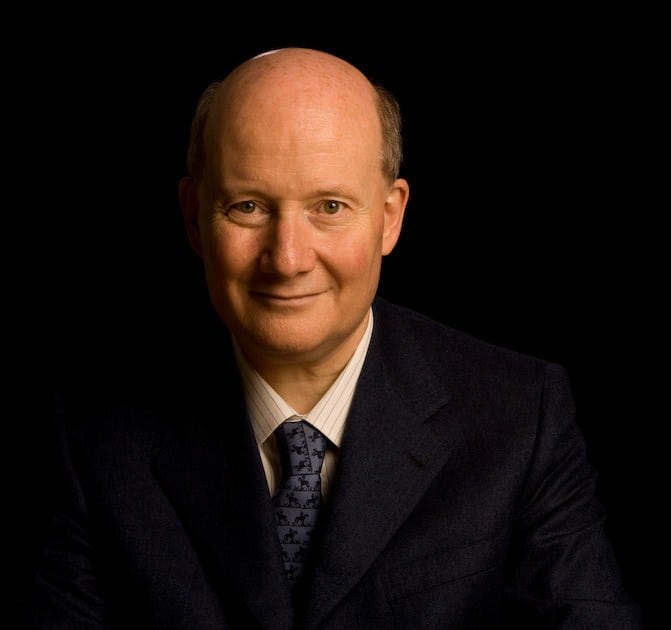
Massimo Introvigne (born June 14, 1955 in Rome) is an Italian sociologist of religions. He is the founder and managing director of the Center for Studies on New Religions (CESNUR), an international network of scholars who study new religious movements. Introvigne is the author of some 70 books and more than 100 articles in the field of sociology of religion. He was the main author of the Enciclopedia delle religioni in Italia (Encyclopedia of Religions in Italy). He is a member of the editorial board for the Interdisciplinary Journal of Research on Religion and of the executive board of University of California Press’ Nova Religio. From January 5 to December 31, 2011, he has served as the “Representative on combating racism, xenophobia and discrimination, with a special focus on discrimination against Christians and members of other religions” of the Organization for Security and Co-operation in Europe (OSCE). From 2012 to 2015 he served as chairperson of the Observatory of Religious Liberty, instituted by the Italian Ministry of Foreign Affairs in order to monitor problems of religious liberty on a worldwide scale.