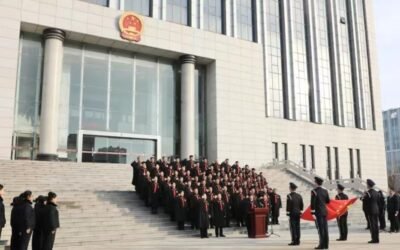
When it finally succeeds in bringing refugees back to Chinese territory, the CCP arrests, sentences, and tortures them.
by Massimo Introvigne
Article 5 of 5. Read article 1, article 2, article 3, and article 4.

The CCP persistently interferes and pressures to extradite CAG members. Those who return to China for various reasons are often detained upon entry, subjected to torture, prolonged interrogations, and forced “transformation,” with some still missing today. One CCP police officer explicitly told an arrested CAG member, who later reported his words to “Bitter Winter”: “The state is now tracking all CAG members who have gone abroad. Once found, they must be deported back, and upon return, it’s not just imprisonment…”
(7.1) Targeted Arrests: The Case of Xiaoli
As “Bitter Winter” reported, CAG member Xiaoli (a pseudonym) was denied asylum in Italy. Unable to work legally or afford medical treatment because of illness, she was compelled to go back to China. She was arrested immediately upon arrival, then subjected to torture and violent “persuasion.”
The police had detailed information about her overseas church gatherings. They even showed her photos of fellow CAG members from those meetings, demanding that she identify them, despite the meeting location being known only to a few. They also pressed her to provide more information about the CAG communities in Italy.
(7.2) Sentencing for Overseas Activities
The case of Xiaolin (pseudonym)
One CAG member who appeared as an extra in a church film was arrested upon returning to China, sentenced to two years in prison, and placed under long-term surveillance.
The case of Xiaoguang (pseudonym)
The court cited Xiaoguang’s participation in a CAG film viewed over 100,000 times as the basis for sentencing him to four years and six months in prison with a fine of RMB 9,000 (around USD 1,260).
(7.3) Torture, Forced “Persuasion,” and Heavy Sentences: The Case of Zhang Ying
In 2021, Zhang Ying (pseudonym), who was nearly 60, was apprehended. After returning from the United States to China in 2017, she had evaded custody for four years before her detention.
Despite suffering from a malignant tumor requiring urgent surgery and being in feeble health, police subjected her to torture, including interrogation on a “tiger bench” while handcuffed and shackled, continuing until she convulsed and could not move. Despite her condition, she was sentenced to one and a half years for “using a xie jiao to undermine the enforcement of the law.”
The CCP’s persecution severely impacted Zhang’s family. Her non-believing husband was held for more than thirty days, and her daughter received a one-year prison sentence along with a fine of RMB 4,000. The family spent nearly RMB 200,000 to secure the release of Zhang and her daughter, and their total losses, including property confiscated by the CCP, exceeded RMB 500,000 (around USD 70,000).
The Case of Li Zheng
In 2019, Li Zheng (pseudonym), who returned from Saipan, stayed at a relative’s home for a month but was eventually arrested. He was detained in a “persuasion class” for 35 days and then sentenced to seven years in prison.
The Case of a CAG Member from Sichuan
In 2018, a CAG member from Sichuan attended a church gathering while on a two-week trip to Japan. After returning to China, she was arrested and sentenced to seven years in prison.
The Case of Li Zhu
Persecuted for preaching the gospel, Li Zhu (pseudonym) fled to South Korea. In June 2013, she returned to China to renew her visa and was arrested, subjected to torture, hooded, interrogated, and sentenced to five years in prison.
The Case of Wang Xiumei
In February 2017, Wang Xiumei sought asylum in Switzerland but was issued a deportation order, forcing her to return to China in May. In June, county public security police raided her rental home, arresting her and quickly freezing the assets of both her and her sister. On February 9, 2018, she was sentenced to three and a half years in prison on charges of “using a xie jiao to undermine the enforcement of the law” and was fined RMB 30,000 (around USD 4,457).

(7.4) Arrest and Disappearance Upon Return: The Case of Ms. Zhao
On December 10, 2018, during a roundtable at the European Parliament on religious persecution in China, Willy Fautré, the Director of Human Rights Without Frontiers, emphasized the risks CAG members face when they return to China. He mentioned Ms. Zhao (pseudonym), who was deported from Germany to China and has since gone missing.
[8] Conclusion and Recommendations
(8.1) Conclusion
The CCP’s transnational repression of overseas CAG members severely violates multiple international human rights obligations, particularly in the following three areas:
Religious Freedom
Article 18 of the International Covenant on Civil and Political Rights guarantees freedom of religion and expression. Although China signed the covenant, its ongoing suppression of the CAG, extended overseas, constitutes a grave violation of this right.
Prohibition of Torture and Non-Refoulement
Article 3 of the Convention Against Torture prohibits returning individuals to countries where they risk torture. Numerous cases demonstrate that deported CAG members face torture, violent “persuasion,” and detention, making such deportations a violation of international obligations. In 2021, the United Nations Committee against Torture ruled against Switzerland, which had denied asylum to a CAG devotee, stating that CAG members in China, or deported to China after their asylum requests have been denied abroad, are “at risk of torture or other cruel, inhuman or degrading treatment or punishment.”
Right to Seek Asylum
Article 14 of the Universal Declaration of Human Rights and the Refugee Convention protect the right to seek asylum from religious persecution. The CCP’s overseas harassment of CAG members and their families significantly interferes with asylum processes.
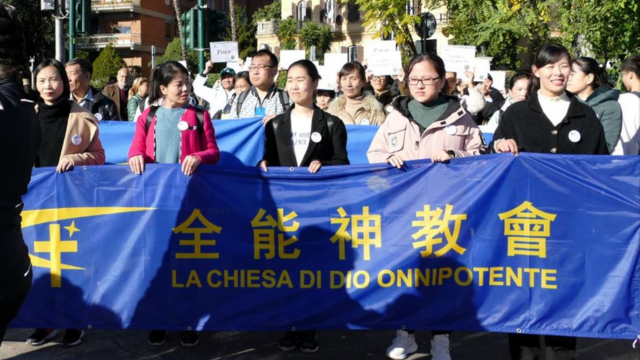
(8.2) Recommendations
- Governments must strictly uphold non-refoulement obligations, refraining from deporting CAG members to China.
- Asylum authorities should enhance identification and protection measures for CAG asylum seekers, considering their transnational repression as evidence of “ongoing persecution.”
- International human rights organizations and media should document the harassment and fear faced by CAG members overseas, advocate for their cause, and build international consensus.
- Host countries should provide robust legal aid, asylum procedures, and protective measures to shield CAG members from the CCP’s overseas pressure and surveillance.

Massimo Introvigne (born June 14, 1955 in Rome) is an Italian sociologist of religions. He is the founder and managing director of the Center for Studies on New Religions (CESNUR), an international network of scholars who study new religious movements. Introvigne is the author of some 70 books and more than 100 articles in the field of sociology of religion. He was the main author of the Enciclopedia delle religioni in Italia (Encyclopedia of Religions in Italy). He is a member of the editorial board for the Interdisciplinary Journal of Research on Religion and of the executive board of University of California Press’ Nova Religio. From January 5 to December 31, 2011, he has served as the “Representative on combating racism, xenophobia and discrimination, with a special focus on discrimination against Christians and members of other religions” of the Organization for Security and Co-operation in Europe (OSCE). From 2012 to 2015 he served as chairperson of the Observatory of Religious Liberty, instituted by the Italian Ministry of Foreign Affairs in order to monitor problems of religious liberty on a worldwide scale.