Sravana Borkataky-Varma and Anya Foxen refuse to tell us what Kuṇḍalinī “really” is. And yet we may end up knowing more about Kuṇḍalinī than we ever dared to ask.
by Massimo Introvigne

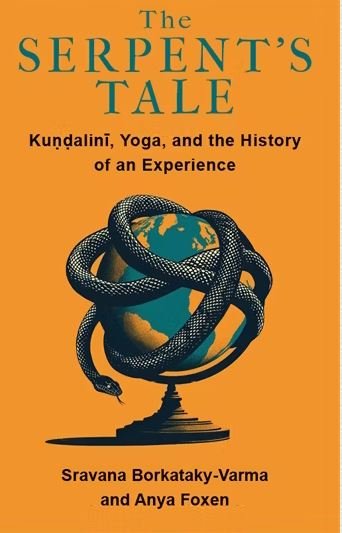
Few concepts in contemporary spirituality have been as mystified, commodified, and reinterpreted as Kuṇḍalinī. In “The Serpent’s Tale: Kuṇḍalinī, Yoga, and the History of an Experience” (New York: Columbia University Press, 2025), authors Sravana Borkataky-Varma and Anya Foxen do not so much tame the serpent as let it slither—uncoiled, unstandardized, and unapologetically plural.
This is not a book for those seeking a how-to manual on awakening the sacred feminine energy coiled at the base of the spine, perhaps to improve their sexual performances. Nor is it a polemic against Western misappropriations of Eastern traditions. Rather, it is a dazzling, erudite, and refreshingly unpatronizing exploration of how Kuṇḍalinī has meant many things to many people—sometimes divine, sometimes dangerous, always elusive.
Borkataky-Varma and Foxen bring both theoretical gravitas and practical familiarity to their subject. Their central thesis is as bold as it is liberating: there is no standard definition of Kuṇḍalinī. The term has come to signify a kaleidoscope of meanings as East met West—through colonial encounters, Theosophical conversations, and psychedelic retreats. And yet, unlike some Indologists who wield Sanskrit like a sword to dismiss Western yogis as deluded dabblers, the authors refuse to call Western practices “false.” They may be different, yes, but they may “work” for their practitioners. And in a delicious twist of historical irony, what is practiced in India today may be shaped by Western theories.
Kuṇḍalinī, the authors remind us, is not an “it” but a “she”—a goddess, a divine energy, often (not always) represented as a coiled serpent who slumbers in the subtle body. Her prehistory is a tapestry of fire, vision, and serpentine ascent. The earliest textual appearance of the word Kuṇḍalinī is in 8th-century tantric texts, with Abhinavagupta in the 10th century describing not one but three Kuṇḍalinīs. The familiar theory of Kuṇḍalinī as an energy to be raised from the lower body is authoritatively formulated only in the 13th century with the “Jñānēśvarī”—a text that, while not “standard” (because no such standard exists), has profoundly influenced both Indian and Western interpretations since the 19th century.
The authors devote a fascinating excursus to the Western imagination’s preoccupation with serpents—from Eden to esoterica—and how this primed the ground for Kuṇḍalinī’s reception. The Theosophical Society, that grand Victorian organization of East-meets-West mysticism, played a pivotal role. While Madame Blavatsky initially downplayed Kuṇḍalinī, subsequent Theosophists—including James Pryse, Charles Webster Leadbeater, and George Arundale—enshrined it as a central concept, blending Indian metaphysics with Christian esotericism. Their ideas still ripple through yoga studios and Jungian salons alike.
A bibliographic gem uncovered in the book is “The Dream of Ravan: A Mystery,” serialized in the Dublin University Magazine in 1853–54. The authors argue that it may be the first systematic Western text on Kuṇḍalinī. It predates Blavatsky’s interest and influenced the Theosophical approach.
Sir John Woodroffe—aka “Arthur Avalon” (although the “Avalon” texts were in part written by his Bengali friend Atalbihari Ghosh)—tried to bring Kuṇḍalinī “back” to its Indian roots in “The Serpent Power” (1919). Although both he and his view were involved in Theosophical activities, he criticized the Theosophists’ “Westernized” approach to the Kuṇḍalinī. However, the authors argue that even his approach was Western in its search for a normative model. He left unresolved the question that still haunts seekers and scientists alike: is Kuṇḍalinī’s ascent physical or metaphysical? The authors’ answer: both. But they also trace the historical divide between those seeking physiological proof (including G. Rele’s vagus nerve theory in “The Mysterious Kuṇḍalinī,” 1927) and those who insist the serpent slithers in subtler realms.
From Vivekananda’s pluralistic embrace of breathwork and devotion, to Swami Kuvalayananda’s laboratory experiments, to Sivananda’s buffet of techniques, the book maps a rich terrain of Kuṇḍalinī pedagogies. Krishnamacharya’s lineage, intriguingly, sees Kuṇḍalinī not as a goal but a blockage—something to be dissolved, not raised.
Yogananda and Aurobindo, both heirs to Vivekananda’s vision, link Kuṇḍalinī to evolution. For Aurobindo, the serpent ascends and descends—Divine Consciousness incarnating into flesh.
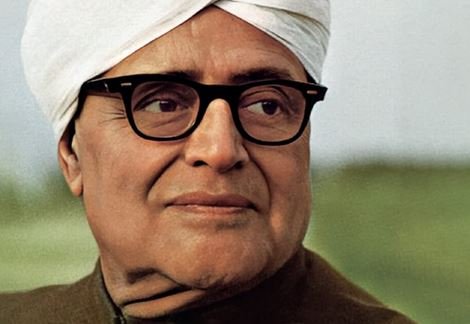
But the most compelling figure is Gopi Krishna, the civil servant turned mystic-poet who experienced a spontaneous Kuṇḍalinī awakening in 1938 so intense it nearly drove him to suicide. He emerged from the ordeal writing poetry in languages he didn’t know and authored seventeen books. Meeting James Hillman catalyzed his literary career, but the authors caution against reading him solely through Hillman’s Jungian lenses. Gopi Krishna insisted on the physicality of the process—including the transmutation of seminal fluid, a detail Hillman politely downplayed.
The book does not shy away from the messy entanglements of charisma, commerce, and Kuṇḍalinī. Yogi Bhajan, whose blend of Sikhism, Hinduism, and New Age flair defined “Kuṇḍalinī yoga” for millions, is treated with nuance. The authors are less concerned with his scandals than with the myth of authenticity: Bhajan’s system is not “traditional,” but that doesn’t mean it’s invalid. “Tradition,” they write, “is an evolving thing.”
Amrit Desai and Osho—both scandal-plagued and influential—also appear. Osho emphasized that Kuṇḍalinī awakens beyond the individual’s control, requiring a guru to interpret the chaos.
Today, the serpent slithers online. A new generation of Western-born gurus—some traditional like Swami Sivananda Radha, others iconoclastic like Adi Da—continue to offer teachings posthumously via livestream. At Esalen, the Grofs taught Kuṇḍalinī for fourteen years, blending psychology, psychedelia, and spirituality. Scientists like Itzhak Bentov and Lee Sannella tried to measure the unmeasurable. And scholars like Lilian Silburn dared to speak of Kuṇḍalinī’s sexual dimensions, even as media outlets whipped up moral panics. The authors mention as a cautionary tale that, as late as 2016, Tracy Elise, founder of the Phoenix Goddess Temple, was sentenced to “just short of five years” in jail as her organization was misunderstood as a “house of prostitution.”
The book’s final chapter is its most provocative. Fieldwork in rural India reveals tantric practitioners whose techniques—painful, intimate, and initiated in adolescence—raise uncomfortable questions. The chapter closes with the story of two women in their fifties who were initiated in a highly complex kundalini technique, which may be painful for both the male and female partner, where the vagina tries to hold the penis tightly, creating a rhythm for driving the semen upward. The problem is that they were initiated into this technique when they were slightly more than children. Child sexual abuse?, the authors ask. “Perhaps,” they answer. “However, it is equally important to point out that this is not how ‘they’ see their practice.” They “do not see themselves as victims of oppression,” and in fact are “tired of being misunderstood and misrepresented.” Their tantric practice “is a heritage in which they take pride.”
It’s a risky move, but one that underscores the book’s core message: Kuṇḍalinī is not a monolith. It resists standardization, moralization, and easy binaries. As Jeff Kripal is quoted: “There simply is no necessary relationship between many forms of mystical, ecstatic, and visionary experiences and a particular set of ethical norms and social values.” Or more bluntly: “An abusive jerk can be enlightened (and often is).”
“The Serpent’s Tale” is not a map but a mirror. It reflects the reader’s assumptions, desires, and projections onto them. It refuses to tell us what Kuṇḍalinī “really” is. And yet, by the final page, we may know more about Kuṇḍalinī than we ever dared to ask.
This book is for the intellectually curious, the spiritually ambivalent, and the editorially exacting. It is not a tale of one serpent, but of many—each coiled in the stories we tell, the bodies we inhabit, and the truths we dare to unlearn.
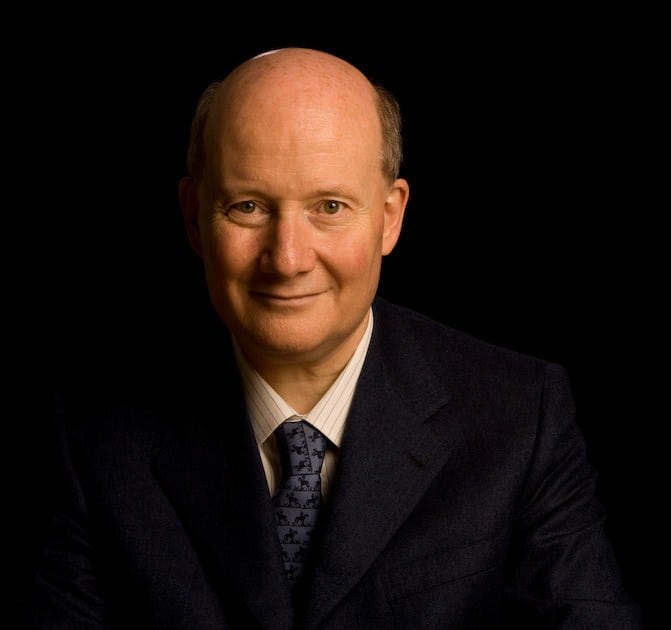
Massimo Introvigne (born June 14, 1955 in Rome) is an Italian sociologist of religions. He is the founder and managing director of the Center for Studies on New Religions (CESNUR), an international network of scholars who study new religious movements. Introvigne is the author of some 70 books and more than 100 articles in the field of sociology of religion. He was the main author of the Enciclopedia delle religioni in Italia (Encyclopedia of Religions in Italy). He is a member of the editorial board for the Interdisciplinary Journal of Research on Religion and of the executive board of University of California Press’ Nova Religio. From January 5 to December 31, 2011, he has served as the “Representative on combating racism, xenophobia and discrimination, with a special focus on discrimination against Christians and members of other religions” of the Organization for Security and Co-operation in Europe (OSCE). From 2012 to 2015 he served as chairperson of the Observatory of Religious Liberty, instituted by the Italian Ministry of Foreign Affairs in order to monitor problems of religious liberty on a worldwide scale.