In 1993, the Solar Templars had to confront both a persisting disgruntled ex-member and suspicious Canadian police officers.
by Massimo Introvigne
Article 5 of 9. Read article 1, article 2, and article 3, and article 4.

In the previous article, we discussed the foundation in 1984 of what would later be called the Order of the Solar Temple (OTS) and its relationships with Jacques Breyer, whom the OTS leaders Joseph Di Mambro and Luc Jouret recognized as the revelator of some of their neo-Templar doctrines after a mystical experience he had in 1952.
According to Swiss historian Jean-François Mayer, the OTS, between the late 1980s and the 1990s, distanced itself from Breyer by de-Christianizing its message and de-catholicizing its ritual. OTS rites included a mass, since Jouret had in 1984 been ordained as a priest by Jean Laborie (1919–1996), a bishop of a small fringe Catholic splinter group, the Latin Old Catholic Church. By comparing similar rituals of the OTS and of Breyer’s group, the Sovereign Order of the Solar Temple (OSTS), Mayer concluded that Jouret and Di Mambro had de-catholicized both the mass and other neo-Templar rites, and had included references to non-Christian occult traditions.
These references included UFO and extraterrestrial lore, a feature already present (but certainly less important) in Breyer’s OSTS. When the public discovered the OTS apocalyptic worldview behind the facade of Jouret’s motivational speeches, the group started to experience some opposition.
In the French-speaking world, the anti-cult movement is much more prominent than elsewhere. It had experienced, well before the first Solar Temple deaths in 1994, which added fuel to the fire, a degree of governmental support unknown in the English-speaking world. The OTS, however, barely caught the attention of the French anti-cult organizations in the 1980s although it was occasionally mentioned.
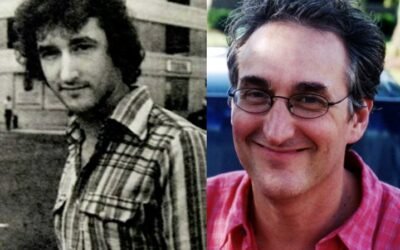
The situation changed in 1991. In that year, the Martinique branch of ADFI (Association pour la défense des familles et de l’individu, the largest French anti-cult organization), ADFI-Martinique, denounced the conversion of wealthy Martinicans to the OTS and their eventual move to Quebec. ADFI-Martinique was able to join forces with the Swiss Rose-Marie Klaus, a disgruntled OTS ex-member. Her husband Bruno (1948–1997) had left her within the frame of “cosmic” marriage rearrangements allegedly dictated by the secret Templar Masters.
Rose-Marie Klaus contacted the Canadian cult-watching association Info-Secte, and was eventually invited to speak in Martinique at the end of 1992. Gradually, Klaus’s determined opposition made inroads, and Jouret found it increasingly difficult to be invited as a motivational speaker by respectable companies.
In November 1992, members of the Canadian Parliament received death threats from a mysterious terrorist group, Q-37 (allegedly including 37 members from Quebec). Q-37 announced the intended murder of Quebec’s Minister of Public Safety, Claude Ryan (1925–2004), accused of adopting a political line too favorable to the claims of Native Americans. Although it was later admitted that Q-37 most probably never existed, the Quebec police suspected a possible involvement of the OTS. While Jouret occasionally expressed views hostile to the claims of Native Americans in Quebec, this was by no means an important concern for the OTS. There were many right-wing organizations more likely to be associated with Q-37.
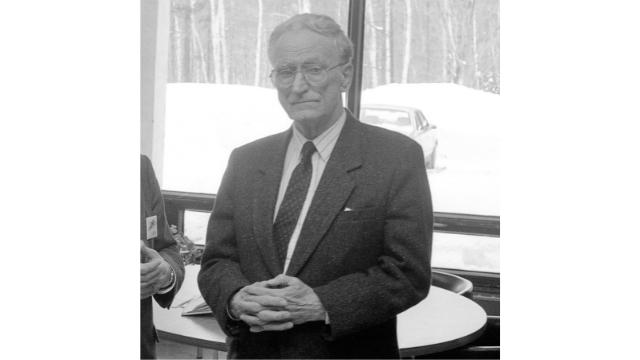
It was, as a consequence, probable that the information leading to the opening of an investigation of the OTS on February 2, 1993, came from cult-watching organizations. Within the frame of this investigation, two OTS members, Jean-Pierre Vinet (1939–1994) and Hermann Delorme, were arrested on March 8, 1993, as they attempted to buy three semiautomatic guns with silencers, illegal weapons in Quebec. An arrest warrant was also issued against Luc Jouret, who was at that time in Europe. In fact, the arms deal had been arranged by a police informant engaged in a sting operation. The prosecution ended with a “suspended acquittal” and a minor fine for Jouret, Vinet, and Delorme. The latter left the OTS following the incident.
Jumping on the news about OTS, Rose-Marie Klaus managed to have lurid accounts of the “cult of the end of the world” published in some daily newspapers and tabloid magazines. Vinet was fired from his position at Hydro-Québec, and police investigations were launched in France and Australia, where Di Mambro had some financial interests, later grossly exaggerated by sensationalist accounts in the press.
It is not easy to determine whether the preparation for a “transit” of the core members of the OTS to another planet (which Di Mambro, but perhaps not many other members, knew would be a mass suicide) was started before or after the first Canadian police actions in 1993. According to Mayer, who has participated in the Swiss official police investigation and has studied the files left on OTS computers in Switzerland, dates of creation of documents show that the first versions of the texts about the “transit” were written almost at the same time when the Canadian investigation was started in February. By that time, Rose-Marie Klaus had already launched her public campaign.

In Quebec, Jouret had proved not as effective as a manager of the different Templar activities than as a public speaker. Dissension erupted, and Robert Falardeau (1947–1994), an officer with the Quebec Ministry of Finances, replaced him as Grand Master. Jouret founded a new organization called ARCHS (Academy for the Research and Knowledge of Higher Science).
Jacques Larochelle, the lawyer of the defendants in the Canadian case, first called the separation a “schism” in a 1993 press conference. While Larochelle was understandably attempting to protect his clients, things were more complicated. According to Delorme, although the new organization had a distinctive style, several persons remained members of both ARCHS and OTS. Both groups acknowledged the ultimate authority of Di Mambro.
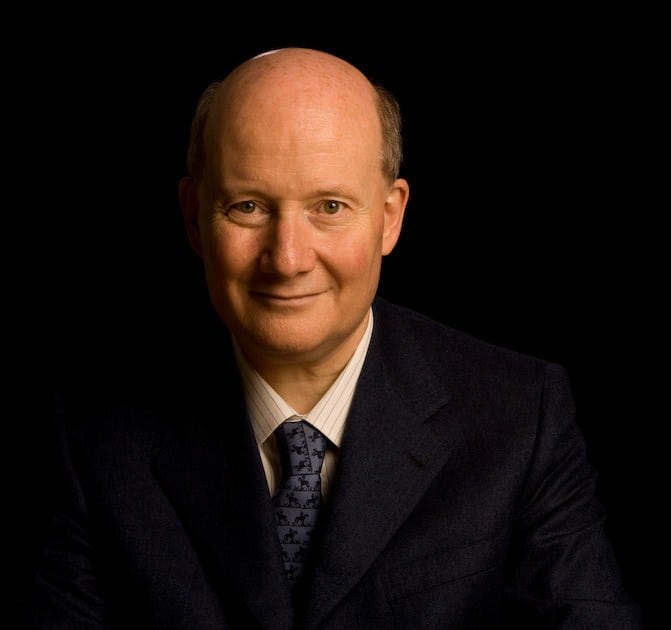
Massimo Introvigne (born June 14, 1955 in Rome) is an Italian sociologist of religions. He is the founder and managing director of the Center for Studies on New Religions (CESNUR), an international network of scholars who study new religious movements. Introvigne is the author of some 70 books and more than 100 articles in the field of sociology of religion. He was the main author of the Enciclopedia delle religioni in Italia (Encyclopedia of Religions in Italy). He is a member of the editorial board for the Interdisciplinary Journal of Research on Religion and of the executive board of University of California Press’ Nova Religio. From January 5 to December 31, 2011, he has served as the “Representative on combating racism, xenophobia and discrimination, with a special focus on discrimination against Christians and members of other religions” of the Organization for Security and Co-operation in Europe (OSCE). From 2012 to 2015 he served as chairperson of the Observatory of Religious Liberty, instituted by the Italian Ministry of Foreign Affairs in order to monitor problems of religious liberty on a worldwide scale.