The rule that two witnesses are needed refers to ecclesiastical governance only, and has nothing to do with the organization’s interaction with secular authorities.
by Massimo Introvigne
Part 2 of 2. Read Part 1.

As discussed in the first article of this series, the Independent Inquiry into Child Sexual Abuse for England and Wales in its September 2021 report about child protection from abuse in religious organizations and settings concluded that, while problematic in the past as it happened for most other religions, the policies adopted by the Jehovah’s Witnesses for handling cases of child abuse have now been improved. Rather than focus on the present, some media preferred to use the opportunity of the report to focus on cases of the past, repeating old slander against the Jehovah’s Witnesses.
On the other hand, there is an aspect where the Inquiry seriously, but in my opinion unfairly, criticizes the Jehovah’s Witnesses. It refers to the so-called “two witness rule.” The Inquiry first observes that many religious organizations do not take internal disciplinary action against their members who are accused of sexual abuse unless they are clergy or employees. Most do not act against ordinary parishioners. The Jehovah’s Witnesses, the Inquiry notes, are a rare “example of a religious organisation with such an internal process in place. Having determined whether to make a referral to the statutory agencies, two elders will consider whether there is sufficient evidence to establish an allegation from a scriptural perspective” (p. 71, par. 30.1).
As Jehovah’s Witnesses’ religious manuals explain, in the absence of a confession, to convene an ecclesiastical judicial committee to discipline the alleged abuser, “There must be two or three eyewitnesses, not just people repeating hearsay; no action can be taken if there is only one witness” (p. 71, par. 30.1).
The Inquiry criticizes this ecclesiastical two-witness model, observing that “the application of the rule in the context of child sexual abuse is likely to increase the suffering of victims and fails to reflect the reality that by its very nature child sexual abuse is most often perpetrated in the absence of witnesses” (p. 72, par. 30.1). According to the Inquiry, “The rule’s capacity to cause harm to victims and survivors of child sexual abuse is clear… The continuing use of this rule shows a disregard of the seriousness of the crimes involved and their impact on individuals. It also lacks compassion for the victim, and serves to protect the perpetrator” (p. 115, par. 25).
I respectfully disagree. Here, the Inquiry seems to fall into the very confusion it laudably tried to avoid on other issues. It admits that the so-called two-witness rule “is not intended to be a safeguarding measure” (p. 115, par. 25). In other words, it has nothing to do with the only matter the Inquiry was supposed to investigate.
How the Jehovah’s Witnesses, or any other religion, handle their ecclesiastical matters within the congregation should not be of any concern to a secular investigation. Freedom of religion and freedom of association allow them to discipline, or not discipline, their members in the way they deem fit. Once they have complied with laws or regulations about reporting members suspected of being guilty of sexual abuse to the police, whether they keep them in the fold, expel them, or otherwise discipline them is an ecclesiastical matter that secular institutions have no business in regulating.
This also happens in other religious organizations. They may expel members for matters such as heresy, which no secular court would consider a crime. Conversely, they may decide not to expel members guilty of crimes acknowledged as such by secular laws, perhaps because they hope they would repent and return to God, something that may be irrelevant in a secular court but is very much relevant in a religious context.
Jehovah’s Witnesses find a detailed and unequivocal explanation of this difference in a 2019 article of their official publication The Watchtower dealing with child sexual abuse, part of a series of articles that are regarded as a core document explaining the protection policy, and were studied by all congregations of Jehovah’s Witnesses throughout the world. The article called sexual abuse of children an “especially repugnant wicked deed.” If a Jehovah’s Witness becomes guilty of sexual abuse he or she is violating both the law of the land and the law of God.
As for the law of the land, The Watchtower explains, “Christians are to ‘be in subjection to the superior authorities.’ (Rom. 13:1) We prove our subjection by showing due respect for the laws of the land. If someone in the congregation becomes guilty of violating a criminal law, such as by committing child abuse, he is sinning against the secular authorities. (Compare Acts 25:8.) While the elders are not authorized to enforce the law of the land, they do not shield any perpetrator of child abuse from the legal consequences of his sin. (Rom. 13:4).” The article reiterates that reporting an abuse to secular authorities is not against any religious principle: “what if the report is about someone who is a part of the congregation and the matter then becomes known in the community? Should the Christian who reported it feel that he has brought reproach on God’s name? No. The abuser is the one who brings reproach on God’s name.”
An entirely different matter is whether the accused member should be expelled from the congregation. Here, elders may apply different criteria from secular courts. “A Christian who gives in to wrong desire and commits a serious sin is spiritually sick. This means that he [sic] no longer has a healthy relationship with Jehovah. In a sense, the elders are spiritual physicians. They endeavor to make ‘the sick one [in this instance, the wrongdoer] well.’ Their Scriptural counsel can help him to restore his relationship with God, but this is only possible if he is genuinely repentant.”
For this reason, before bringing proceedings before a judicial committee that may lead to disfellowshipping the accused, the elders proceed with caution and apply the rule they find in the Bible, in 1 Timothy 5:19, amongst other citations, that at least two witnesses are required. Once again, this rule applies to the congregation’s ecclesiastical disciplinary process, not to the decision to report the suspect to secular authorities. “Does this mean, asks The Watchtower, that before an allegation of abuse can be reported to the authorities, two witnesses are required? No. This requirement does not apply to whether elders or others report allegations of a crime.”
As far as the congregation’s ecclesiastical investigation is concerned, “If at least two people—the one making the accusation and someone else who can verify this act or other acts of child abuse by the accused—establish the charge, a judicial committee is formed.”
The so-called two-witness rule does not mean that, in absence of a second witness, the victim who reported the abuse is accused of lying, nor that the accused is protected. As we have seen, the accused is reported to the secular authorities according to the laws of the land. In addition, “the absence of a second witness does not mean that the one making the accusation is untruthful. Even if a charge of wrongdoing cannot be established by two witnesses, the elders recognize that a serious sin may have been committed, one that deeply hurt others. The elders provide ongoing support to any individuals who may have been hurt. In addition, the elders remain alert regarding the alleged abuser to protect the congregation from potential danger.” In fact, as child protection measures, restrictions are normally imposed on those who are found guilty of child abuse but are not expelled.
This detailed explanation illustrates what the so-called two-witness rule is, and what it is not. But a secular Inquiry should have been satisfied simply by the fact that the rule plays no role in determining how the Jehovah’s Witnesses interact with secular authorities in cases of child sexual abuse. The two-witness rule belongs to the realm of ecclesiastical governance of a religion, a realm secular governments cannot interfere with without violating the corporate religious freedom of the religious organizations.
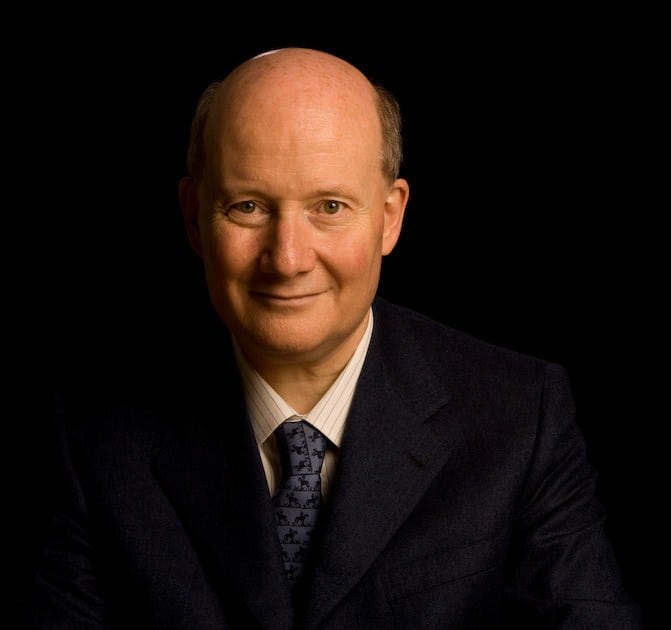
Massimo Introvigne (born June 14, 1955 in Rome) is an Italian sociologist of religions. He is the founder and managing director of the Center for Studies on New Religions (CESNUR), an international network of scholars who study new religious movements. Introvigne is the author of some 70 books and more than 100 articles in the field of sociology of religion. He was the main author of the Enciclopedia delle religioni in Italia (Encyclopedia of Religions in Italy). He is a member of the editorial board for the Interdisciplinary Journal of Research on Religion and of the executive board of University of California Press’ Nova Religio. From January 5 to December 31, 2011, he has served as the “Representative on combating racism, xenophobia and discrimination, with a special focus on discrimination against Christians and members of other religions” of the Organization for Security and Co-operation in Europe (OSCE). From 2012 to 2015 he served as chairperson of the Observatory of Religious Liberty, instituted by the Italian Ministry of Foreign Affairs in order to monitor problems of religious liberty on a worldwide scale.