In chaotic post-Saddam Iraq, a cluster of new religious movements proceeding from a man called Ahmed al-Hassan emerged. The AROPL is the largest one.
by Massimo Introvigne and Karolina Maria Kotkowska.
Article 2 of 5. Read article 1.
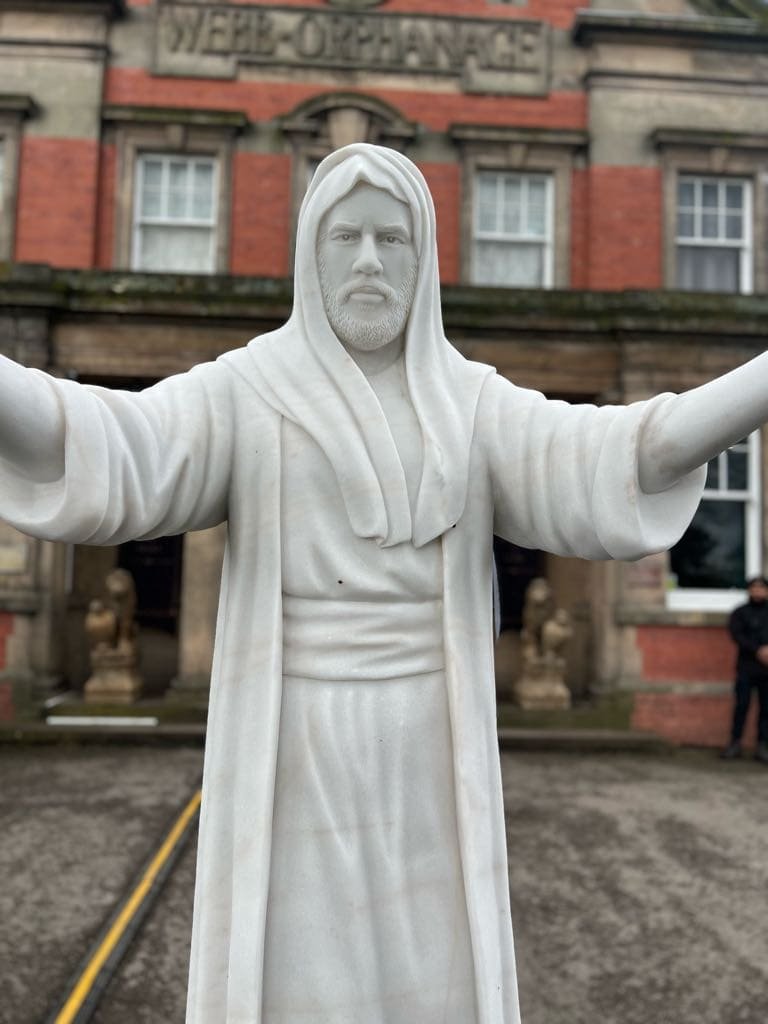
The beautiful Victorian building in an English city near Manchester, was once an orphanage. It maintains its distinctive architecture but today near the entrance stands the statue of an Iraqi man called Ahmed al-Hassan. While we, and other scholars who came for a conference and for visiting the religious movement that had converted a former orphanage into its world headquarters, gather around the statue, a group of followers of al-Hassan tell us their stories of faith and persecution.
In the first article of this series, we presented al-Hassan as the man who is at the origins of a group of different Shia-derivative new religious movements born in post-Saddam-Hussein Iraq, of which the largest is the Ahmadi Religion of Peace and Light (AROPL). This is the group headquartered in the UK, which is not to be confused with the Sunni-derivative Ahmadiyya community, a different religion.
The AROPL’s raison-d’être is to proclaim to the world the teaching and mission of one of al-Hassan’s followers, Abdullah Hashem, “Aba al-Sadiq,” a U.S. citizen with an Egyptian father and an American mother. In 2015, at age 32, Abdullah Hashem revealed that Ahmed al-Hassan (who, as mentioned in the previous article, had not been seen in public since 2007) had instructed him to “raise the Black Banners of the East” and inform the world about the appearance of Imam al-Mahdi, the eschatological figure announced in Islamic prophecies who will rule the world in the end times. He claimed that he, Hashem, was the promised Qaim or Riser of the Family of Muhammad.

The date, 2015, was important. Hashem and his followers referred to an old prophecy that they applied to the death of King Abdullah of Saudi Arabia. This prophecy, which circulated widely amongst the Shiites, indicated that the Imam al-Mahdi should appear after the death of a King of Hejaz (i.e., Saudi Arabia) called Abdullah, identified by certain signs. According to Shia sources, Prophet Muhammad prophesied that “Hejaz will be ruled by a man whose name is the name of an animal, if you see him from far, you will think he is cross-eyed, and if you come close to him, you do not see anything (wrong) in his eyes. He will be succeeded by a brother of his, named Abdullah… Whoever guarantees for me the death of Abdullah, I guarantee for him the Riser/Qaim.” The AROPL notes that King Fahd of Saudi Arabia had the name of an animal (Fahd meaning “leopard”) and had the eye problem described in the prophecy. He died in 2005 and was succeeded by his brother Abdullah, who died in turn on January 23, 2015. Abdullah Hashem advanced his claims immediately after this event.
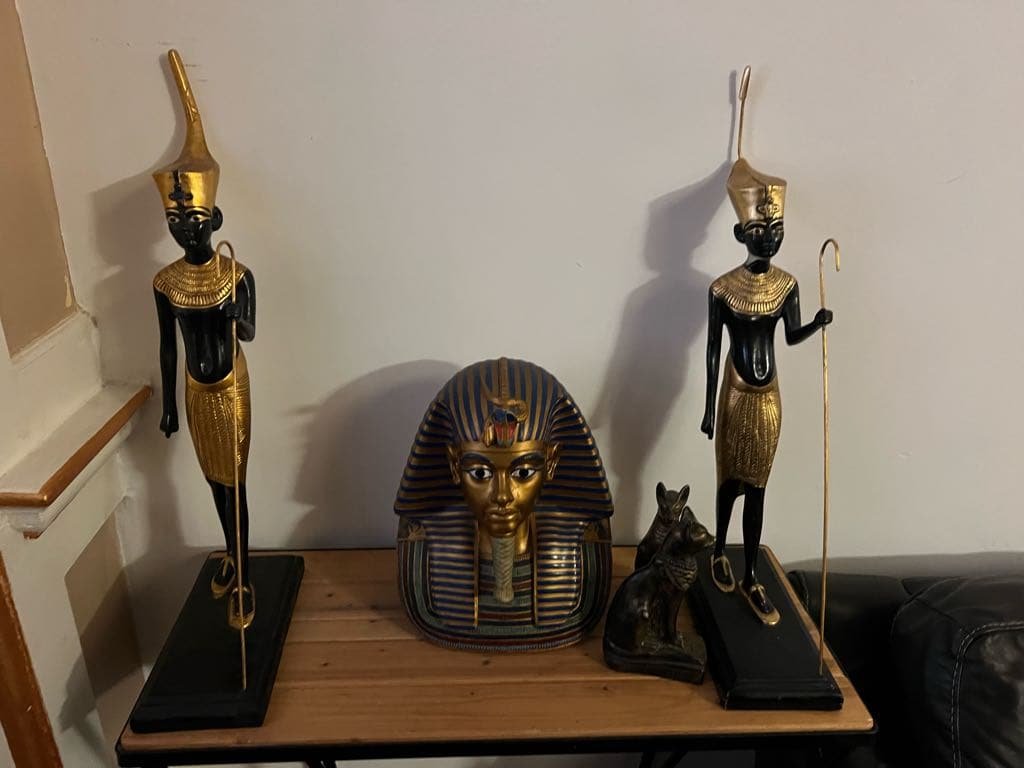
Other prophecies indicated that the Mahdi will be from Egypt and will reveal himself at age 32. Abdullah Hashem was 32 in 2015 and his father is Egyptian. This is connected with early Muslim texts about a “Companion of Egypt,” similarities between the early Egyptian religion (which later became corrupted) and Islamic monotheism, and references to Egypt in different prophecies. When we visited the headquarters of AROPL, we noted the presence of symbols of the ancient Egyptian religion.
In the previous article, we emphasized the importance for the AROPL of the Will of Prophet Muhammad, a document transmitted in Shia sources although not accepted as genuine by most Sunnis. This text names both “Ahmed” and “Abdullah” as rulers in the end times, which the AROPL believe are references to Ahmed al-Hassan and Abdullah Hashem.
The AROPL claims that al-Hassan himself told Hashem that the latter was the Riser, the Qaim of the Family of Muhammad. He fulfilled the three criteria to be recognized as a divinely appointed messenger. The first is being mentioned in the previous messenger’s will, in this case Muhammad’s last will. The second is demonstrating God-given knowledge in all the great matters pertaining to salvation. The third is calling for a return to the original order based on the supremacy of God rather than the supremacy of people. These criteria, it is claimed, also authenticated al-Hassan’s role as the Yamani.
Hashem reports he has met and has been taught by al-Hassan for years through personal, physical encounters, although they also occasionally came together in dreams and visions. Dreams are important in Hashem’s worldview, although they require discernment as they are of diverse types and not all of them come from good spirits. Hashem states that he originally believed that the Riser/Qaim was al-Hassan. When we met him in the UK, he told us how he was surprised when al-Hassan told and demonstrated to him that he, Hashem, was the Riser/Qaim and al-Hassan was the Yamani. At this stage, Hashem said, he could no longer deny his own call without denying al-Hassan at the same time, which would of course have been unconceivable.
Hashem’s claims and revelations are collected in the book “The Goal of the Wise,” translated into English in 2022. An outside observer would discern here diverse sources: Twelver Shiism, various esoteric “hyper-Shiite” traditions of Islam including Alawism, Christian Gnosticism, Western esotericism, and what scholars of the latter refer to as “conspirituality,” the meeting of esoteric ideas and what are commonly called conspiracy theories.
Hashem’s theology follows a scheme that some scholars would call “dispensationalist.” God entered into six covenants with humanity, centered respectively on Adam, Noah, Abraham, Moses, Jesus, and Mohammed. Al-Hassan as the Yamani inaugurated the seventh covenant leading to the rise of the Riser/Qaim. With a typical dispensationalist twist, the book explains that the rules of each covenant were God-given and valid at that time but were superseded by the following covenant and not all of them remained in force. Each covenant was breached by humans, thus causing a punishment by God, and ultimately requiring a new covenant.

Hashem also reveals esoteric interpretations of the previous covenants, with precedents both in Islamic and Western esotericism. We learn for example that the tree in the Garden of Eden whose forbidden fruit Adam (not Eve) tried to eat was not a physical tree but Fatimah, the daughter of Muhammad and wife of Ali, in a precedent incarnation. Her beauty attracted Adam who tried, unsuccessfully, to have a sexual relation with her: this was the “original sin.”
We also learn that Christians, who insist Jesus was crucified, and Muslims, who believe he was not, are both right. The crucified body was Jesus’, but the soul was of Simon of Cyrene, with whom Jesus had exchanged souls, “jumping” to other bodies in which the disciples met him and marrying Mary Magdalene before the attempted crucifixion. Prophet Mani, the founder of Manichaeism, was their son (implying that the date of his birth was much earlier than historians believe).
From this, we can understand that Hashem—who, we should remember, always presents his teachings as coming from lengthy dialogues with al-Hassan—is part of the esoteric tradition of Islam believing in reincarnation (including of humans into animals and even rocks and stones) and karma, and also in the possible transmigration of souls either before or after death from one body to another. This means that a soul can enter the body of an adult who is alive, not only of an infant at birth. Some souls can also be present in two bodies at the same time.
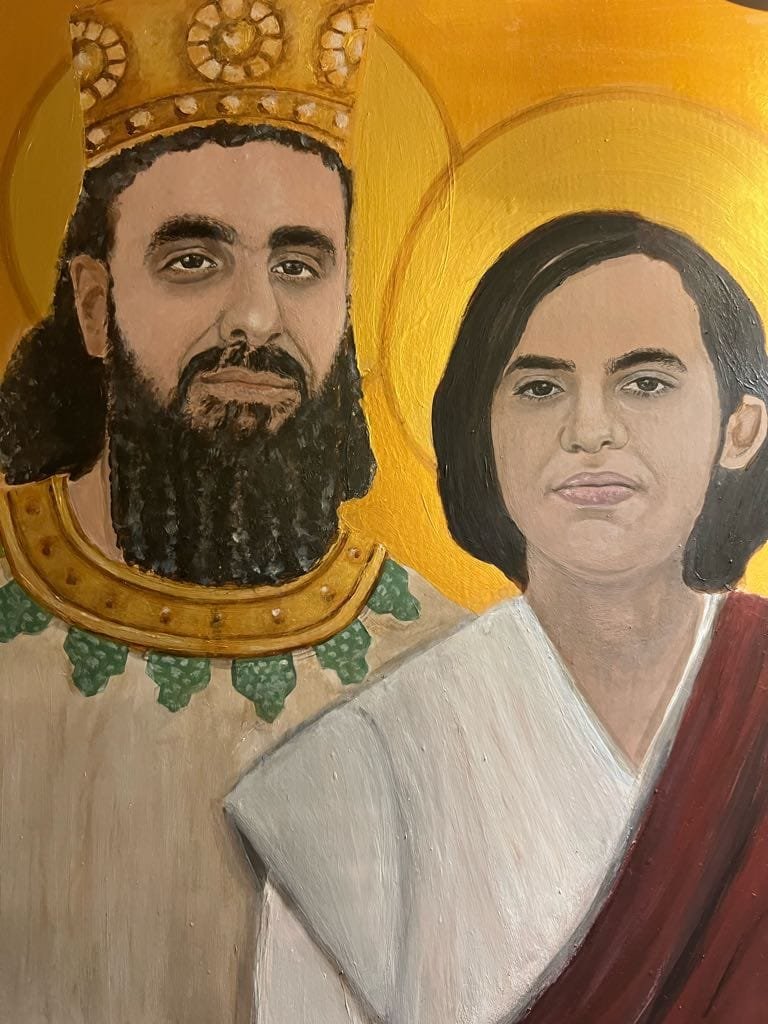
Islamic traditions indicate that in human history the number of prophets is 124,000 and the number of “messengers” (a higher function) is 313. Ahmed al-Hassan revealed that many of the 124,000 are unknown prophets who carried divine messages to their nations and others are well-known names such as Zeus, Socrates, Aristotle, King Cyrus of Persia, Krishna, Buddha, Confucius, Lao-Tze, and Alexander the Great. In the present new dispensation, many believers are the reincarnations of prophets, messengers, and even angels, whose souls entered them after their conversion, which means that some of the 313 are now with the Riser/Qaim and others will come. This is the phenomenon of the Raj’a, the Great Return, and the headquarters in the UK display the portraits of many current believers represented as the reincarnations of previous prophets and messengers. It is also true, however, that “good souls” can leave a person in case of unruly behavior or apostasy. We normally do not remember our previous incarnations, although these memories are stored in the soul and there are ways of retrieving them.
Between one incarnation and the next, the souls dwell in a Purgatory-like space called Samarat. When the number of their incarnations is completed, they are judged and go to Heaven, which is in an inaccessible location on Earth, or Hell, which is in the Sun, although there is also a worse possible destination for the evilest souls. It is known as the Great Terror.

Massimo Introvigne (born June 14, 1955 in Rome) is an Italian sociologist of religions. He is the founder and managing director of the Center for Studies on New Religions (CESNUR), an international network of scholars who study new religious movements. Introvigne is the author of some 70 books and more than 100 articles in the field of sociology of religion. He was the main author of the Enciclopedia delle religioni in Italia (Encyclopedia of Religions in Italy). He is a member of the editorial board for the Interdisciplinary Journal of Research on Religion and of the executive board of University of California Press’ Nova Religio. From January 5 to December 31, 2011, he has served as the “Representative on combating racism, xenophobia and discrimination, with a special focus on discrimination against Christians and members of other religions” of the Organization for Security and Co-operation in Europe (OSCE). From 2012 to 2015 he served as chairperson of the Observatory of Religious Liberty, instituted by the Italian Ministry of Foreign Affairs in order to monitor problems of religious liberty on a worldwide scale.