Thousands of dizi (disciples) have visited more than one hundred countries in self-funded travels to promote peace, love, and conscience.
by Willy Fautré*
*A paper presented via video at the International Forum on World Citizenship Day 2025 “Transitional Justice Through Effective Relief: The Tai Ji Men Case as an Example,” Taipei, April 1, 2025.

One of the best ways to build up a global citizenship identity is through travel. Throughout the years Tai Ji Men has offered such an opportunity to thousands of dizi (disciples) through self-funded trips to more than one hundred countries. The more you can travel, the more global you are becoming as a human being.
Traveling has long been a catalyst for the expansion of perspectives, the breaking down of barriers separating human beings and peoples, and the fostering of mutual understanding. In the context of the modern global world, it is an integral element of what has become known as “world citizenship.” This concept refers to an individual’s sense of belonging to the global community rather than to a single nation, and it suggests a responsibility toward people and cultures beyond one’s own borders. The impact of travel in contributing to world citizenship allows individuals to engage with diverse cultures, challenge preconceived notions, and develop a more empathetic and interconnected worldview.
One of the most profound ways travel contributes to world citizenship is by encouraging cultural exchanges. When individuals travel to foreign lands, they have the opportunity to experience new customs, languages, traditions, and ways of life. This firsthand exposure to different cultures often challenges stereotypes and promotes greater tolerance. Rather than relying on second-hand accounts or media representations, travellers can engage directly with people from different backgrounds, fostering mutual respect. Over time, as more individuals travel and share their experiences, the collective understanding of cultures broadens.
Travel provides individuals with opportunities to develop and strengthen global networks. International travel often results in lasting friendships and connections that span continents. These relationships contribute to a sense of global community. The ability to collaborate across borders on various issues becomes a natural extension of the travel experience. Through these connections, individuals can exchange knowledge, ideas, and resources, further enriching the global dialogue and contributing to collective progress.
By travelling, you, the dizi, discover the magic of communicating with other people in languages you have learned at school, sometimes with limited motivation. This will boost your thirst for learning.
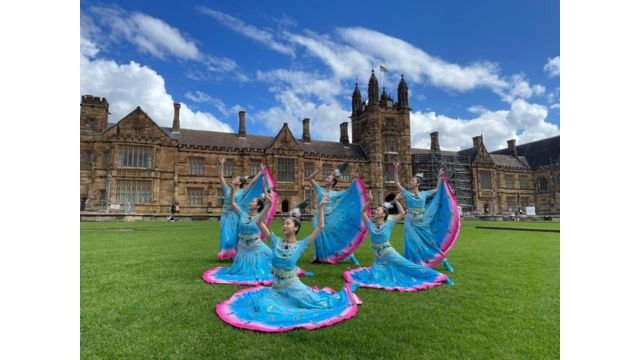
By travelling, you, the dizi, get more knowledgeable about various cultures and traditions, about history and hardships of other peoples. This can awaken empathy in your heart and a will to help.
By travelling and personal contacts, you will be in a position to challenge the pre-conceived ideas you may have about other human groups and other parts of the world.
By travelling, you get an understanding of the way past and present tragedies have shaped the minds of whole nations for several generations. This knowledge can nurture a deep sense of compassion in your heart and active solidarity.
By travelling, you can share your experience with other people when you are back home, mobilize them for noble causes and make the world more human.
Last but not least, by travelling, you get spiritually richer.
All the dizi who have travelled with Dr Hong have come back with a heart full of love and humanity, with the strong desire to spread tolerance, love, and peace.
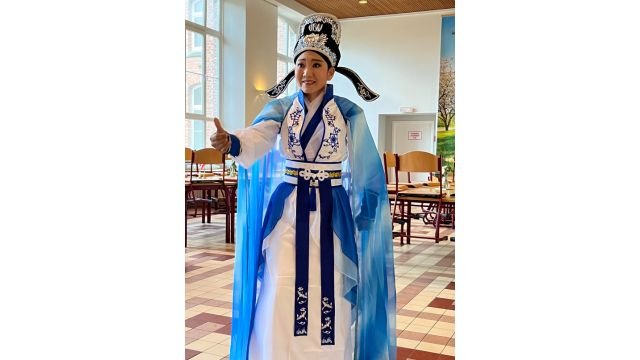
The first of April in our European countries is known as April Fools’ Day, an annual custom consisting of practical jokes and hoaxes. The first of April 2001 was also a sort of April Fools’ Day, in the best sense of the expression. Indeed, who would have believed that it would have been possible to then gather 20,000 delegates from around the world at Taipei Municipal Stadium. The brave challenge of Dr. Hong, Tao-Tze as Vice President of the Association of World Citizens has now become an annual reality. Let us be happy about it!
Long live Tai Ji Men and Dr Hong!

Willy Fautré, former chargé de mission at the Cabinet of the Belgian Ministry of Education and at the Belgian Parliament. He is the director of Human Rights Without Frontiers, an NGO based in Brussels that he founded in 1988. His organization defends human rights in general but also the rights of persons belonging to historical religions, non-traditional and new religious movements. It is apolitical and independent from any religion.
He has carried out fact-finding missions on human rights and religious freedom in more than 25 countries He is a lecturer in universities in the field of religious freedom and human rights. He has published many articles in university journals about relations between state and religions. He organizes conferences at the European Parliament, including on freedom of religion or belief in China. For years, he has developed religious freedom advocacy in European institutions, at the OSCE and at the UN.