The source that published it makes Soyonbo Borjgin’s story even more dramatic and believable.
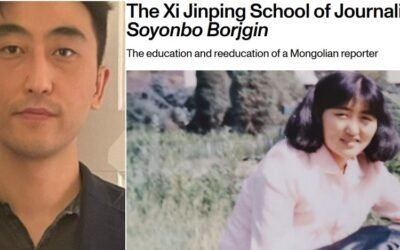

The source that published it makes Soyonbo Borjgin’s story even more dramatic and believable.
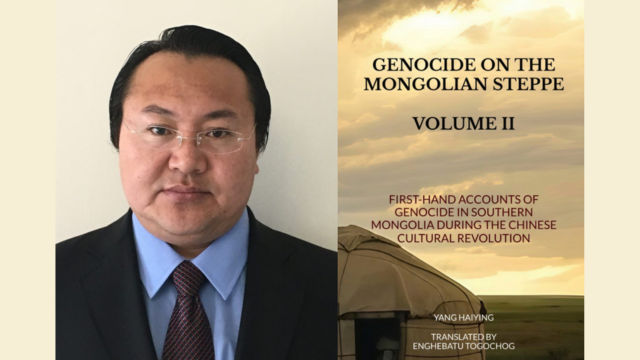
The Cultural Revolution was a genocidal time in what China calls Inner Mongolia. Today, it’s a cultural genocide.

Blaming Mongolian herders for grassland degradation (in fact caused by China’s large-scale agriculture and mining) is a pretext to destroy their culture.

Amid claims of legal irregularities, two men got respectively seven and seven and a half years for keeping books of the banned movement in their homes.
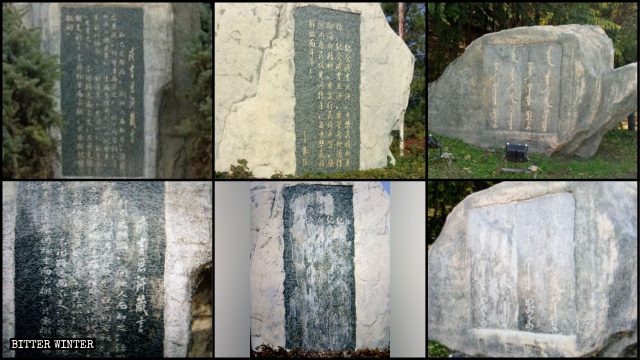
In Inner Mongolia, stone tablets on the great emperor have been painted over or destroyed in Hulun Buir, and his portraits removed from schools, while the CCP tries to rewrite history.

Amid the CCP’s campaign to eradicate Mongolian cultural and linguistic identity, schoolteachers and parents are threatened to accept CCP’s cultural genocide policies.

The CCP’s policy of eradicating cultural, religious, and linguistic identities is systematic, and derives from Xi Jinping’s reflections on the fall of the Soviet Union.

Buildings with Islamic architecture elements, like domes, are rectified as part of the CCP’s Islam “sinicization” campaign in areas populated by Muslim Huis.

As the CCP’s drive to wipe out Mongolian culture intensifies, new measures are planned to ban livestock grazing—an integral part of the traditional nomadic lifestyle.

While the protest against the substitution of Mongolian with Chinese as the primary education language continues, authorities propose the same “Five No Changes” that were part of the reform since it was launched in August.