Abdus Salam was killed in the village called L Plot, in Punjab, on May 17.


Abdus Salam was killed in the village called L Plot, in Punjab, on May 17.

Haqqani militias, the most violent wing of the Taliban, receive training from China at Bagram Air Base, some reports claim.

On May 15, unidentified assailants came on a motorbike and killed two peaceful merchants. It is not the first time Sikhs are targeted.

A refugee who converted from Islam to the Salvation Army cannot be sent back from Switzerland to Pakistan, the Court said.
By Massimo Introvigne
Image 1: A protest against blasphemy laws and the persecution of Christians in Pakistan. Credits.
On April 26, 2022, in the case “M.A.M. v. Switzerland,” the European Court of Human Rights has established the principle that those who convert from Islam to Christianity are at serious risk of persecution in Pakistan and are in principle entitled to asylum.
The decision is significant because it concerns a case of so-called conversion “sur place,” i.e., that occurred after asylum seekers left their country of origin. M.A.M. left Pakistan because he felt at risk due to a vendetta involving his family and a family of neighbors, which the Swiss authorities and the European Court agree would not justify asylum.
However, after he arrived in Switzerland, M.A.M., a Muslim, converted to Christianity and joined the Salvation Army. The Swiss authorities and courts agreed that his conversion was sincere and that he is an active member of the Salvation Army in Switzerland.
M.A.M. then based his asylum request on the fact that converts from Islam to Christianity may be easily accused of blasphemy and arrested for a crime that is punished by the death penalty under Pakistani law. Even when they are not arrested and sentenced, converts may be killed by their relatives, who then are declared not guilty by courts or receive very mild sentences. In the case of M.A.M., the fact that his brother was an imam made the risk even higher.
The Swiss authorities and judges, up to a decision of the Federal Administrative Court of June 2, 2020, rejected the asylum request. They examined several COI (Country of Origin Information) documents about Pakistan, and concluded that Christianity is not banned in the country and there is no general persecution of Christians there. As for blasphemy, they interpreted Pakistani law in the sense that the crime is committed only by those who publicly insult or disparage Islam, which was not the case of M.A.M.
M.A.M. was supported by ADF (Alliance Defending Freedom), the European Centre for Law and Justice (ECLJ), and Ordo Iuris – Institute for Legal Culture in his recourse to the European Court of Human Rights. The latter examined COI and documents dealing with blasphemy laws and the situation of converts from Islam to Christianity in Pakistan, including the European Parliament resolution of 29 April 2021 on blasphemy laws in Pakistan and the U.K. “Country Policy and Information Note—Pakistan: Christians and Christian Converts” of February 2021. These documents were published after the Swiss Federal Administrative Court 2020 decision, but describe a situation that existed well before.
The European Court concluded that the Swiss authorities and courts had focused their attention on the situation of Christians in Pakistan in general, but failed to examine the specific situation of Christian converts from Islam. They are indeed at risk of being either executed on the basis of the blasphemy laws, as charges of offending Islam are often trumped-up, or killed by their relatives.
For these reasons the European Court, which has not the power to grant asylum, blocked the deportation of M.A.M. back to Pakistan and asked Switzerland to reconsider his asylum request taking into accounts the principles established in the European decision.
The decision hits both Pakistan and the restrictive asylum policies prevailing in Switzerland. Already on July 27, 2021, the United Nations Committee Against Torture had ruled against Switzerland after it had denied asylum to a member of The Church of Almighty God who had escaped from China, stating that Christians in general are at risk of persecution and torture in China unless they belong to the government-controlled Three Self Church and Patriotic Catholic Church.

The ousted Prime Minister had become famous for his extravagant praise of China and Xi Jinping, and refusal to acknowledge the Uyghur genocide.

Graves have been desecrated in the village of Perochak, in the Sialkot District of Punjab. It is not the first time.

The Jama’at-ud-Da’wah leader has been convicted of financing terrorism. But who finances Hafiz Saeed?

Christian Pakistani women are “sold” as brides to Chinese men, and end up as victims of abuse, are forced to prostitution, and even (some claim) killed for organ harvesting.

Less than ten days after the deadly anti-Shiite terrorist attack in Peshawar, Syed Salman Haider Rizvi was killed in Karachi.
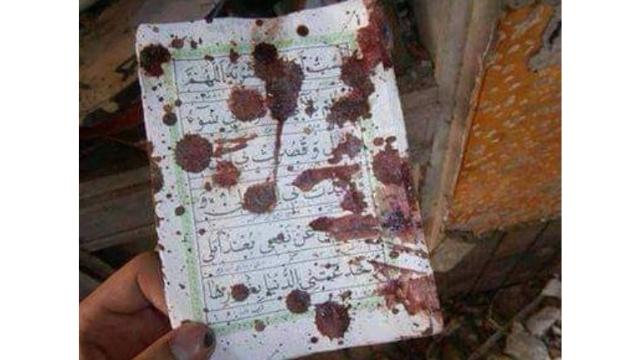
63 killed, 200 wounded in an attack against a Shiite mosque in Peshawar, Pakistan.