More than two thousand years ago, legal scholars already understood that sometimes the literal application of a law creates the worst injustice.
by Massimo Introvigne*
*A paper prepared for the International Forum on World Citizenship Day, April 1, 2024, “Practicing Freedom of Religion and Human Dignity: The Human Rights Case of Tai Ji Men,” Taipei, Taiwan.

What happened to Tai Ji Men is an almost perfect case of a phenomenon captured by the greatest legal scholar of all time, Cicero, who called it “summum ius, summa iniuria.” There are different translations of this very famous Latin expression. In short, it means “The highest justice is the highest injustice.” But to understand it, we should translate “The strictest application of the law is the highest injustice.”
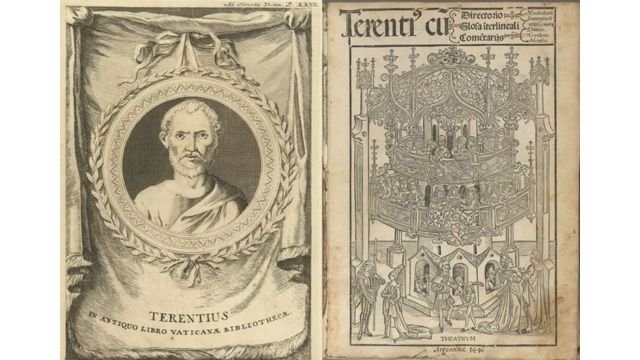
Most Western legal scholars know the quote as coming from Cicero, who was the first to use this exact sentence, in his masterpiece “De Officiis” (On Obligations), dating back to the year 44 BCE. Yet, in this text Cicero calls it a “tritum sermone proverbium,” a “well-worn old proverb,” meaning it was a much older expression. In fact, in a slightly different form it is found in a comedy, “The Self-Tormentor,” written by the acclaimed Roman playwright Terentius in 163 BCE, more than one hundred years before Cicero’s famous quote. Terentius wrote “ius summum saepe summa malitia,” “the highest right is often the highest wrong.” We also know that Terentius’ Latin play is a translation of one written in Greek by Menander around the year 300 BCE, whose text has been lost.
All this shows that the phenomenon studied by Cicero is as old in the Western world as the very idea of a written law. Cicero and those who noted the problem before him agreed that having a written law had been a great progress. Before laws were written, controversies were decided by the ruler or king or his delegates, who perhaps were wise men and perhaps were not so. A written law was certainly more predictable.
However, humans soon discovered that sometimes applying literally the written law did not lead to justice but to injustice. This happened, and still happens, because laws cannot predict the immense variety of practical cases. They may also be misused by corrupt judges. By the time of Cicero, i.e., more than two thousand years ago, there were already professional legal scholars and they had formulated three simple rules to correct the “summum ius, summa iniuria” phenomenon. First, one should always ask what the purpose of the law was, what the Roman scholars called its “ratio,” or reason, a legal term still widely used. If by applying the law literally the purpose is not achieved, then the law needs a non-literal interpretation.
Second, the Roman legal scholars invented, among many other things, the statutes of limitation. However, they also provided that if an act or decision was clearly unjust or wrong, it could always be reformed, and the statutes of limitation did not apply.
Third, even if the expression “transitional justice” is recent, the Romans had experienced enough tyrants, bad kings, and crazy emperors to have developed the theory that the unjust decisions rendered under them can always be cancelled after the evil ruler had died or had been overthrown. No statute of limitation here, again.
These principles were already clear more than two thousand years ago. They remain the pillars of any system that, while relying on written laws, does not want to succumb to the “summum ius, summa iniuria” phenomenon.
These principles are universal. A regime not respecting them is by definition unfair and tyrannical. Yet, these are precisely the principles that were not respected in the Tai Ji Men case.

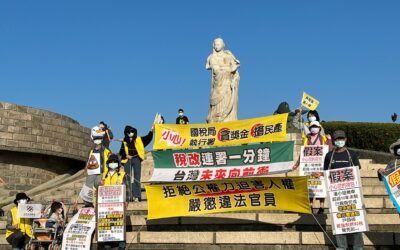
After the Supreme Court had ruled that the “red envelopes” given by the dizi (disciples) to their Shifu (Grand Master) included non-taxable gifts and there had been no tax evasion, the National Taxation Bureau, while finally correcting to zero the tax bills for all years other than 1992, maintained the tax bill of 1992. It claimed that for that year only a decision rendered by the Supreme Administrative Court against Tai Ji Men had become final and could not be changed as the statute of limitation had expired. Here we have a “summum ius,” a most literalistic application of the law on the statutes of limitations. We also have a “summa iniuria,” because the “red envelopes” of 1992 received a different fiscal treatment than the “red envelopes” of the other years, while it is obvious that their content and purpose was the same.
To avoid the “summum ius, summa iniuria” phenomenon, Taiwan’s authorities should have considered (1) that the “ratio” or reason of the tax laws is to identify real tax evasion, not to find formalistic loopholes in the system to punish taxpayers that all agree had not evaded taxes; (2) that patently unjust decisions should always be corrected, statutes of limitations notwithstanding; and (3) that decisions that were still by-products of a tyrannical hostility to religious liberty and human rights should be rectified in the name of transitional justice, no matter at what date they were rendered and even if they were pronounced when the country had formally transitioned to a non-tyrannical system (but remnants of the old ways were still at work).
As we all know, these principles, already known to Cicero and to generations before Cicero, were not applied. A case of “summum ius, summa iniuria” manifested itself against Tai Ji Men in Taiwan. Its only good aspect is that there is still time to rectify it.

Massimo Introvigne (born June 14, 1955 in Rome) is an Italian sociologist of religions. He is the founder and managing director of the Center for Studies on New Religions (CESNUR), an international network of scholars who study new religious movements. Introvigne is the author of some 70 books and more than 100 articles in the field of sociology of religion. He was the main author of the Enciclopedia delle religioni in Italia (Encyclopedia of Religions in Italy). He is a member of the editorial board for the Interdisciplinary Journal of Research on Religion and of the executive board of University of California Press’ Nova Religio. From January 5 to December 31, 2011, he has served as the “Representative on combating racism, xenophobia and discrimination, with a special focus on discrimination against Christians and members of other religions” of the Organization for Security and Co-operation in Europe (OSCE). From 2012 to 2015 he served as chairperson of the Observatory of Religious Liberty, instituted by the Italian Ministry of Foreign Affairs in order to monitor problems of religious liberty on a worldwide scale.