Reversing an earlier jurisprudence, both the Court of Appeal and the Supreme Court ruled that schedules should be adjusted to respect religious liberty.
by Massimo Introvigne

On April 9, a press release by the Seventh-day Adventist Church reported about an important decision by the Supreme Court of South Korea, the first of this kind, about the right of an Adventist student seeking admission to a university to have an interview scheduled on Saturday before sunset moved to a different time or day.
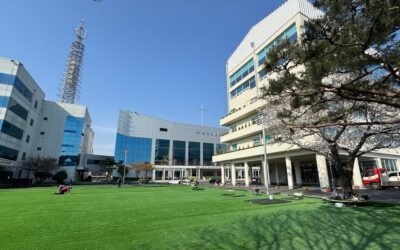
An Adventist student identified as Sister In sought admission to Chonnam National University’s Law School in October 2020 and passed the document screening phase. Her interview was scheduled on Saturday. She objected that submitting to the interview on that day conflicted with her religious obligation as a Seventh-day Adventist to abstain from work-related activities on Saturday. She indicated that moving the interview to Saturday after sunset would have been enough. The university refused to accommodate her. She did not attend the interview at the originally scheduled time, was not admitted, and sued the President of the university.
The first-degree court found against Sister In, in accordance to what was the prevailing Korean case law on the matter. The Seventh-day Adventists lost cases in 2010 about the legal aptitude test and the bar exam, and in 2023 about the national examination for nursing assistants. These exams were scheduled before sunset on a Saturday and the Adventists’ request that their members may participate after sunset or on a different day was not accepted.
However, in the Chonnam National University case, the appeal court reversed the previous case law and found in favor of Sister In. The appeal judges noted that, “The defendant, being the president of a national university and exercising public authority, must consider ways to allow the plaintiff to participate in the interview by her conscience without compromising the fairness and equity of the student selection process. The refusal to accommodate the plaintiff’s request violates the principle of minimal infringement and is unlawful due to the misuse of discretion.”
The Supreme Court has now agreed with the appeal judges, noting that accommodating Sister In would have been comparatively easy and would not have created an excessive burden for the university.
A Supreme Court’s spokesperson commented that, “This is the first decision by either the Constitutional Court or the Supreme Court to explicitly acknowledge a Seventh-day Adventist’s request for a change in the test schedule. It clarifies the obligations of administrative authorities to prevent Seventh-day Adventists and other minorities from facing undue discrimination due to their religious beliefs.”

Massimo Introvigne (born June 14, 1955 in Rome) is an Italian sociologist of religions. He is the founder and managing director of the Center for Studies on New Religions (CESNUR), an international network of scholars who study new religious movements. Introvigne is the author of some 70 books and more than 100 articles in the field of sociology of religion. He was the main author of the Enciclopedia delle religioni in Italia (Encyclopedia of Religions in Italy). He is a member of the editorial board for the Interdisciplinary Journal of Research on Religion and of the executive board of University of California Press’ Nova Religio. From January 5 to December 31, 2011, he has served as the “Representative on combating racism, xenophobia and discrimination, with a special focus on discrimination against Christians and members of other religions” of the Organization for Security and Co-operation in Europe (OSCE). From 2012 to 2015 he served as chairperson of the Observatory of Religious Liberty, instituted by the Italian Ministry of Foreign Affairs in order to monitor problems of religious liberty on a worldwide scale.