Ukrainians, anti-cultist-in-chief Novopashin argues, only achieve some success because of “cults” that “destabilize society” in Russia with American support.
Massimo Introvigne

Many Russians were taken by surprise by the Ukrainian counter-offensive in the region of Kursk. They asked how this unpredicted development was possible. What they “could” have predicted, though, was what simple, if ridiculous, explanation of the events Russian anti-cultists would offer to the perplexed population. No doubt, they would blame the “cults.” And they did.
Alexander Novopashin is an Orthodox archpriest from Novosibirsk and the Vice President of RATsIRS, the Russian national organization that was affiliated with the European anti-cult federation FECRIS until March 2023, whose President is the notorious Russian anti-cultist Alexander Dvorkin.
He is circulating a statement on the developments of the Ukrainian war, which he dramatically inaugurates by stating that “Our people are dying, military and civilians. The enemy is destroying our cities and villages,” conveniently forgetting the cities and villages in Ukraine destroyed by Russia.
Ukrainian military operations, Novopashin explains, would not succeed alone. They have some success because “in addition to military operations, Western intelligence agencies, represented by the Ukrainian Nazi centers for information and psychological influence (CIPSO), are sowing confusion among Russian citizens.”
American and Ukrainian funds support “totalitarian cults operating in our country and destabilizing society, which plays into the hands of the enemy. There are many such cults and groups. First of all, these are active participants in the Maidan and preachers trained in Ukraine—neo-Pentecostals who created open or dormant cells throughout Russia. These are Scientologists and Mormons, ardently supported by the CIA, Jehovah’s Witnesses, these are neo-pagans, of course. The same work is conducted by members of the neo-Nazi-neopagan cults.” He also mentions the domestic Russian group “Citizens of the USSR,” which seems so quintessentially Russian that perhaps not even Novopashin really believes it is funded and directed by the CIA or Ukraine.

Novopashin claims that the CIA plan started long ago. “In 1998, the US Congress passed a law called the ‘International Religious Freedom Act,’ which declares that the US government is the guarantor of any organization of a religious nature in any Third World country (the first of which for America is Russia)… It does not matter whether it is a cult of American origin or any other. What is important is that cults are suitable for bringing destruction to our country at the level of the individual, family, society and state.”
It may seem that Novopashin is a lonely lunatic to whom “Bitter Winter” devotes an excessive attention. He is lunatic, but not lonely. Not only he is at the apex of the Russian anti-cult establishment but he disseminated so well his arguments about the International Religious Freedom Act and the American central direction of the international defense of the “cults” that they are still repeated by occasionally funny but not particularly bright FECRIS anti-cultists in the West.
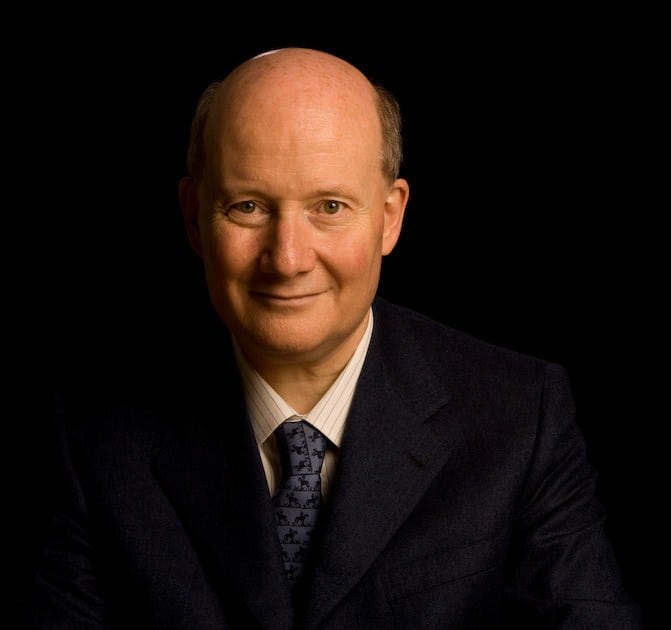
Massimo Introvigne (born June 14, 1955 in Rome) is an Italian sociologist of religions. He is the founder and managing director of the Center for Studies on New Religions (CESNUR), an international network of scholars who study new religious movements. Introvigne is the author of some 70 books and more than 100 articles in the field of sociology of religion. He was the main author of the Enciclopedia delle religioni in Italia (Encyclopedia of Religions in Italy). He is a member of the editorial board for the Interdisciplinary Journal of Research on Religion and of the executive board of University of California Press’ Nova Religio. From January 5 to December 31, 2011, he has served as the “Representative on combating racism, xenophobia and discrimination, with a special focus on discrimination against Christians and members of other religions” of the Organization for Security and Co-operation in Europe (OSCE). From 2012 to 2015 he served as chairperson of the Observatory of Religious Liberty, instituted by the Italian Ministry of Foreign Affairs in order to monitor problems of religious liberty on a worldwide scale.