Groups cannot be singled out as “cults” and discriminated through anti-cult propaganda or by using administrative tools, the judges said.
by Massimo Introvigne

On November 23, 2021, Russia was severely hit twice by the European Court of Human Rights (ECHR). Once again, the ECHR stated that Russian policies against “cults” violated the European principle of freedom of religion or belief (FORB).
The first case, Centre of Societies for Krishna Consciousness In Russia and Frolov v. Russia, dealt with several instances of discrimination against ISKCON, popularly known as the Hare Krishna movement, in Russia. In 2008, a Russian Orthodox priest said in an interview that ISKCON’s was a “demonically oriented religion,” which “profoundly affected the personality” of its followers. Up to the appeal stage, Russian courts found the statements non-discriminatory.
Also in 2008, the government of the Ulyanovsk region in cooperation with anti-cult organizations published, at taxpayers’ expenses, a brochure called Watch Out for Cults!, which called ISKCON, together with other movements, a “totalitarian cult” and a “destructive cult.” In this case too, up to the appellate stage, Russian courts refused to intervene against the brochure.
Finally, in 2013, the prefecture of the Severo-Vostochnyy District in Moscow refused to authorize an ISKCON public meeting, stating that holding the event would have been disrespectful of the religious beliefs of others (meaning the members of the majoritarian Russian Orthodox Church). In this case too, recourses to Russian courts of law failed to produce favorable results for ISKCON.
The ECHR rejected ISKCON’s recourse about the priest’s interview, stating that, defamatory as it was, it had been given by a private individual to a private media, and the Russian government was not responsible for it. On the other hand, the government was responsible for the brochure, which had “breached the principles of laicism and non-interference with internal affairs of a religious movement and undermined the dignity of its followers.” The court concluded that, through the brochure, “by using derogatory language and unsubstantiated allegations for describing the applicant centre’s religious beliefs” the Russian government had violated ISKCON’s freedom of religion.
As for the public event, the ECHR recognized that it might have served the purpose of converting members of the Russian Orthodox Church to a different religion. However, the ECHR said, this cannot be forbidden. “Freedom to manifest one’s religion includes the right to try to convince one’s neighbour,” and Russia should learn to live with attempts by missionaries of other faiths who try to convert devotees of the majority religion. Of course, that nobody should try to convert members of the Russian Orthodox Church to another religion is enshrined in Russian anti-proselytization laws, and it is unlikely that Russia will comply with the ECHR ruling.
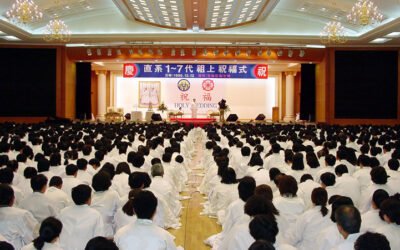
In Corley and Others v. Russia the ECHR dealt with the cases of a family from the U.S., the Corleys, and one from Japan, the Igarashis, who had moved to Russia in the 1990s with the purpose of spreading there the teachings of the Unification Church. The climate changed in the 2000s, and within the context of anti-cult campaigns against the Unification Church Mr. Corley and Mr. Igarashi had their visa revoked. Mr. Igarashi was even arrested and kept in jail in unsanitary conditions for an alleged violation of the immigration laws.
The applicants acknowledged that Russia has a right to enforce its immigration laws, but insisted that they cannot be used as tools for discriminating against religions the authorities label “cults.” The ECHR found that “the Russian authorities singled out Mr Corley and Mr Igarashi for special treatment, paving the way for their precipitated departure. As there is nothing to indicate that they held any employment or position outside the Unification Church or engaged in any activities other than religious work, it concludes that the reasons for that treatment were connected with their religious work.
Seen against the State policy objective of countering the influence of foreign missionaries in Russia, the pattern of involvement of the security services in the enforced departures of members of the Unification Church from Russia suggests that those measures were taken for the purpose of repressing the exercise of their right to freedom of religion and stifling the spreading of its teaching in Russia.” This is not admissible under the European Convention on Human Rights, the ECHR said.
The ECHR sent a clear signal that Russia, or any other country, cannot single out certain religions as “cults” and prevent them from being active or proselytizing. The court also reiterated that administrative tools cannot be surreptitiously used to limit the religious liberty of groups the government does not like.
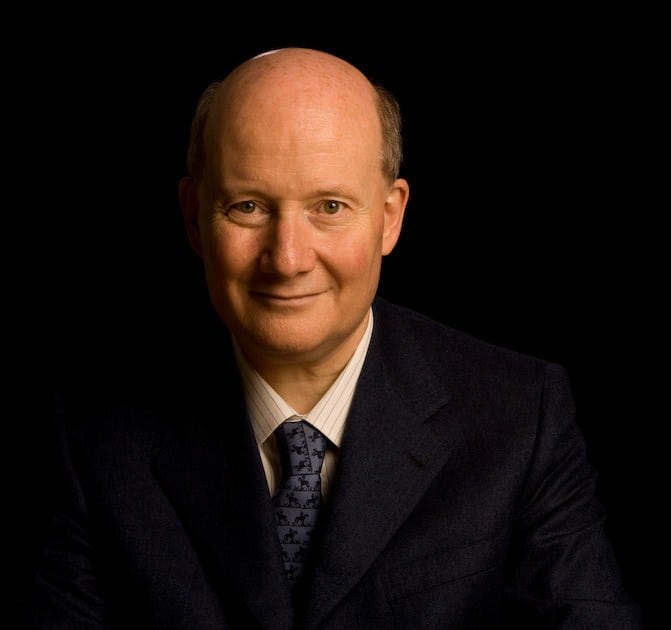
Massimo Introvigne (born June 14, 1955 in Rome) is an Italian sociologist of religions. He is the founder and managing director of the Center for Studies on New Religions (CESNUR), an international network of scholars who study new religious movements. Introvigne is the author of some 70 books and more than 100 articles in the field of sociology of religion. He was the main author of the Enciclopedia delle religioni in Italia (Encyclopedia of Religions in Italy). He is a member of the editorial board for the Interdisciplinary Journal of Research on Religion and of the executive board of University of California Press’ Nova Religio. From January 5 to December 31, 2011, he has served as the “Representative on combating racism, xenophobia and discrimination, with a special focus on discrimination against Christians and members of other religions” of the Organization for Security and Co-operation in Europe (OSCE). From 2012 to 2015 he served as chairperson of the Observatory of Religious Liberty, instituted by the Italian Ministry of Foreign Affairs in order to monitor problems of religious liberty on a worldwide scale.