Putin’s new “State Policy for the Preservation and Strengthening of Traditional Russian Spiritual and Moral Values” is used to crack down on religious minorities.
by Massimo Introvigne

In any other country in the world, asking to prohibit the peaceful Hindu Holi Festival of Colors would look like a bizarre request. In Russia, it comes from the two main anti-cult websites, operated by Alexander Dvorkin and Alexander Novopashin, respectively President and Vice President of the national anti-cult umbrella organization RATsIRS, which until March 2023 was affiliated with the European anti-cult federation FECRIS.
Both published an interview with Father George Maximov, a professor at Moscow Theological Academy and a member of the Synodal Working Group on Interreligious Dialogue of the Russian Orthodox Church. And both web sites commented that holding in Russia the Holi Festival of Colors should be prohibited as it violates the Presidential Decree issued by President Putin after the invasion of Ukraine, on November 9, 2022, on a new “State Policy for the Preservation and Strengthening of Traditional Russian Spiritual and Moral Values,” amended and reinforced by another Presidential Decree of January 25, 2023.

The Holi Festival of Colors, Love, and Spring celebrates the divine love of Rada and Krishna, the arrival of Spring, and the victory of Vishnu over the demon Hiranyakashipu. It is a joyful day celebrated wherever Hindus live, with a number of customs and rituals including throwing colored water and paint on the participants. In several cities in the world, many non-Hindus also join, captivated by the festive atmosphere.

Father Maximov, who paradoxically claims to be an expert in interreligious dialogue, completely misunderstands the meaning of Holi and claims that participants in fact honor demons. At any rate, he is against “pagan religious holidays” in general.
This would be little more than a curiosity, although offensive to both Hindus and common sense, if Dvorkin and Novopashin would not invoke Putin’s Presidential Decree on the protection of “Traditional Russian Spiritual and Moral Values” to suggest that such celebrations should be prohibited. That Holi was celebrated in Novosibirsk, which is home to Novopashin, particularly angered the anti-cultist, who decried that “pagan obscurantism was planted” in his city.
Few non-Russian human rights organizations have paid attention to the Presidential Decrees of November 9, 2022, and January 25, 2023, but precisely their use to call for the prohibition of a Hindu festival that many non-Hindus also celebrate shows how broad, and destructive of what remains of religious pluralism in Russia, their application can be.

While proclaiming that “Russian Orthodoxy has a special role in the formation and strengthening of traditional values,” the decrees do mention that “Christianity, Islam, Buddhism, Judaism and other religions are also an integral part of Russia’s historical and spiritual heritage,” but excludes newly imported faiths defined as alien to the Russian ethos and “destructive.” In particular, the decrees forbid the propaganda and public activities of religious and other organizations inspired or supported by “the United States of America and other unfriendly foreign states.” With an eye on the Jehovah’s Witnesses, explicitly prohibited are religious organizations that are “against military service.”
On the other hand, the concept of the Russian ethos is not defined. Although “other religions” are tolerated if they are “part of Russia’s historical and spiritual heritage” the text has a distinct Orthodox flavor.
As the Holi incident shows, it is easy to argue that even Hinduism is not part of “Russia’s historical and spiritual heritage” and its public festivals should be prohibited.
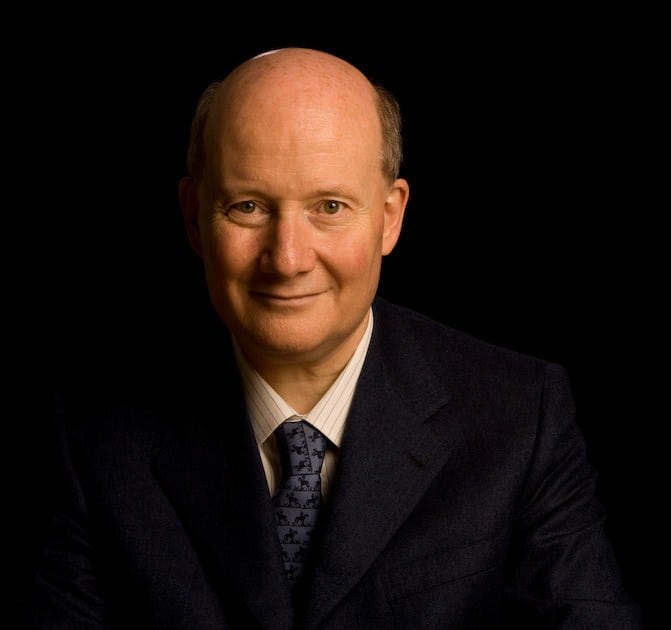
Massimo Introvigne (born June 14, 1955 in Rome) is an Italian sociologist of religions. He is the founder and managing director of the Center for Studies on New Religions (CESNUR), an international network of scholars who study new religious movements. Introvigne is the author of some 70 books and more than 100 articles in the field of sociology of religion. He was the main author of the Enciclopedia delle religioni in Italia (Encyclopedia of Religions in Italy). He is a member of the editorial board for the Interdisciplinary Journal of Research on Religion and of the executive board of University of California Press’ Nova Religio. From January 5 to December 31, 2011, he has served as the “Representative on combating racism, xenophobia and discrimination, with a special focus on discrimination against Christians and members of other religions” of the Organization for Security and Co-operation in Europe (OSCE). From 2012 to 2015 he served as chairperson of the Observatory of Religious Liberty, instituted by the Italian Ministry of Foreign Affairs in order to monitor problems of religious liberty on a worldwide scale.