Pastor Nikolai Bogoslavsky of Christ the Savior Church was convicted for keeping in touch with the Latvian-based New Generation movement.
by Massimo Introvigne

The City Court of Anapa, in Russia’s Krasnodar Krai, rendered on April 4 one of the first decisions applying to a religious group Article 284.1 of the Russian Criminal Code as amended in 2022 after the aggression war against Ukraine started. The article deals with organizations that have not been labeled as “extremist” but as “undesirable.” Organizing, participating in, and even promoting or simply displaying symbols of undesirable organizations on social media are now crimes punished with jail or labor camp penalties.
The case concerned an Evangelical Church in Anapa called Christ the Savior, whose pastor is Nikolai Bogoslavsky. Although independent, Bogoslavsky’s church followed with sympathy the Word of Faith movement (which teaches that those who pray with faith will acquire health and prosperity), of which the Latvian megachurch New Generation is part. In 2021, New Generation was declared “undesirable” in Russia. On August 15, 2022, New Generation churches in Chelyabinsk, Moscow, Kemerovo, Novosibirsk, Krasnodar, and Sochi, were raided by special forces after having being falsely accused by Russian anti-cultists Alexander Dvorkin and Alexander Novopashin, affiliated with the French-supported European federation of anti-cult movements FECRIS, of working as agents of the Ukrainian intelligence services.

Anti-cultists and the police quickly discovered that Anapa’s Pastor Bogoslavsky had been among the participants at a 2021 conference organized by New Generation in Ramenskoye, a city near Moscow. He was indicted under Article 20.33 of the Administrative Code of the Russian Federation, which punishes the “Participation in the activities of a foreign or international non-governmental organization whose activities were declared undesirable in the territory of the Russian Federation.” This was an administrative offense, for which in February 2022 he was fined 5,000 rubles. The prosecutor also sued the social network VKontakte and compelled it to delete the account of Bogoslavsky’s Christ the Savior Church.

However, the amendments to the Criminal Code have now offered the opportunity for harsher penalties against those who keep in touch with “undesirable” organizations. Although he had promised to repent, the prosecutor stated that Bogoslavsky had not ceased his contacts with New Generation, whose images and symbols continued to appear on his social media accounts, and with other foreign churches too.
Bogoslavsky was thus sentenced to spend one year in a corrective labor colony. These labor camps are one of the successors of Stalin-era’s GULAGs.
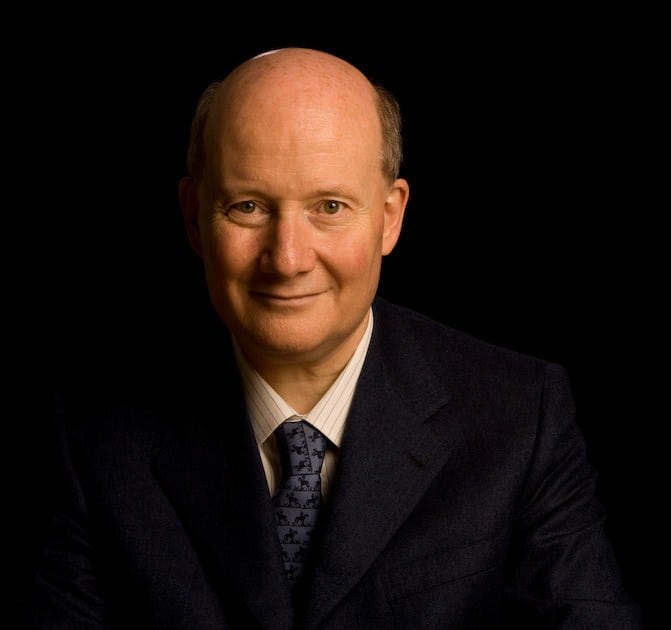
Massimo Introvigne (born June 14, 1955 in Rome) is an Italian sociologist of religions. He is the founder and managing director of the Center for Studies on New Religions (CESNUR), an international network of scholars who study new religious movements. Introvigne is the author of some 70 books and more than 100 articles in the field of sociology of religion. He was the main author of the Enciclopedia delle religioni in Italia (Encyclopedia of Religions in Italy). He is a member of the editorial board for the Interdisciplinary Journal of Research on Religion and of the executive board of University of California Press’ Nova Religio. From January 5 to December 31, 2011, he has served as the “Representative on combating racism, xenophobia and discrimination, with a special focus on discrimination against Christians and members of other religions” of the Organization for Security and Co-operation in Europe (OSCE). From 2012 to 2015 he served as chairperson of the Observatory of Religious Liberty, instituted by the Italian Ministry of Foreign Affairs in order to monitor problems of religious liberty on a worldwide scale.