Amid a violent conflict between rival crime groups, suspicions of a CCP strategy to weaponize criminals for its own purposes come to light.
by Massimo Introvigne
The Tuscan city of Prato, long known for its textile industry, has become the epicenter of a brutal war between rival Chinese criminal clans. Fires, stabbings, and intimidation campaigns have marked the past years, leaving prosecutors convinced that what is unfolding is not a marginal phenomenon but the consolidation of a new “Cupola” of Chinese organized crime in Europe.
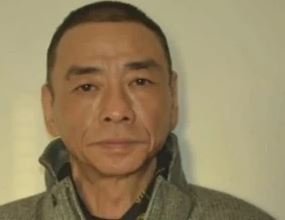
Prosecutor Luca Tescaroli, who took office in Prato in July 2024, has compared the current situation to the rise of the Corleonesi mafia clan in Sicily. The violence is open and demonstrative: warehouses burned in Prato and Campi Bisenzio, entrepreneurs assaulted, workers stabbed and “eviscerated” in broad daylight. The conflict pits factions linked to the veteran boss Zhang Naizhong and his son, Zhang Di, against rival groups seeking control of logistics and distribution networks, particularly in the fashion industry.
Control of logistics is not incidental. It is vital for exploiting the so-called “regime 42,” a loophole in EU customs law that allows goods imported into one member state to circulate tax-free if declared as destined for another. Criminal groups use fictitious recipients to evade billions in VAT, then flood European markets with underpriced Chinese goods. Investigators have linked arson attacks in Prato to similar incidents in Paris and Madrid, showing the transnational reach of these networks.
More than ninety workers—Chinese, Pakistani, Bangladeshi, and North African—have broken the wall of silence, denouncing exploitation in textile and logistics workshops run by Chinese bosses. Yet protection for whistleblowers is minimal. Unlike Italian collaborators of justice, foreign workers cannot easily be given new identities or relocated. Prosecutors warn that without stronger safeguards, intimidation will prevail.
The most disturbing aspect, however, is the attitude of Chinese authorities. Requests for judicial assistance have gone unanswered. Evidence that could only be obtained in China remains inaccessible. This obstruction has led Tescaroli to suspect “interference from Chinese authorities in this matter.” The silence is not neutral: it suggests that Beijing is protecting criminal groups, or even cooperating with them, because they serve broader economic aims.
Tescaroli also noted that in the main case against Chinese mafia bosses, when the court interpreter failed to appear at a hearing in late September, a quick check showed she had gone back to China. Her transcripts were “incomprehensible and unusable.” The translator was the second to quit, and no other Chinese interpreter in Tuscany has agreed to step in. Tescaroli has launched an investigation into the possibility that “someone” may be trying to undermine the trial.
Indeed, the mafia’s activities dovetail with China’s global strategy. By controlling logistics chains, manipulating customs loopholes, and flooding Europe with cheap goods, these networks advance Beijing’s economic interests. Organized crime becomes an informal arm of state policy, ensuring dominance in sectors where legitimate competition would be harder to sustain.
Prato is not a peripheral battlefield. It is the center of a transnational system. The “Chinese mafia” now operates in Tuscany, Rome, Spain, and France, with alliances with Italian mafias such as the Calabrese ‘Ndrangheta and the Neapolitan Camorra. Payments for narcotics are facilitated through Chinese remittance systems, bypassing traditional banking and leaving investigators blind.

Parliamentary inquiries have confirmed that parts of Prato are “militarily occupied” by Chinese gangs. The Chinese mafia has even sought to infiltrate local politics, cultivating ties with officials and attempting to influence electoral campaigns.
The Prato case is not simply an Italian story. It is a Chinese story that reveals how Beijing’s refusal to cooperate with European prosecutors amounts to complicity. The mafia is not only tolerated but instrumentalized. It provides economic leverage, channels illicit profits, and extends China’s reach into Europe’s industrial heartlands.
The victims are many: exploited workers, intimidated entrepreneurs, and communities living under fear. But the larger victims are the Western economy, threatened by China’s unfair competition, and the principle of liberty itself. When a state shields criminal networks for its own advantage, it undermines the rule of law far beyond its borders.

Massimo Introvigne (born June 14, 1955 in Rome) is an Italian sociologist of religions. He is the founder and managing director of the Center for Studies on New Religions (CESNUR), an international network of scholars who study new religious movements. Introvigne is the author of some 70 books and more than 100 articles in the field of sociology of religion. He was the main author of the Enciclopedia delle religioni in Italia (Encyclopedia of Religions in Italy). He is a member of the editorial board for the Interdisciplinary Journal of Research on Religion and of the executive board of University of California Press’ Nova Religio. From January 5 to December 31, 2011, he has served as the “Representative on combating racism, xenophobia and discrimination, with a special focus on discrimination against Christians and members of other religions” of the Organization for Security and Co-operation in Europe (OSCE). From 2012 to 2015 he served as chairperson of the Observatory of Religious Liberty, instituted by the Italian Ministry of Foreign Affairs in order to monitor problems of religious liberty on a worldwide scale.