The massacre of Nigerian Christians is at risk of escalating to genocide. A Croatian politician explains how we may help.
by Marco Respinti
While the murder of Father John Mark Cheitnum, from the rectory of Christ the King Catholic Church in the town of Lere, in Nigeria’s northern Kaduna State, is still in the news, some media blame it on territorial disputes and social inequalities. The truth is different. “Islamist,” or Islamic ultra-fundamentalist, violence (not to be confused with Islam per se, thus avoiding ill-founded charges of “Islamophobia”) is exacting a bloody toll on Christians in Nigeria. Boko Haram, the Islamic State West Africa Province (ISIS’ local branch), and the Fulani nomad herdsmen are openly trying to wipe out Christians from a large area of the country. Observers are collecting documents and testimonies to understand whether behind this systematic slaughter lies a strategic plan. In this case, the term “genocide” would be the most accurate culturally, politically, and legally.
In a conference at the European Parliament in Brussels, hosted by the Intergroup on Freedom of Religion or Belief and Religious Tolerance on July 12, experts, referring also to data provided by Open Doors, reminded the audience that in Nigeria Christians are a little more than 98 million, i.e. almost half of the 211.5 million population of the country. From July 2009 to August 2021, 43,000 Christians have been killed by jihadists and their supporters. It has been estimated that 17,500 churches and more than 2,000 Christian schools have been attacked. In the north of the country, 10 million Christians had to flee their homes, and 6 million more had to escape to avoid being killed, while more than 500 communities were looted.
The impression of many is that the government, led by President Muhammadu Buhari, is way to weak in face of this violence. Some even point out that Buhari comes to a Fulani family.
As Ján Figeľ, former European Commission Special Envoy for the promotion of freedom of religion outside the EU, told this writer, “Nigeria as the largest African country should not be underestimated or abandoned by the international community to its painful and multiple problems. Repetitive bloody attacks against Christian communities by militant Islamists must be stopped, and those who committed crimes should be prosecuted by state authorities. President Buhari and the Government of Nigeria must show real efforts towards justice for all. Justice is crucial for dignity of people, for peace, stability and sustainable development of this important country.”
In fact, Figel’ explains, “the continued persecution of religious minorities and people of faith in the world confirms the urgency of FORB [freedom of religion or belief] international protection and promotion. Regrettably, millions of people are deprived of this right. The European Union should renew the position of its Freedom of Religion and Belief Special Envoy without delay.”
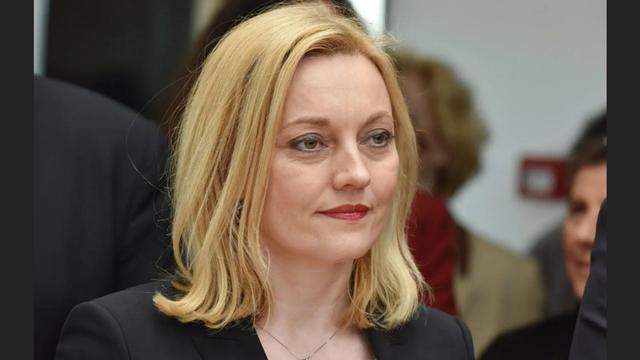
But there are also good news. On July 14, 2022, the Prime Minister of the Republic of Croatia, Andrej Plenković, and the Minister of Foreign Affairs, Gordan Grlić-Radman, accepted the proposal of a member of the Croatian Parliament, Marijana Petir (formerly from the Croatian Peasant Party, now an Independent), to send humanitarian aid to the victims of the attack in the Nigerian city of Owo. Bitter Winter asked MP Petir what is the meaning of this move by Croatia.

Ms. Petir, what prompted you to advance your proposal?
On June 5, 2022, in the Nigerian federal state of Ondo, an attack was carried out on Catholic believers, in which at least fifty people, including children, were killed. The attack that took place during Mass in the city of Owo, in southwestern Nigeria, is not an isolated case, since Christians in Nigeria are often victims of violence by armed groups.
The Federal Republic of Nigeria is a country with over 200 million inhabitants. Frequent armed attacks, kidnappings and robberies cause a feeling of insecurity and force the population to leave their homes, which consequently causes poverty and hunger for a large number of residents. The country’s insecurity is particularly evident in the large number of civilian deaths. A total of 10,399 people died as a result of violence in 2021. Extremist groups are mostly present in the northern part of Nigeria, which is why the population there lives under constant threat. Most of the recorded attacks are in the central part of the country, while attacks in the southwestern part of the country with a majority Christian population have so far been rare. This is why the latest attack in the city of Owo causes additional concern and is a sign of the worsening security situation. I felt Croatia could not turn its face away.
So, what did you do?
The Republic of Croatia, in the framework of its foreign policy activities, especially development and humanitarian activities, advocates for the respect and protection of the rights of all religious groups and provides support for initiatives aimed at strengthening the fight against the persecution of believers and religious minority groups around the world.
I urged the government in Zagreb to send humanitarian aid to the victims of the attack in Owo in the total amount of €30,000.00. The contribution will be focused on humanitarian activities for the benefit of the victims of the attack, by payment to Croatian Caritas. The Ministry of Foreign and European Affairs will prepare and monitor the professional implementation of the activities proposed in this Decision.
You also launched another initiative…
Yes, since Christians are the most persecuted religious group in the world, I proposed to the government of my country to establish a scholarship program as well, for young people who are persecuted for their faith in Africa, Asia and the Middle East.
Croatian scholarships for young, persecuted Christians are the result of my amendment to the state budget for 2021, which was accepted by the government. The planned financial resources of HRK 1.5 million, or €200,000, are intended for scholarships for young people who are persecuted against religious liberty, to enable them to study in Croatia and gain knowledge, then return to their homeland where they will help building or re-building their communities within the framework of a democratic and tolerant society.
This money is intended for their study and accommodation in my country. The first group of students arrived in Croatia from India, Pakistan, Syria, South Sudan, Nigeria, Benin and Ethiopia. This budget for 2022 also provides the same amount of funds for scholarships.

Marco Respinti is an Italian professional journalist, member of the International Federation of Journalists (IFJ), author, translator, and lecturer. He has contributed and contributes to several journals and magazines both in print and online, both in Italy and abroad. Author of books and chapter in books, he has translated and/or edited works by, among others, Edmund Burke, Charles Dickens, T.S. Eliot, Russell Kirk, J.R.R. Tolkien, Régine Pernoud and Gustave Thibon. A Senior fellow at the Russell Kirk Center for Cultural Renewal (a non-partisan, non-profit U.S. educational organization based in Mecosta, Michigan), he is also a founding member as well as a member of the Advisory Council of the Center for European Renewal (a non-profit, non-partisan pan-European educational organization based in The Hague, The Netherlands). A member of the Advisory Council of the European Federation for Freedom of Belief, in December 2022, the Universal Peace Federation bestowed on him, among others, the title of Ambassador of Peace. From February 2018 to December 2022, he has been the Editor-in-Chief of International Family News. He serves as Director-in-Charge of the academic publication The Journal of CESNUR and Bitter Winter: A Magazine on Religious Liberty and Human Rights.