He visited the mines of Norilsk and suggested “scarecrows” should be brought there, so they may “think twice whether it is worth offending the Russians or not.”
by Massimo Introvigne

After his refusal to attend the 7th Congress of World and Traditional Religions in Kazakhstan, where he would have met Pope Francis, there are no signs that Patriarch Kirill may somewhat moderate his attitude about the Ukrainian war.
On September 17 and 18, Kirill visited Norilsk, a Siberian city 300 km north of the Arctic Circle. The city is famous for its world leading nickel and palladium mines, which have a strategic importance in times of war. It is also famous for the difficult and dangerous life of the 80,000 miners who work there.
On September 17, Kirill visited the mines, and on September 18 consecrated in Norilsk a new church honoring Saint Barbara, who is the patron of the miners both for the Catholics and the Orthodox.
In his sermon, he reported that the previous day he “happened to go down to a depth of two kilometers and see the work of miners there, at this depth. This is truly heroic work.” “You are in a zone where it is already warm from the heat that is inside the Earth, the Patriarch said, you understand at what depth you are, where you feel a lack of oxygen, and you understand that the conditions are very, very difficult. And there, at this depth, people work…”
Kirill also hailed those serving in the Russian Army, performing “the duty of serving the Fatherland, but, most importantly, the duty of preserving the Orthodox faith. Because the power of the people is always connected with the power of faith. When faith weakens, then people becomes weaker.”
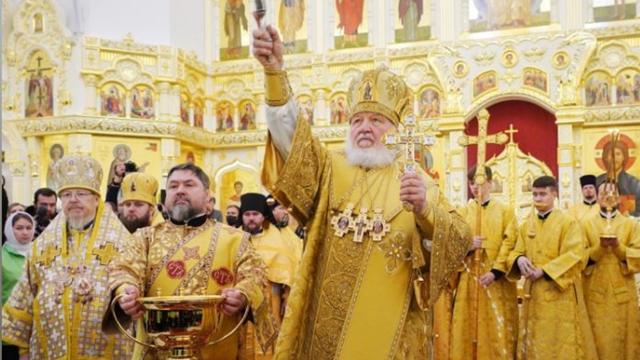
There is of course nothing unusual for a church leader in comforting those who work in extreme circumstances, and hailing the religious spirit of the Army is not uncommon in the Russian Orthodox Church either.
However, Kirill decided to include in the sermon a threatening reference to international circumstances. When you see the Siberian mines, you say, “you understand how futile all attempts to scare our country are, what we are seeing today in the sphere of international relations. Those scarecrows should be brought here and placed in the conditions in which you work… So that they may think twice whether it is worth offending the Russians or not.”
Having received some criticism, the Patriarchate explained that Kirill meant that critics of Russia should go to Norilsk and see the iron will of the Russian miners. However, his words did sound like a threat, and correspond to the general defiant attitude he exhibited since the war in Ukraine started.
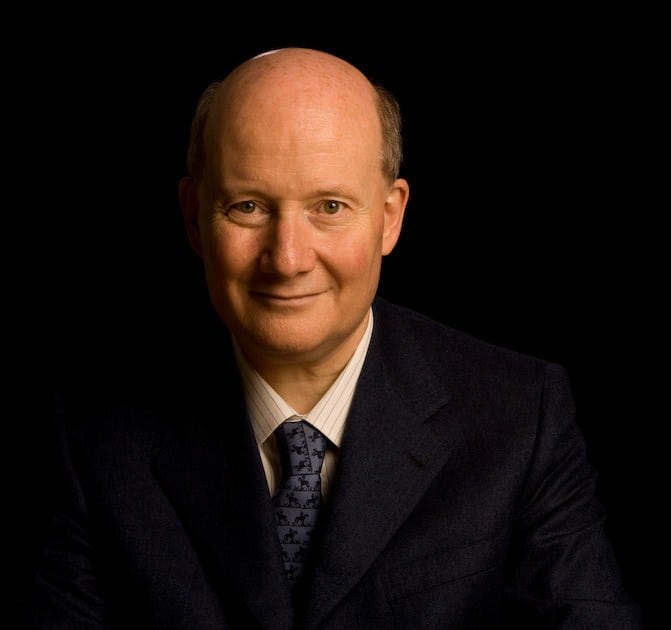
Massimo Introvigne (born June 14, 1955 in Rome) is an Italian sociologist of religions. He is the founder and managing director of the Center for Studies on New Religions (CESNUR), an international network of scholars who study new religious movements. Introvigne is the author of some 70 books and more than 100 articles in the field of sociology of religion. He was the main author of the Enciclopedia delle religioni in Italia (Encyclopedia of Religions in Italy). He is a member of the editorial board for the Interdisciplinary Journal of Research on Religion and of the executive board of University of California Press’ Nova Religio. From January 5 to December 31, 2011, he has served as the “Representative on combating racism, xenophobia and discrimination, with a special focus on discrimination against Christians and members of other religions” of the Organization for Security and Co-operation in Europe (OSCE). From 2012 to 2015 he served as chairperson of the Observatory of Religious Liberty, instituted by the Italian Ministry of Foreign Affairs in order to monitor problems of religious liberty on a worldwide scale.