An Ahmadi was sentenced to three years for calling himself “Hafiz,” and to life imprisonment for having distributed the “wrong” translation of the Quran.
by A. Sahara Alexander
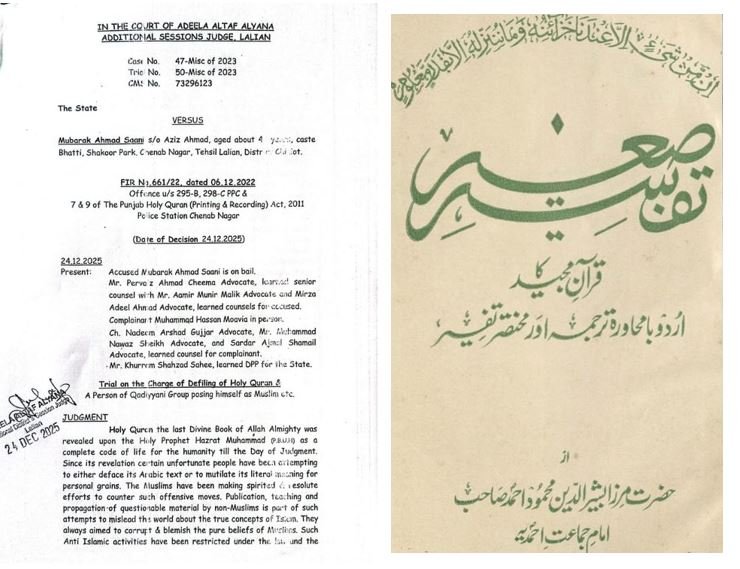
On 24 December 2025, an Additional Sessions Court in Lalian, Punjab, delivered a verdict that should shame any legal system claiming to uphold justice. Mubarak Ahmad Saani, an Ahmadi Muslim, was sentenced to life imprisonment under Pakistan’s blasphemy laws. His crime was not desecrating the Quran, not insulting Islam, not inciting violence or hatred, but calling himself a “Hafiz,” and distributing a book of Quranic translation and commentary revered by his community.
The court’s decision criminalizes reverence, punishes piety, and weaponizes theology to persecute a man whose only offense was to practice his faith with sincerity and devotion—a faith that Pakistan’s legal machinery has systematically declared illegal.
The facts are not in dispute. Saani, a member of the Ahmadiyya Muslim community, had memorized the entire Quran—a feat traditionally celebrated across the Islamic world. He used the honorific “Hafiz,” meaning “one who knows the Quran by heart,” on donation receipts issued to supporters of the Ahmadiyya community. For this, the court sentenced him to three years in prison, arguing that by using the title, he “passed himself off” as a Muslim—a status Ahmadis are legally forbidden to claim under Pakistan’s discriminatory laws.
This is the first time in Pakistan’s history that the use of the title “Hafiz” by an Ahmadi has been treated as a criminal offense. A man who has committed the Quran to memory—an act considered virtuous, even sacred—is now imprisoned for daring to acknowledge it. In the eyes of the court, the crime was not what he did, but who he was.
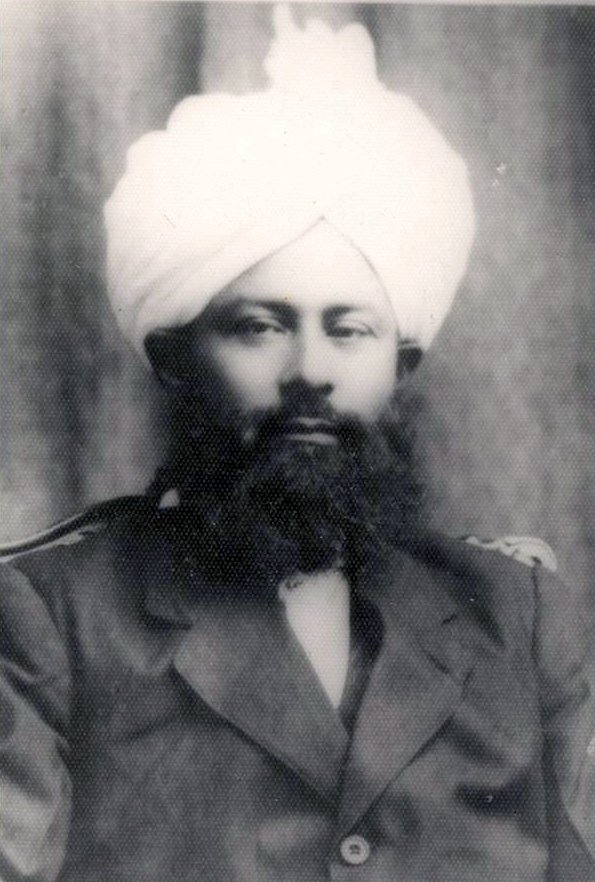
But the court did not stop there. It sentenced Saani to life imprisonment for distributing the “Tafsir-e-Saghir,” a collection of Quranic translations and explanatory notes compiled by Hazrat Mirza Bashiruddin Mahmood Ahmad, the second caliph of the Ahmadiyya community. The book, first published in 1957, is banned in Punjab because it reflects Ahmadi theological interpretations.
In fact, Saani was accused of having violated, by distributing the book, both article 7 of the Punjabi law on the Quran, as amended in 2021, and article 295-B of the Criminal Code, which punished the offenses to the Quran with life imprisonment. He was found not guilty under article 7 of the Punjabi law, because he distributed the book in 2019, before the new text of the statute came into force. But he was found guilty, for the same action, under article 295-B of the Criminal Code. In addition, that he “distributed the distorted translation” of the Quran was also considered a violation of article 298-C of the Criminal Code (for which he was sentenced to three years in jail, in addition to the life imprisonment under article 295-B), as part of a pattern where he allegedly “posed to be a Muslim,” which also included claiming the title of Hafiz.
In a move that defies both legal logic and theological humility, the court launched itself into a doctrinal analysis of Ahmadi “heresies,” declaring the book a “defiled, desecrated translation of the Holy Quran.” It invoked a provision of Pakistan’s blasphemy law that punishes with life imprisonment those who burn, tear, or otherwise desecrate the Quran. But Saani did none of these things. He did not destroy the Quran. He circulated it. He revered it. He offered a translation and commentary that his community has cherished for decades.
This is the perverse genius of Pakistan’s blasphemy laws. They punish interpretations and police theology. And when applied to Ahmadis, they become a tool of religious apartheid—a system in which the Sunni majority dictates not only who may call themselves Muslim, but who may read, translate, and honor the Quran.
The court’s verdict extends the definition of “desecration” to include any translation or commentary not sanctioned by Sunni clerics. It equates theological disagreement with criminal defilement. And it condemns a man to life in prison not for attacking the Quran, but for loving it in the wrong way.
This is an instance of theocratic tyranny masquerading as jurisprudence.
The case of Mubarak Ahmad Saani is emblematic of the broader campaign against Ahmadis in Pakistan—a campaign that has turned religious identity into a crime, theological nuance into blasphemy, and peaceful devotion into a punishable offense. Ahmadis are barred from calling themselves Muslims. They are forbidden from using Islamic terminology. Their mosques are not recognized as mosques. Their religious literature is banned. Their graves are desecrated. Their lives are endangered. And now, their memorization of the Quran is treated as a criminal act.
The enormity of this punishment cannot be overstated. A man who has memorized the Quran—a feat that requires years of discipline, reverence, and spiritual commitment—is imprisoned for acknowledging that fact. Another man might be honored for it. Saani is condemned. And for distributing a book that expresses deep respect for the Quran, he is sentenced to life behind bars.
The verdict of 24 December 2025 will be remembered as a moral failure. It is a stain on Pakistan’s judiciary, a betrayal of the Quran’s own message of justice and mercy, and a chilling reminder that in Pakistan, the harsh persecution of Ahmadis continues—not in the shadows, but in the full light of the courtrooms.
Justice demands more than punishment. It demands truth. And the truth is this: Mubarak Ahmad Saani is not a criminal. He is a victim of a system that punishes faith, censors devotion, and calls persecution piety.

Uses a pseudonym for security reasons.