After international protests, Prime Minister intervenes and prosecution is stopped. But the boy is still at risk of private vendetta, and unjust laws remain.
by Massimo Introvigne
Sometimes, international protests work. Last week several media, including Bitter Winter, denounced the scandalous arrest of an eight-year-old Hindu boy accused of having urinated in a mosque in Pakistan and at risk of death penalty, since he was charged with blasphemy. As we explained, the boy had not urinated voluntarily. The discharge was a consequence of fear, and happened while the same cleric who later denounced him for blasphemy was reprimanding him for having entered the mosque without being a Muslim. Regardless, the child was arrested, and his release on bail caused a mob attack against the Hindu temple in his village.
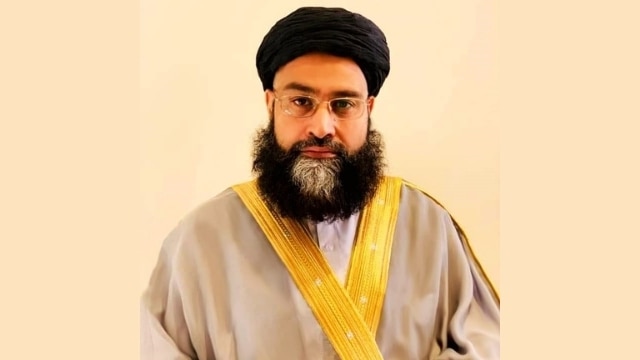
The incident created protests all over the world. As a result, Prime Minister Imran Khan had to intervene and order the police to protect the temple, whose damages were repaired at public expenses. Now, Tahir Mehmood Ashrafi, who is the Prime Minister’s Special representative for religious harmony, has announced that charges against the boy have been dropped, and action will be taken against the police officers who arrested him.
This is a welcome development, but not all problems are solved. First, the boy and his family remain in hiding. They are understandably afraid that the violence directed against the Hindu temple may turn on them, as it happened before in cases of alleged blasphemy. Protection against mob violence requires an effective police, and one without the ideological sympathy for violent ultra-fundamentalist Muslims too many agents often show.
Second, the provisions of the Pakistani Criminal Code that allows to prosecute as adults minors older than 12, and leave to the courts to decide on a case-by-case basis, whether children between 7 and 12 can also be prosecuted, remain in force. There is no indication that the government is considering amending them.
Third, the largest problem remains Pakistan’s blasphemy law, which allows to prosecute and sentence to death those denounced for having offended Islam. A good number of these denunciations are false. In some individual cases, those that reach the international media, individuals arrested for blasphemy may be saved. But nobody in the religious minorities is safe until the blasphemy laws remain in force. Yet, polls indicate that the majority of Pakistani voters want the blasphemy laws to stay, and it is unlikely that any government will challenge them.

Massimo Introvigne (born June 14, 1955 in Rome) is an Italian sociologist of religions. He is the founder and managing director of the Center for Studies on New Religions (CESNUR), an international network of scholars who study new religious movements. Introvigne is the author of some 70 books and more than 100 articles in the field of sociology of religion. He was the main author of the Enciclopedia delle religioni in Italia (Encyclopedia of Religions in Italy). He is a member of the editorial board for the Interdisciplinary Journal of Research on Religion and of the executive board of University of California Press’ Nova Religio. From January 5 to December 31, 2011, he has served as the “Representative on combating racism, xenophobia and discrimination, with a special focus on discrimination against Christians and members of other religions” of the Organization for Security and Co-operation in Europe (OSCE). From 2012 to 2015 he served as chairperson of the Observatory of Religious Liberty, instituted by the Italian Ministry of Foreign Affairs in order to monitor problems of religious liberty on a worldwide scale.