The Chief Justice of the Supreme Court ordered the release of a man who had distributed an Ahmadi commentary to the Holy Quran. A step in the right direction, but problems remain.
by Massimo Introvigne

Reportedly, a poor miller who managed to win a case against the all-powerful 18th-century King of Prussia Frederick the Great commented “There is a judge in Berlin,” meaning a honest and impartial magistrate who would not be intimidated by the government. We often read that this quote was invented by playwright Bertolt Brecht, but it might have originated before him.
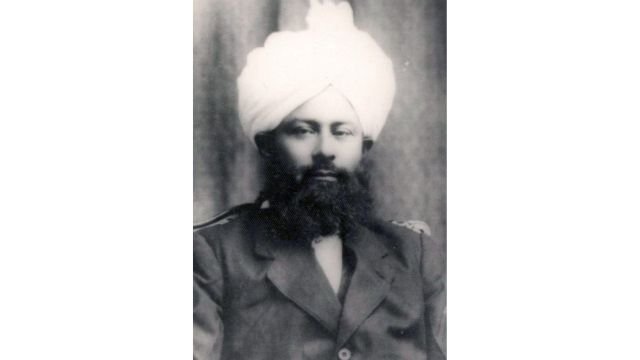
There is a judge in Islamabad, too. While the country was busy with the elections, Pakistan’s Supreme Court Chief Justice Qazi Faez Isa issued on February 8 a positive, if circumspect, ruling about the right of the persecuted Ahmadiyya community of printing and disseminating the “Tafseer-e-Sagheer,” the shorter version of the 10-volume “Tafseer-e-Kabeer,” the commentary to the Holy Quran by Mirza Basheer-ud-Din Mahmood Ahmad, the son and successor of Ahmadiyya founder Mirza Ghulam Ahmad.
A man called Mubarak Ahmed Sami had been arrested on January 7, 2023 for disseminating the “Tafseer-e-Sagheer,” thus breaching a Punjab law of 2021 prohibiting the printing and distributing of “heterodox” editions and commentaries of the Holy Quran. The man claimed that he had distributed the book in 2019, when the law was not yet in force.
Chief Justice Isa ordered the defendant, who had remained in jail for thirteen months, immediately released against the posting of a symbolic bond of 5,000 rupees ($18).
The Chief Justice may have based its decision only on the fact that penal law cannot be retroactive and asked the lower courts to consider whether the facts occurred in 2019 or 2022, but he went one step further.
He asked the courts of merit to meditate on religious liberty and on the Quranic teaching (2:256) “There is no compulsion in religion.” As reported by “Dawn,” he said that “even Prophet Muhammad (peace be upon him) was told by Almighty Allah that he was required to only convey the message and should not compel people to believe, as stipulated in verses from Surah Ar-Ra’d and Surah Yunus.”
“Freedom of faith—the decision says—is one of the fundamental tenets of Islam. But sadly, in matters of religion tempers flare up and the Quranic mandate is forsaken…The Holy Quran requires that all matters of significance should be pondered over and reflected upon Surah An-Nahl (chapter 16), verse 44 and Surah Yunus (chapter 10), verse 24… They should also have considered verse 9 of Surah al-Hijr (chapter 15) where Allah says, ‘We have, without doubt, sent down the Message; and we will assuredly guard it.’”
Isa also observed that the principle “no compulsion in religion” inspires Clause (a) of Article 20 of the Constitution of Pakistan, stating that “every citizen shall have the right to profess, practice and propagate his religion,” Clause (b) of the same Article 20, which adds that “every religious denomination and every sect thereof shall have the right to establish, maintain and manage its religious institutions,” and Article 22’s prescription that “no religious community or denomination shall be prevented from providing religious instruction for pupils of that community or denomination in any educational institution maintained wholly by that community or denomination.” “These fundamental rights cannot be derogated from, circumvented or diluted… The functionaries of the state [should have] heeded the Holy Quran, considered the Constitution and examined the law.”

The defendant is not off the hook and his trial will continue. Isa, however, did not limit his examination of the case to the non-retroactivity of criminal laws. He affirmed a broader principle of religious liberty, including the right to transmit one’s faith through appropriate means—and books.
Yet, Isa knows very well that there are laws in Pakistan explicitly targeting the Ahmadis and that the attitude of local police and courts is governed by politics rather than by law only. Isa’s affirmation of freedom of religion is a step in the right direction, but more is needed to align Pakistan with full-blown democracies where religious liberty is recognized to unpopular minorities as well.
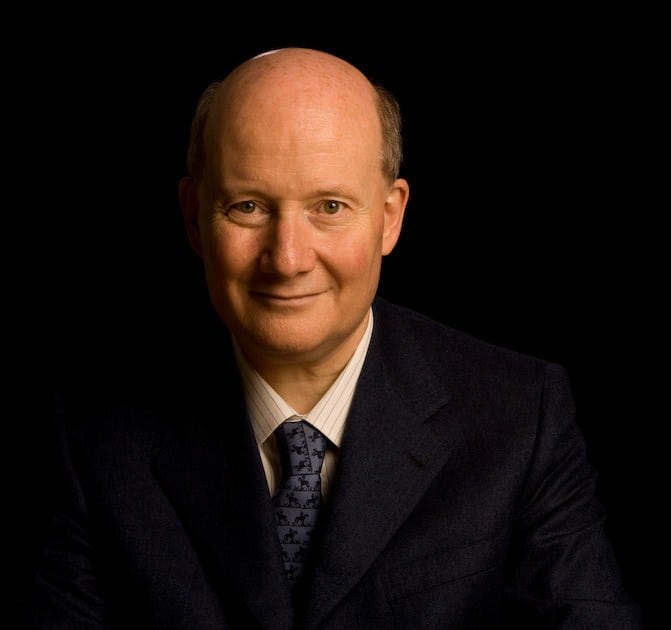
Massimo Introvigne (born June 14, 1955 in Rome) is an Italian sociologist of religions. He is the founder and managing director of the Center for Studies on New Religions (CESNUR), an international network of scholars who study new religious movements. Introvigne is the author of some 70 books and more than 100 articles in the field of sociology of religion. He was the main author of the Enciclopedia delle religioni in Italia (Encyclopedia of Religions in Italy). He is a member of the editorial board for the Interdisciplinary Journal of Research on Religion and of the executive board of University of California Press’ Nova Religio. From January 5 to December 31, 2011, he has served as the “Representative on combating racism, xenophobia and discrimination, with a special focus on discrimination against Christians and members of other religions” of the Organization for Security and Co-operation in Europe (OSCE). From 2012 to 2015 he served as chairperson of the Observatory of Religious Liberty, instituted by the Italian Ministry of Foreign Affairs in order to monitor problems of religious liberty on a worldwide scale.