A “psycholinguistic expert analysis” concluded that Luhansk’ Father Feognost is “working for the enemy.”
by Massimo Introvigne

In Russia, anti-cult “experts” carry out “psycholinguistic analyses” that lead courts to sentence Jehovah’s Witnesses and other “cultists” based on the argument that their language is “extremist.”
It is not surprising that the same method is being exported to occupied Ukraine. What is more surprising, however, is that the first victim is a priest of the Ukrainian Orthodox Church affiliated with the Moscow Patriarchate, i.e., the branch of the Ukrainian Orthodox Community that maintains its loyalty to Patriarch Kirill.
This does not mean that all Moscow Patriarchate priests blindly endorse Kirill’s enthusiastic support of Putin’s war of aggression, including in Russia. Father Feognost (secular name Timofei Pushkov) works at the parish of St. Nikolai in the village of Kuryachivka in the Markivka District of Ukraine’s Luhansk Region, currently under Russian occupation.
On May 12, 2022, Father Feognost posted on YouTube a video criticizing the extreme pro-Putin and pro-war views of three fellow Moscow Patriarchate priests, Father Pavel Ostrovsky (a celebrity in Russia), Father Dionisy Lobov, and Father Pavel Velikanov. Father Feognost subsequently stopped his social media activism after having been threatened by the police. However, on May 2, 2023, he was told that a case against him had been started before the Markivka District Court in April based on his May 2022 video.

A detailed summary of the case is offered by our colleague Felix Corley, a distinguished specialist of religious liberty issues in Russia, on Forum 18’s website.
Corley notes that it is the first known case of prosecution in occupied Ukraine for the new crime of “discrediting the Russian Army,” introduced in March 2022.
While readers interested in the legalities of the case may read Corley’s summary, we want to comment shortly on the fact that, as Forum 18 reports, the decision to prosecute Feognost came directly from the FSB headquarters in Moscow, which sent the case to the FSB of Luhansk. Then, the “Luhansk FSB sent the video to the Dahl Eastern Ukrainian University in Luhansk for a psycholinguistic examination, ‘which was carried out according to the most loyal of formulas.’ The ‘expert examination’ found that he ‘discredited, worked for the enemy.’”
As discussed in scholarly conferences about Russia and the countries where the same method has been exported, these “psycholinguistic examinations” are pseudo-scientific tools used to persecute unpopular minorities. Cases about the Jehovah’s Witnesses, in particular, demonstrate that the technique was developed by Russian anti-cultists who argue that any language critical of the Putin regime or of the Russian Orthodox Church is a sign of “extremism.” In all cases, the answers by such “experts” to questions whether the language of the defendants reveals their “extremism” have been positive. Often, one expertise simply cuts and pastes from others of the same kind.
Father Feognost’s case is interesting because the defendant is himself a priest of the Moscow Patriarchate and because to “extremism,” treason (“working for the enemy”) and the novel crime of “discrediting the Russian Army” have been added. But the case, confirms, once again, that anti-cultists such as Alexander Dvorkin have created a school, and “psycholinguistic experts” are hired guns who offer a veneer of (pseudo-)science to the ruthless prosecution of any dissent or criticism.
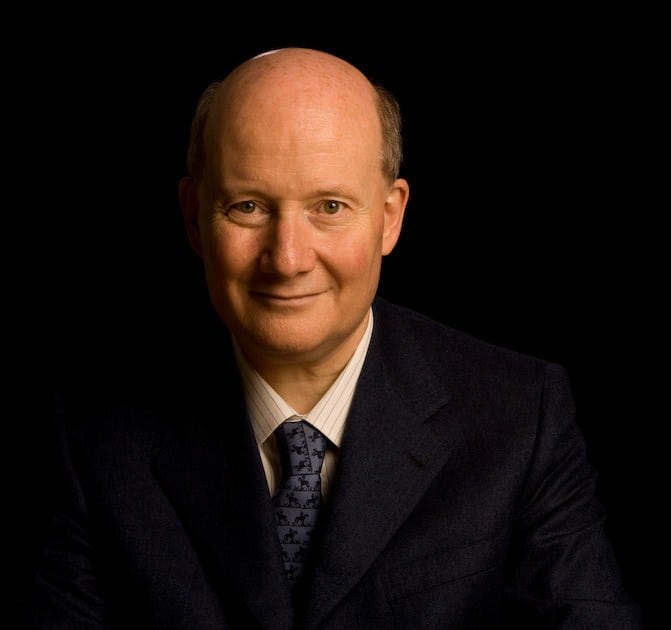
Massimo Introvigne (born June 14, 1955 in Rome) is an Italian sociologist of religions. He is the founder and managing director of the Center for Studies on New Religions (CESNUR), an international network of scholars who study new religious movements. Introvigne is the author of some 70 books and more than 100 articles in the field of sociology of religion. He was the main author of the Enciclopedia delle religioni in Italia (Encyclopedia of Religions in Italy). He is a member of the editorial board for the Interdisciplinary Journal of Research on Religion and of the executive board of University of California Press’ Nova Religio. From January 5 to December 31, 2011, he has served as the “Representative on combating racism, xenophobia and discrimination, with a special focus on discrimination against Christians and members of other religions” of the Organization for Security and Co-operation in Europe (OSCE). From 2012 to 2015 he served as chairperson of the Observatory of Religious Liberty, instituted by the Italian Ministry of Foreign Affairs in order to monitor problems of religious liberty on a worldwide scale.