A law proposal would prohibit broadcasting horoscopes and “magic-based predictions” in all media.
by Massimo Introvigne
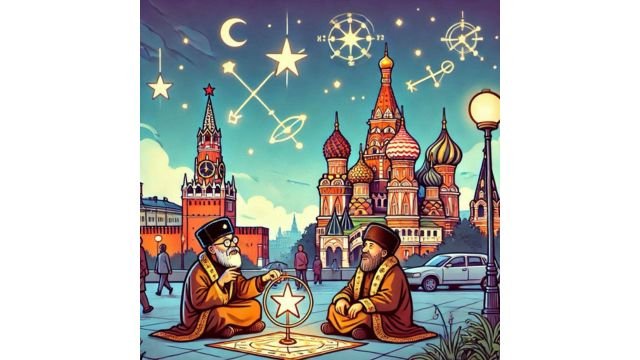
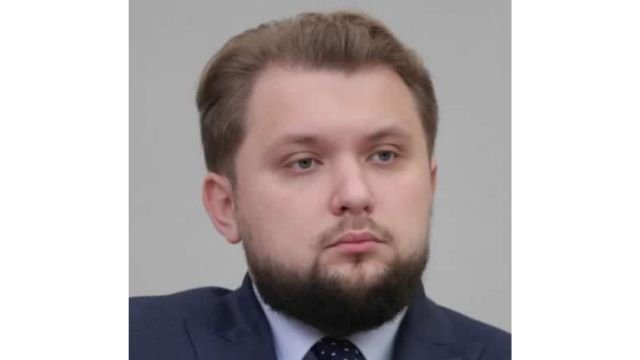
In Russia, the State Duma has proposed a total prohibition on the broadcasting of horoscopes and all forms of “predictions by astrologers and fortune tellers” in all the media. Deputy Speaker of the State Duma Boris Aleksandrovich Chernyshov conveyed the news to the media.
Chernyshov stated that media should focus on educational projects, success stories, and the “achievements of science and culture,” rather than “promoting magic and superstition.”
He claimed that while these materials are often portrayed as entertaining and neutral, they tend to exploit a lack of knowledge, foster tolerance for fraud, and contribute to the “dissemination of pseudoscience.”
Chernyshov stated that “magicians and psychics are essentially deceivers.” He is sure they “lack the ability to foresee the future” and are just trying to manipulate and deceive the populace.
Astrology is increasingly popular internationally among young people. In Germany in 2021 61% of those of the age group 18 to 24 stated they believed in horoscopes. The percentage was 37% of those between age 18 and 29 in the United States in 2022. Surveys prove that astrology is by no means an old ladies’ belief. Young adults are two times more likely to believe in astrology than those over 60 in both statistics.
There are of course different kinds of astrology, and of criticism of astrology. Trying to eradicate it through media bans seems to be an obvious violation of freedom of belief and freedom of expression.
Calling for the media to extol the “achievements of science” over “superstition” is reminiscent of Stalinist campaign against all forms of supernatural beliefs. Similar campaigns are still going on in China today.

Massimo Introvigne (born June 14, 1955 in Rome) is an Italian sociologist of religions. He is the founder and managing director of the Center for Studies on New Religions (CESNUR), an international network of scholars who study new religious movements. Introvigne is the author of some 70 books and more than 100 articles in the field of sociology of religion. He was the main author of the Enciclopedia delle religioni in Italia (Encyclopedia of Religions in Italy). He is a member of the editorial board for the Interdisciplinary Journal of Research on Religion and of the executive board of University of California Press’ Nova Religio. From January 5 to December 31, 2011, he has served as the “Representative on combating racism, xenophobia and discrimination, with a special focus on discrimination against Christians and members of other religions” of the Organization for Security and Co-operation in Europe (OSCE). From 2012 to 2015 he served as chairperson of the Observatory of Religious Liberty, instituted by the Italian Ministry of Foreign Affairs in order to monitor problems of religious liberty on a worldwide scale.