While we can speculate on who really authored the story of Bersone and the Ninth Circle, its most surprising feature is that it is still mentioned after one century.
by Massimo Introvigne
Article 6 of 6. Read article 1, article 2, article 3, article 4, and article 5.

“L’Élue du Dragon” cannot conceivably be a factual account of events in Paris centered around the Ninth Circle Satanic lodge. As mentioned in the previous article of this series, this conclusion is supported by solid facts.
Writing four years after the publication of the first edition of the book, in 1933, Duguet stated that “it is certainly possible that on some points Bersone was wrong, covered the truth or lied,” but maintained that the essential of the text was true. However, both the public life in Paris of Clotilde Bersone as the “Countess of Coutanceau” and the activities of Garfield do belong to the central plot. If there is no trace of a Countess of Coutanceau in Paris between 1877 and 1881, and it can be positively excluded that Garfield was in Europe at that time, then the whole plot cannot but collapse.
Where did the “Élue du Dragon” come from? Perhaps it was not exclusively an invention of Duguet/Boulin and Richard, the priests who prepared and published it. For this conclusion, I do not rely on the personality or sincerity of the two priests. Rather, it is the structure of the text that does not seem to belong to the late 1920s. Too many pages were devoted to attacking politicians who, after the First World War, were long forgotten.
Some, such as Ferry, Grévy, and Garfield, had at least their place in history, and for Garfield it is possible that some echo of the American scandal of Crédit Mobilier, a French bank, was still alive in France. But why should a forger of 1927–28 be concerned with attacking Tirard, who was twice Prime Minister for a brief time between 1887 and 1890, but after forty years was widely forgotten?
The criticism directed against Taxil in his anticlerical incarnation and the absence of any reference to his “conversion” may indicate that the text was written before 1887. It is also significant that the book did not mention Pike at all, despite his real-life association with Garfield. After Taxil, Pike became a household name and a villain of choice for those who read French anti-Masonic literature. Associating Garfield with Pike would have reinforced the text’s credibility, but only if it had been written after 1891.
Alternatively, we can explain the absence of Pike with the desire by the author not to be in any way confused with the discredited Taxil, and conclude that the work was written after 1897. References to minor politicians of the 1880s, however, remain a good argument to suggest that the text was older.
We cannot know for sure, but my guess is that a manuscript was produced between 1880 and 1890 in the Catholic circles favorable to General Georges Ernest Boulanger (1837–1891), the head of a nationalist party who was an important force in French politics in the 1880s. All the politicians placed by the text in the Ninth Circle were opponents of Boulanger. Perhaps the publication of the text became less interesting after both Boulanger’s suicide in 1891 and the competition first and the discredit later of Taxil between 1892 and 1897.

It is not surprising that the unpublished manuscript ended up in that deposit of strange documents that was Paray-le-Monial in the era of the Hiéron du Val d’Or, where in the 1920s it was rediscovered by Richard. Those who believe the text was entirely written by Boulin and Richard should explain why they took the trouble to attack Grévy and Tirard, without mentioning figures who were more disliked by French Catholics and that it would have been more interesting to connect to the Ninth Circle such as Émile Combes (1835–1921), to whom they could easily have attributed some Satanic adventures in his early years.
“Bersone’s” book is not a more reliable source for Ninth Circle-QAnon conspiracy theories that the alleged Catholic instructions asking that all Popes perform a Satanic human sacrifice before taking office.
I would add a postscript about the French esoteric master René Guénon (1886–1951), who was somewhat involved in the Bersone affair. When the book came out, Guénon considered the “Élue du Dragon” as a sort of tasteless remake of Taxil. However, he later changed his mind on Clotilde Bersone, as evidenced by his correspondence with his friend and anti-Masonic activist Olivier de Fremond (1854–1940) and others.
From Cairo, where he had by then moved, on October 18, 1930, Guénon wrote to a correspondent, a certain Hillel, probably a Freemason from Calais, France: “Here, behind Al-Azhar, there is an old man, who looks surprisingly like the portraits of the ancient Greek philosophers, and who paints strange pictures. The other day he showed us a sort of dragon with the head of a bearded man, and with a hat that was fashionable in the 16th century, with six small heads of different animals that emerge from the beard.
The really strange thing is that this picture resembles, in a way that confounds, that of R.I.S.S. [i.e., the Catholic anti-Masonic publication “Revue internationale des sociétés secrètes”] published some time ago, of the dragon of the famous Élue du Dragon. That volume claimed to have found the image in some old book it did not name, which made its authenticity rather dubious. But the strangest thing is that the old man claims he has seen this incredible beast and he has drawn what he saw!”
On October 6, 1932, replying to an allusion of Guénon, Fremond wrote: “No, you never told me about your extraordinary adventure in Cairo connected with the Élue du Dragon.” Later, Fremond must have found out, because on February 7, 1933, he wrote to Guénon that in the works and the letters of the latter there is, “it appears to me, a demonstration of the ‘marvelous’ in Freemasonry and in its ‘dependences,’ for example in the story of the Dragon, which is really extraordinary…”

On June 8, 1933, Fremond wrote to Guénon again: “But in reality, what is there in this story of the Élue du Dragon? Without a doubt, a lot of imagination, but also a great truth, because after all we agree on this ‘diabolical marvels’ and on the relations of Freemasonry with Hell. And Hell enjoys confusing the questions and changing the cards on the table.” On August 21, 1933, after Guénon had read a new novel by Duguet (alias Boulin), “La Cravate blanche,” Fremond wrote: “Thus, the Élue du Dragon is reality, just slightly novelized, and our most acclaimed politicians are only, as you [Guénon] rightfully qualify them, ‘simple puppets,’ and Satan, Satan in person, holds the strings….”
A skeptic naturally could object that the old man in Cairo could simply have embellished the story for Guénon and have had in his hands one of the illustrated French versions of the Élue du Dragon. It is also possible that Richard and Boulin had effectively taken the picture from a more ancient text, which the old Egyptian could have seen.
The episode in Cairo is not technically “evidence” of anything. It is however interesting to understand Guénon’s obsession with “counter-initiation” and black lodges, which could have induced him to take seriously, after the initial skepticism, even Clotilde Bersone. The latter, with every probability, never existed.
But, once introduced, Clotilde never went away. The book by “Clotilde Bersone” continues to be kept in print to this very day by archconservative Catholics promoting anti-Masonic campaigns. That the Ninth Circle comes back in the QAnon and right-wing extremist circuit is not surprising. They use everything that can support their delusion about a century-old Satanist pedophile conspiracy, in which the political and religious leaders they do not like are allegedly involved.
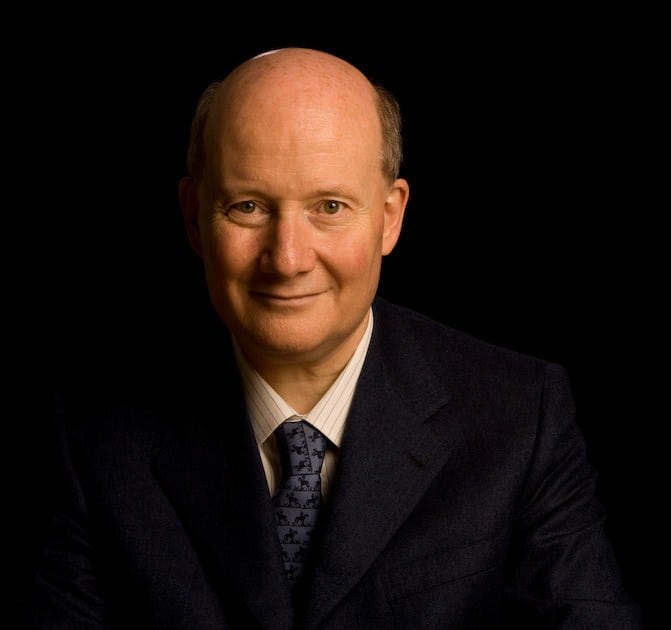
Massimo Introvigne (born June 14, 1955 in Rome) is an Italian sociologist of religions. He is the founder and managing director of the Center for Studies on New Religions (CESNUR), an international network of scholars who study new religious movements. Introvigne is the author of some 70 books and more than 100 articles in the field of sociology of religion. He was the main author of the Enciclopedia delle religioni in Italia (Encyclopedia of Religions in Italy). He is a member of the editorial board for the Interdisciplinary Journal of Research on Religion and of the executive board of University of California Press’ Nova Religio. From January 5 to December 31, 2011, he has served as the “Representative on combating racism, xenophobia and discrimination, with a special focus on discrimination against Christians and members of other religions” of the Organization for Security and Co-operation in Europe (OSCE). From 2012 to 2015 he served as chairperson of the Observatory of Religious Liberty, instituted by the Italian Ministry of Foreign Affairs in order to monitor problems of religious liberty on a worldwide scale.