The Ortega regime is not only a threat for human rights. Now it threatens regional and global stability as well.
by Massimo Introvigne
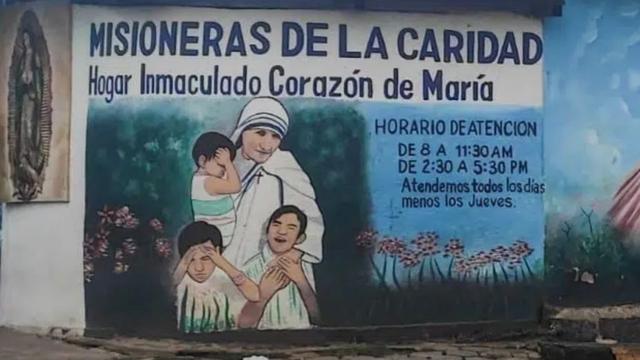
Nicaragua has often been in the news in the last weeks, for three main developments. First, the regime has published a long blacklist of more than two hundred organizations whose headquarters are abroad that are now banned in Nicaragua. It includes the Missionaries of Charity founded by Mother Theresa, whose activities in favor of the poor had made them very popular in the country. Although no official reasons for their being blacklisted were supplied, it seems that the nuns were accused of “representing foreign interests” in the country. They should now leave Nicaragua and their facilities will be closed.
Cardinal Leopoldo Brenes, Archbishop of Managua, published a note on July 4, where he said on behalf of the Catholic Bishops of Nicaragua that, “faced with the decision of the National Assembly to cancel the legal personality of the foundation of the Missionary Sisters of Charity of Saint Teresa of Calcutta, who provided assistance to the poorest of our Nicaraguan society, we deeply regret the pain of so many of our brothers who will no longer have the attention they received from the Sisters. At the same time, we express our gratitude to them for their invaluable service to our local Churches. Esteemed Sisters, you can count on our closeness, solidarity and our humble prayers. ‘Blessed are the pure in heart, for they will see God’ (Mt 5,8).”

In a second disturbing development, Nicaragua renewed an agreement allowing Russian troops to enter Nicaragua to train there and conduct military drills with the Nicaraguan Army. The agreement existed before, but several countries had asked Nicaragua not to renew it in view of the Russian invasion of Ukraine. The regime ignored these suggestions, and is playing with the fire of international tensions.
Third, on July 2 and 4 the police occupied the town halls of the last remaining five municipalities whose mayors belong to the opposition, raised Sandinista Front flags, and ordered the mayors to resign. With this “local coup,” the last remnant of democracy has been eliminated from Nicaragua.

The Catholic Church continues to protest the increased repression of any dissenting voice, including of bishops, priests, and nuns. It is however clear that Nicaragua has chosen the path of dictatorship, and relies on the support of Russia and China to be protected against its own citizens, whose patience is wearing thin after years of abuse and corruption.

Massimo Introvigne (born June 14, 1955 in Rome) is an Italian sociologist of religions. He is the founder and managing director of the Center for Studies on New Religions (CESNUR), an international network of scholars who study new religious movements. Introvigne is the author of some 70 books and more than 100 articles in the field of sociology of religion. He was the main author of the Enciclopedia delle religioni in Italia (Encyclopedia of Religions in Italy). He is a member of the editorial board for the Interdisciplinary Journal of Research on Religion and of the executive board of University of California Press’ Nova Religio. From January 5 to December 31, 2011, he has served as the “Representative on combating racism, xenophobia and discrimination, with a special focus on discrimination against Christians and members of other religions” of the Organization for Security and Co-operation in Europe (OSCE). From 2012 to 2015 he served as chairperson of the Observatory of Religious Liberty, instituted by the Italian Ministry of Foreign Affairs in order to monitor problems of religious liberty on a worldwide scale.