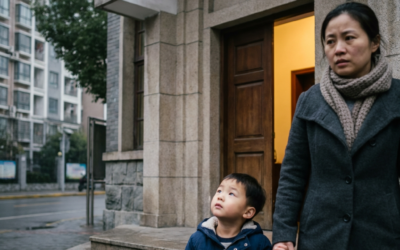
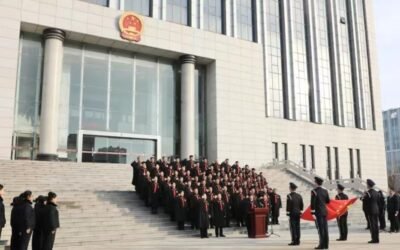
A sweeping investigation reveals how Mongolian words, songs, and memories are being erased, from the digital world to the classroom door.
by Massimo Introvigne

The PEN America report titled “Save Our Mother Tongue,” published in cooperation with the Southern Mongolian Human Rights Information Center, presents a stark account of not just a crisis but a gradual cultural extinction in China’s Inner Mongolia, which its non-Han inhabitants prefer to call Southern Mongolia. The report uses a calm, clinical tone typical of researchers who have spent too long interviewing people who speak in whispers, gathering evidence from vanished websites, and tracing the bureaucratic marks of a state that views Mongolian identity as a nuisance to manage. Underneath the data and analyses, the report reveals a deeper worry: that an entire civilization is being pushed aside while being told to smile for the tourists.
The report starts with a story that feels unbelievable, yet sadly aligns with Beijing’s recent actions. In 2023, Lhamjab A. Borjigin, a historian known for recording oral testimonies of Cultural Revolution survivors, was reportedly kidnapped from democratic Mongolia and taken back across the border. His 2006 book had unexpectedly gained popularity in audio format on WeChat, which may have been one of his most significant offenses: independent memory, enhanced by digital technology. His disappearance, the report indicates, is a clear warning and should not be dismissed as an isolated incident. If Mongolians choose to remember their own history, the state will ensure they know who holds power over the present.
To grasp how we reached this point, the report revisits decades of what might be termed “managed autonomy.” In China, this phrase typically means “autonomy that is gradually eliminated.” The Cultural Revolution purges from 1967 to 1969, which resulted in hundreds of thousands of arrests and tens of thousands of deaths, aimed not just at political upheaval but at dismantling Mongolian self-governance. Following this, demographic manipulation took place, reducing Mongolians to a minority in their autonomous region. Economic measures such as forced urbanization, land confiscation, and bans on grazing completed the process. By the time the 2020 bilingual education policy was implemented, the groundwork had already been laid.
This policy, which required teaching literature, civic education, and history in Mandarin rather than Mongolian, was framed as the “will of the Party,” a phrase in China that serves both as justification and threat. Mongolian parents and students immediately recognized it as an attack on their mother tongue. This led to the most significant protest movement in Southern Mongolia’s modern history, with around 300,000 students boycotting classes. The state reacted with its typical mix of bureaucratic intimidation and excessive force, detaining thousands, firing teachers, and issuing warnings that labeled the defense of one’s language as a “war” and an “ideological battle of life and death.” When a government equates children’s textbooks to enemy combatants, it highlights that something more profound than education is at play.
The most disturbing parts of the report focus on the digital landscape, where the erasure of Mongolian identity is executed with a precision that would impress a Silicon Valley project manager. The Mongolian-language internet, once lively, is now a barren wasteland. Out of 169 cultural websites studied, 148 have been shut down, turned into Mandarin sites, or transformed into something unrecognizable. Major platforms like surag.net and altanhurd.com have disappeared. The Mongolian social media app Bainuu, once hosting 400,000 users, was allowed to return after the 2020 protests only in a muted form, stripped of group discussions and community interaction.
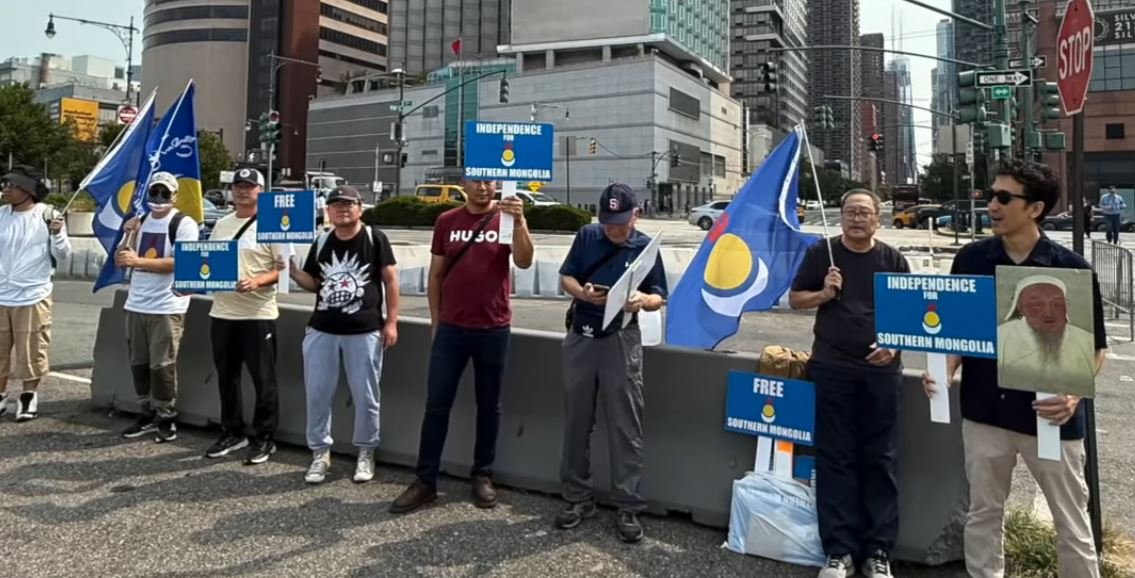
On WeChat, Mongolian users endure an Orwellian level of surveillance. Eleven out of eighteen interviewees reported bans simply for participating in cultural events abroad. Research from the Citizen Lab shows that keywords such as “Mergen,” “Xi Wu Qi,” and the phrase “Mongolian independence” trigger automated censorship. The vertical Mongolian script, already at risk, becomes digitally invisible due to poor Unicode support, forcing users to send photos of handwritten messages like dissidents in a schoolyard passing notes. Meanwhile, the state invests in language software used to enhance censorship.
Culture is also being cleaned up for official approval. Music, described by one interviewee as the “heartbeat of our culture,” has been sanitized. The Mongolian music app Eghshig has been pressured to remove over 200 songs by popular artists. Playlists that once celebrated the grasslands now feature titles like “The Love from Our Great Communists” and “Herdsmen Praise the Communist Party.”
The rebranding effort is equally bizarre. Since 2023, Mongolian identity has been systematically replaced with the term “Northern Frontier culture,” a phrase that is both geographically vague and politically charged. Institutions have been renamed to reflect this shift: the Inner Mongolia Women’s Federation becomes “The Voice of Northern Frontier Women,” as if Mongolian womanhood were a family embarrassment needing a pseudonym.
Even those in exile find no safety. Mongolians living in Japan, Australia, Canada, and Europe report that local police from Inner Mongolia have contacted them via WeChat. This claim might seem absurd if not well-documented. Families in Mongolia are pressured to disown activists abroad. Chinese state influence has even extended to European cultural institutions, leading to the removal of captions with words such as “Chinggis Khan” and “Mongol” from a museum exhibit in France and the cancellation of the play “The Mongol Khan” in certain areas. The reach of the state now spans borders and centuries.
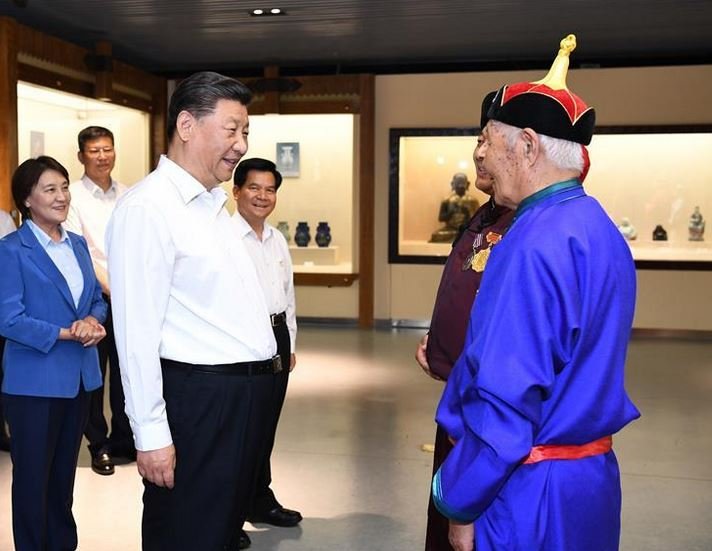
The report convincingly argues that these actions go against international human rights law, including China’s commitments under the International Covenant on Economic, Social, and Cultural Rights. It also warns that generative AI might speed up erasure. Chinese chatbots like DeepSeek and Ernie already respond to inquiries about Mongolian rights with standard propaganda, dismissing documented abuses as “rumors.” As China exports its AI systems, these simplistic narratives risk becoming the global norm, drowning out Mongolian voices with algorithmic certainty.
Yet, the report concludes not in despair but with a glimmer of hope. Mongolians have demonstrated “remarkable creativity and resilience” in preserving their culture despite intense pressure. They continue to write, sing, teach, and protest—even if they sometimes must do this by sending handwritten images in encrypted chats. Their goal is straightforward: to tell their own stories in their own language and ensure that Mongolian words, poems, and songs persist as vibrant expressions of a people who refuse to be redefined.
“Save Our Mother Tongue” is a timely reminder that languages are more than communication tools; they are vessels of memory, humor, longing, and identity. To erase a language is to erase a worldview. Fighting for a language asserts that a people’s story is ongoing, regardless of how many websites are shut down or playlists rewritten.

Massimo Introvigne (born June 14, 1955 in Rome) is an Italian sociologist of religions. He is the founder and managing director of the Center for Studies on New Religions (CESNUR), an international network of scholars who study new religious movements. Introvigne is the author of some 70 books and more than 100 articles in the field of sociology of religion. He was the main author of the Enciclopedia delle religioni in Italia (Encyclopedia of Religions in Italy). He is a member of the editorial board for the Interdisciplinary Journal of Research on Religion and of the executive board of University of California Press’ Nova Religio. From January 5 to December 31, 2011, he has served as the “Representative on combating racism, xenophobia and discrimination, with a special focus on discrimination against Christians and members of other religions” of the Organization for Security and Co-operation in Europe (OSCE). From 2012 to 2015 he served as chairperson of the Observatory of Religious Liberty, instituted by the Italian Ministry of Foreign Affairs in order to monitor problems of religious liberty on a worldwide scale.