by Peter Zoehrer*
*Paper presented at the webinar “The Media Impact on FoRB and the Tai Ji Men Case,” co-organized by CESNUR and Human Rights Without Frontiers on May 8, 2025, after World Press Freedom Day (May 3).

As a journalist and a Freedom of Religion or Belief (FoRB) activist, I have witnessed firsthand how the media can be a force for liberation—or a tool of oppression. At its best, the press uncovers injustice and gives voice to the voiceless. At its worst, it amplifies prejudice, repeats government propaganda, and legitimizes violations of human rights.
Nowhere is this duality more apparent than in how religious minorities are portrayed in the media today. From Africa to East Asia, from authoritarian regimes to democratic states, the media have too often failed their public duty when covering vulnerable faith communities. Today, I want to focus primarily on the long-standing injustice faced by the Tai Ji Men spiritual movement in Taiwan. But let me emphasize: Tai Ji Men is not alone.
Religious persecution is worsening globally. According to the U.S. Commission on International Religious Freedom (USCIRF) 2024 report, over 80 countries continue to engage in or tolerate severe violations of FoRB. Let’s look at some examples.
– Nigeria: More than 5,000 Christians were murdered for their faith in 2023 alone, according to the International Society for Civil Liberties and Rule of Law (Intersociety). Entire communities live in fear while mainstream media coverage in the West remains shockingly muted.
– Pakistan: The Ahmadiyya Muslim community, declared non-Muslim by constitutional law, faces constant harassment, incited in part by state-sanctioned and media-endorsed hate speech. Blasphemy accusations—often triggered by social media rumors—lead to mob violence and extrajudicial killings.
– China: More than a million Uyghur Muslims are held in so-called reeducation camps. Tibetan Buddhists face enforced assimilation. Falun Gong practitioners are persecuted relentlessly, demonized in official media as an “evil cult.” Independent investigations have documented torture, forced organ harvesting, and propaganda campaigns aimed at erasing both identity and truth.
– Japan: Since the assassination of former Prime Minister Shinzo Abe in 2022, over 4,000 news articles have attacked the Unification Church. Though the assassin acted alone and was never a member of the Church, Japanese media and political forces exploited the tragedy to launch a smear campaign—resulting in frozen assets, revoked legal status, and violations of religious freedom under the guise of “consumer protection.”

This is not journalism. It is trial by the media. It erodes FoRB and the rule of law.
Now let me turn to the case that brings all these patterns into sharp focus: the Tai Ji Men case in Taiwan.
In December 1996, Tai Ji Men—a menpai (similar to a school) organized as an academy and promoting peace, self-cultivation, and traditional culture—was raided by Taiwanese authorities under fabricated accusations of fraud and tax evasion. The prosecutor at the time, Hou Kuan-Jen, launched a public smear campaign, giving press briefings that portrayed Tai Ji Men as a dangerous “cult.” Mainstream media repeated these claims without scrutiny, turning a baseless accusation into a national scandal.
But the facts speak differently. In 2007, after over a decade of court battles, the Supreme Court of Taiwan acquitted Dr. Hong Tao-Tze, the founder of Tai Ji Men, and his co-defendants of all charges—including tax evasion. The Court confirmed that no profit-seeking tuition had occurred. Yet, the National Taxation Bureau ignored this ruling and continued to issue tax bills based on the already discredited accusations.
In 2020, government authorities auctioned and nationalized Tai Ji Men land—sacred property intended for a self-cultivation and education center—despite no legal justification. The media barely reported it.
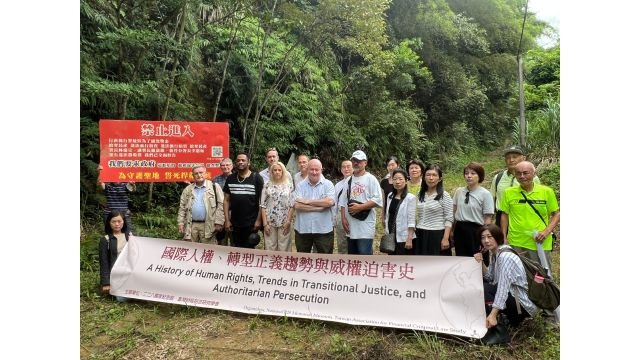
This is a textbook example of how false narratives, repeated long enough, become perceived truth. The media never corrected the record. Injustice was allowed to stand—not only by government actors but also by journalists who failed to do their jobs.
Freedom of the press and freedom of religion are not only parallel rights—they are intertwined. When the media fail to investigate or challenge government narratives, especially against minority religions, it enables abuse.
It’s easy to sell headlines that reinforce fear or prejudice. It’s harder to tell the more profound truth. But that is our moral duty as journalists.
Independent platforms such as “Bitter Winter,” “FOREF Europe,” and CESNUR have documented Tai Ji Men’s case in depth. Scholars like Massimo Introvigne, Eileen Barker, Rosita Šorytė, and Willy Fautré have shown how uncorrected media slander feeds a broader pattern of discrimination.
Let me be clear: Tai Ji Men is not a “tax evader.” It is not a “cult.” It is a peaceful community that has tirelessly promoted conscience, dialogue, and cultural exchange—presenting at the UN and receiving awards from over 100 countries. Yet in its own homeland, it has faced 27 years of state-sponsored and media-enabled injustice.
As we celebrate the recent International Day of Press Freedom, let us remember that the integrity of journalism is not measured by access, ratings, or virality—but by courage, honesty, and the willingness to report what others won’t.
If we care about human dignity and democracy, then we must care about FoRB—and about those whose voices are silenced or distorted in the public square.
The story of Tai Ji Men deserves to be heard. And the truth deserves to be told—not just today, but until justice prevails.

Peter Zoehrer, an Austrian journalist who has published and lectured extensively in the fields of human rights and freedom of religion or belief, is the Executive Director of Forum for Religious Freedom-Europe (FOREF), an independent, secular, civil society formation dedicated to defending religious liberty and other fundamental human rights in accordance with international law.