Father Walter J. Ong reflected on the role of conscience in guiding us through the great transformations in communication. His thoughts resonate with Dr. Hong’s teachings.
Massimo Introvigne*
*Introduction to the webinar “The Media Impact on FoRB and the Tai Ji Men Case,” co-organized by CESNUR and Human Rights Without Frontiers on May 8, 2025, after World Press Freedom Day (May 3).

The Jesuit Catholic priest and Saint Louis University Professor Father Walter J. Ong, who died in 2003, was among the most influential media scholars of the 20th century. In his 1982 masterpiece “Orality and Literacy,” Ong explored the profound cognitive and cultural shifts that occur when societies transition from oral traditions to literacy. Ong argued that writing restructures consciousness, altering how humans think, communicate, and engage with knowledge.
Well-known among scholars is Ong’s call to reflect on how deep the transformations of societies transitioning from orality to scripture are. Less noticed was his remark that the transition carries ethical implications, particularly about conscience, the internal moral compass that guides human behavior.
In oral cultures, knowledge is preserved through the spoken word, storytelling, and communal memory. Ong highlights that oral societies rely on mnemonic devices, formulaic expressions, and participatory communication to sustain traditions. The ethical values in such cultures are deeply embedded in collective experiences, reinforced through shared narratives and interpersonal interactions. The communal nature of orality fosters a strong sense of responsibility, as moral principles are transmitted through lived experiences rather than abstract reasoning.
Oral traditions emphasize relational ethics, where morality is shaped by direct human interactions rather than detached analysis. This fosters a participatory conscience, where individuals are accountable to their communities. Ethical decisions are often made in real time, guided by immediate social feedback rather than written laws or philosophical discourse.
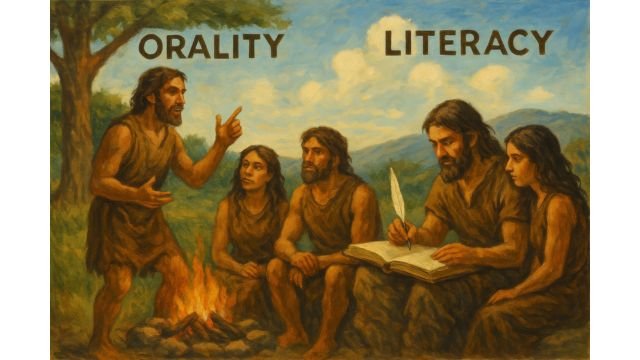
The advent of writing introduces a shift from communal knowledge to individualized reflection. Ong argues that literacy enables abstract thinking, allowing individuals to engage with complex ethical dilemmas. Literacy fosters introspection, as individuals can engage with philosophical and religious texts that shape their conscience. However, while literacy empowers individuals to develop personal moral frameworks, it can also lead to detachment from communal values.
Ong extended his analysis to the impact of print and electronic media on ethical consciousness. The printing press revolutionized knowledge dissemination, enabling widespread moral and philosophical discourse. This democratization of information strengthened ethical reasoning, allowing individuals to engage with diverse perspectives.
However, Ong warned that electronic media, particularly digital communication, altered ethical engagement. Even before the Internet and social media, Ong noticed a transition from literacy as we knew it to a “secondary orality,” where the sounds and images of radio and television do not suppress the written word but reduce its preeminence.
This immediacy of digital interactions can diminish reflective moral reasoning, leading to impulsive ethical judgments. The fragmentation of information in digital spaces challenges traditional notions of conscience, as individuals navigate a vast array of conflicting moral narratives. There is a risk that conscience may get lost in a sea of information. In the electronic age, media can help the recovery of conscience but may also exacerbate its loss by spreading false or irresponsible information.
The ethical implications of Father Ong’s grand study of the evolution of communication resonate with the teachings of Dr. Hong Tao-Tze, the Shifu (Grand Master) of Tai Ji Men. Celebrating International Day of Happiness in 2021, Dr. Hong noted that “In society, a good culture is needed to nourish people’s bodies, minds, and souls. Spiritual abundance and inner peace are the keys to true and constant happiness. Conscience is the foundation and origin of a good culture and the positive energy to stabilize the world. We should strike a balance between technology and spirituality, as well as between economic growth and environmental health.”
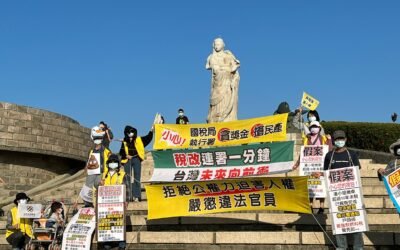
Free media is essential for broadcasting a renewed call to conscience. However, the media can also abuse their role and act in opposition to conscience. This was true during the long Tai Ji Men case in Taiwan, when the media repeated Prosecutor Hou Kuan-jen’s lies and created a climate of slander and defamation, leading to the discrimination of dizi (disciples) in Taiwanese society.
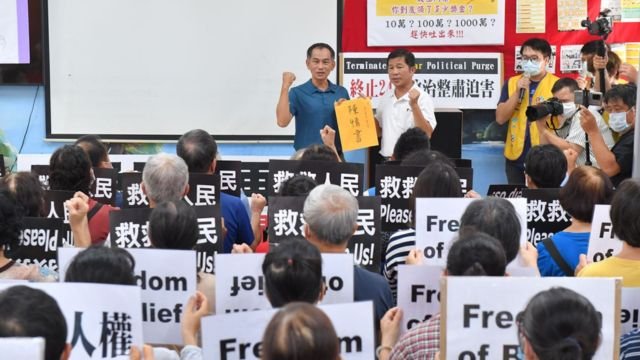
On the other hand, our webinars are also a call to the media, starting from those specializing in freedom of religion and belief, but hopefully extending to different media outlets, to tell the truth on the Tai Ji Men case. Telling the truth is not only a way to render due justice to Tai Ji Men. It is also an exercise that reinforces conscience and leads to a more conscientious world.
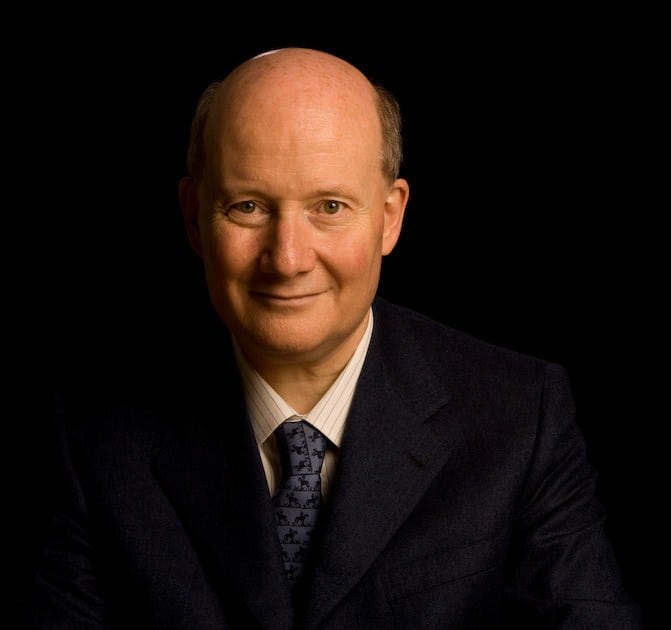
Massimo Introvigne (born June 14, 1955 in Rome) is an Italian sociologist of religions. He is the founder and managing director of the Center for Studies on New Religions (CESNUR), an international network of scholars who study new religious movements. Introvigne is the author of some 70 books and more than 100 articles in the field of sociology of religion. He was the main author of the Enciclopedia delle religioni in Italia (Encyclopedia of Religions in Italy). He is a member of the editorial board for the Interdisciplinary Journal of Research on Religion and of the executive board of University of California Press’ Nova Religio. From January 5 to December 31, 2011, he has served as the “Representative on combating racism, xenophobia and discrimination, with a special focus on discrimination against Christians and members of other religions” of the Organization for Security and Co-operation in Europe (OSCE). From 2012 to 2015 he served as chairperson of the Observatory of Religious Liberty, instituted by the Italian Ministry of Foreign Affairs in order to monitor problems of religious liberty on a worldwide scale.