Passive conscience, or the internalized habit of following the rules, is not always enough. A “creative conscience” is also needed.
by Massimo Introvigne*
*A paper presented at the seminar “Remembering Shimu’s Fight: Conscience and the Tai Ji Men Case,” Pasadena, California, April 5, 2024.

This seminar puts together two themes dear to us all: the loving memory of Madam Yu Mei-Jung, the Shimu of Tai Ji Men, and Tai Ji Men’s practice of prioritizing conscience, which also inspired its resilience in front of great injustice.
Conscience is today a contested term, both in philosophy and among theologians of Christianity, a religious tradition where conscience is crucial. Some have even suggested (wrongly, in my opinion) that the term should no longer be used, as its meaning has become ambiguous.
Being both a Roman Catholic and a sociologist, I start by mentioning a famous book about the sociology of American Catholicism, “American Catholics Today,” published in 2007 by William D’Antonio, James Davidson, Dean Hoge, and Mary Gautier (Lanham, MD: Rowman & Littlefield). By using different surveys, the authors tried to measure what was the prevailing “locus of moral authority” for Catholics in the United States. Confronted with a difficult moral decision, what authority did American Catholic mostly rely on? The alternative the sociologists considered opposed relying on the official teachings of the Catholic Church and its leaders, and what they called “relying on individual conscience.” They found that, as years had passed, the number of Catholics who answered surveys by saying they relied on their conscience rather than on the official teachings of the Church was constantly growing, and they were now (i.e., in 2007) in the majority. Debates on matters such as abortion and same-sex relationships colored the book and the surveys. It was mostly on these matters that many Catholics said they would rather follow their conscience than official Church teachings.
The book led to new doubts about the word “conscience.” As Catholic theologians quickly noted, the Catholic Church itself does teach that we should always follow our conscience. The “Catechism of the Catholic Church” states that the conscience can lead us to choices that, seen from outside, are wrong; however, if we have truly followed our conscience, these wrong choices were not sins. We have, however, a duty to educate our conscience to minimize the risk that it may lead us to wrong choices.

Following in the footsteps of the great Protestant theologian H. Richard Niebuhr and his posthumously published book “The Responsible Self” (1963), one of the most well-known (if controversial) contemporary female Catholic theologians, the late Sister Anne E. Patrick, distinguished two ways of looking at conscience, one passive and one creative. The passive conscience, in the words of Sister Patrick, is the internalized habit of “fulfilling the commonly recognized duties on one’s state in life.” As sons, daughters, parents, spouses, citizens, workers, or devotees of a certain religion we have a certain number of duties our society recognizes, and we have internalized the need to fulfill them. Passive conscience is often bad-mouthed but is also necessary. No society or organization can survive without it.
However, passive conscience, while necessary, is not sufficient. Niebuhr was himself of German descent and was haunted by the case of Nazism. Passive conscience had created among Germans, a people well-known for respecting the rules, a habit to follow the authorities, even when these authorities were the Nazis. Perhaps German education had produced an unbalance between passive conscience and creative conscience, which is also necessary. Creative conscience alerts us when following the rules and the orders of the authorities, perhaps even following our long-established habits, would lead to injustice, and we should be brave enough to challenge the usual ways and look for something new.
Sister Patrick noted that passive conscience tends to prevail in men and creative conscience in women, offering several historical examples. We may disagree with her, and certainly the Catholic Church sometimes saw her as just a little bit too creative, as when she opposed the Vatican on the question of the ordination of women as priests and bishops.
On the other hand, it is true that great women followed their creative conscience to break certain rules and at the same time continued to listen to their passive conscience as well, thus remaining within the fold of the institutions they sought to reform. In Catholic history, Catherine of Siena in the 14th century and Dorothy Day in the 20th century immediately come to the mind.

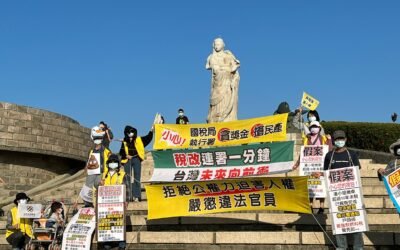
According to those who know her, Shimu was precisely such a woman. She fully realized that in our time conscience cannot be taken for granted, that it is necessary to respect the authorities but sometimes the actions of the authorities can be unjust and should be opposed. She looked for new and creative ways to promote conscience. She supported the Movement of An Era of Conscience and participated in the International Day of Conscience events. Today we celebrate and honor her example as we struggle to become brave, loyal, and creative women and men of conscience.

Massimo Introvigne (born June 14, 1955 in Rome) is an Italian sociologist of religions. He is the founder and managing director of the Center for Studies on New Religions (CESNUR), an international network of scholars who study new religious movements. Introvigne is the author of some 70 books and more than 100 articles in the field of sociology of religion. He was the main author of the Enciclopedia delle religioni in Italia (Encyclopedia of Religions in Italy). He is a member of the editorial board for the Interdisciplinary Journal of Research on Religion and of the executive board of University of California Press’ Nova Religio. From January 5 to December 31, 2011, he has served as the “Representative on combating racism, xenophobia and discrimination, with a special focus on discrimination against Christians and members of other religions” of the Organization for Security and Co-operation in Europe (OSCE). From 2012 to 2015 he served as chairperson of the Observatory of Religious Liberty, instituted by the Italian Ministry of Foreign Affairs in order to monitor problems of religious liberty on a worldwide scale.