The great Russian writer taught that we effectively confront injustice when we decide to stand against lies.
by Marco Respinti*
*Conclusions of the international webinar “Spreading the Truth About the Tai Ji Men Case,” co-organized by CESNUR and Human Rights Without Frontiers on March 24, 2025, United Nations International Day for the Right to the Truth Concerning Gross Human Rights Violations and the Dignity of the Victims
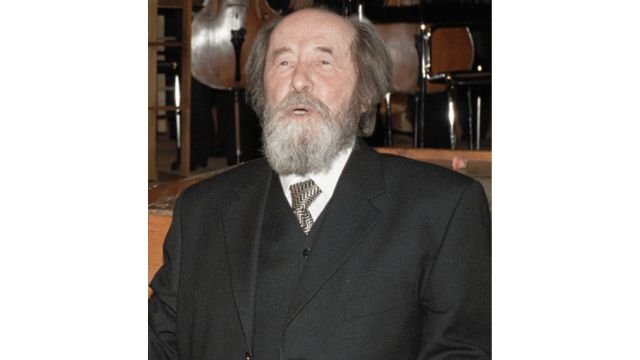
It is impossible to overestimate the moral importance of Russian writer Aleksandr I. Solzhenitsyn (1918–2008). While he was born into an observant Russian Orthodox family in the Soviet Union, he initially held atheistic views and embraced Marxism-Leninism. Only much later, and gradually, did he return to the Orthodox Christian faith. During World War II, he served in the Red Army and began witnessing the absurdity of totalitarianism and the cruelties of war. Growing increasingly disillusioned, after criticizing the lucid folly of Stalin (Iosif Vissarionovič Džugašvili, 1878–1953), he was arrested and sentenced to eight years in one of the nightmares that totalitarian regimes have been able to invent and realize. It was the Gulag, a horrible system of prisons and forced labor camps spread all over Russia, often in hostile regions, where people worked as slaves under extreme conditions, frequently ending in death.
The Gulag is the epitome of Soviet Communism. Solzhenitsyn’s first literary attempts were born out of that experience. The most famous—and terrifying—of these is “The Gulag Archipelago.” Solzhenitsyn had been liberated in 1956, after Stalin’s death, and things seemed, for a moment, to change. Working as a high school teacher in mathematics, astronomy, and physics, he cultivated his literary talent. Soon, he realized that the content of what would become his masterpiece, “The Gulag Archipelago,” was still strictly prohibited in Russia. He then decided to start publishing parts of the book in the West, which led to repression and retaliation. His fame immediately rose and expanded worldwide.
But despite having been awarded the Nobel Prize for Literature in 1970, he was arrested again on February 12, 1974, for what he had dared to write. Stripped of his Soviet citizenship, he was compelled to leave Russia and moved to Frankfurt, in then West Germany. From there, he relocated to Vermont, USA, in 1976 with his wife and sons. In due time, “The Gulag Archipelago” was finally published in its entirety, followed by other major works, but the bulk of those remained prohibited in Russia until 1990, after the fall of the Soviet Union.
Solzhenitsyn came to embody the critical conscience of the Russian people toward Communism. But to define him simply as an anti-communist dissident would mean unfairly downsizing him. He was much more than that: he was the living denunciation of the materialistic reductionism of humanity. He saw Communism as only one of the expressions of the multifaceted ideology that haunts human beings when they lose God. In fact, he was also critical of Western materialism and called for a spiritual revival of the world—an idea that still resonates today.
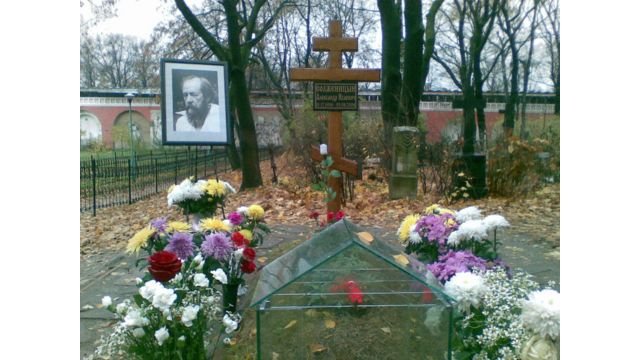
This brief, and probably ungenerous, memory of that great soul serves as a lead-in to the key focus of our webinar today, which celebrates the United Nations International Day for the Right to the Truth Concerning Gross Human Rights Violations and the Dignity of the Victims through a reflection on the importance of spreading the truth about the Tai Ji Men case.
Out of the many important texts and speeches by Solzhenitsyn, there is one I would recommend for almost daily meditation. It is a very short text that was published years ago, went somewhat forgotten, resurfaced in some collections, but is probably not yet appreciated as it deserves. Solzhenitsyn wrote it while he was still in the Soviet Union, releasing it on the very day he was arrested in 1974. Its title is emblematic: “Live Not by Lies.”
It is a statement and a flag, a shield and a sword. It is a program for life, an announcement of battle, and a call for repentance—indeed, a cry for conversion: cultural, intellectual, and spiritual.
“We are approaching the brink,” he writes, “already a universal spiritual demise is upon us; a physical one is about to flare up and engulf us and our children, while we continue to smile sheepishly and babble: ‘But what can we do to stop it? We haven’t the strength.’” A few lines later, Solzhenitsyn repeats, echoing the sense of loss of humanity, “We can do nothing.” Then he starts responding: “But we can do—everything!—even if we comfort and lie to ourselves that this is not so. It is not ‘they’ who are guilty of everything, but we ourselves, only we!”
This is the central point. In a nutshell, if the world is heading in the wrong direction, it is also because of us. We are, in a way, complicit with the evil we stigmatize and denounce until we find the will to react.
Let us read again Solzhenitsyn: “And therein we find, neglected by us, the simplest, the most accessible key to our liberation: a personal nonparticipation in lies! Even if all is covered by lies, even if all is under their rule, let us resist in the smallest way: Let their rule hold not through me!” This is the secret of all secrets: start not participating in lies, stop living by lies. We may not be all liars, but until we allow others to lie we are still complicit with them.
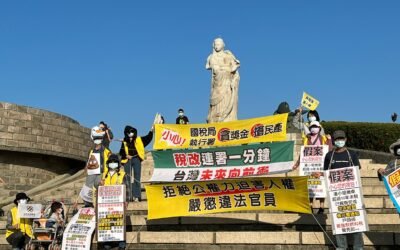
Now, isn’t this the case with the campaign of slander waged against Tai Ji Men for almost thirty years? Aren’t lies those spread about Tai Ji Men since December 1996? Aren’t lies those uttered by those who disregard a large number of rulings by courts of law, including the Supreme Court of the Republic of China in Taiwan? Aren’t lies those repeated by bureaucrats who astonishingly continue to ignore the truth, facts, and evidence, and by politicians who turn a blind eye? Aren’t lies those told by people who choose not to see or hear, by the media content with the status quo, and by commentators who prefer an easy life?

Of course, they are lies. The only thing in this case that is not a lie, but a hard piece of truth, is the suffering of Tai Ji Men’s Shifu (Grand Master) and dizi (disciples)—the continuous harassment they endure, the imprisonments, violence, and psychological pain they were subjected to, and the nationalization of their property. Should we forgive this inversion of lies and truth? Of course no, never. Not in the case of Tai Ji Men, not in the case of any other fabricated claim, not in the face of any ideological crime or fake news, not for anything.
We must all stop believing lies and pardoning liars, Solzhenitsyn tells us this even today from the Otherworld. We should not live by lies. The core of this series of webinars on the Tai Ji Men case is nothing other than this basic, uncompromising, and robust statement.
Let’s all then learn and repeat the commandments that the great Russian writer left for all who do not want to live by lies. One who would noy live by lies, he wrote,
“Will not write, sign, nor publish in any way, a single line distorting, so far as he can see, the truth;
Will not utter such a line in private or in public conversation, nor read it from a crib sheet, nor speak it in the role of educator, canvasser, teacher, actor;
Will not in painting, sculpture, photograph, technology, or music depict, support, or broadcast a single false thought, a single distortion of the truth as he discerns it;
Will not cite in writing or in speech a single ‘guiding’ quote for gratification, insurance, for his success at work, unless he fully shares the cited thought and believes that it fits the context precisely;
Will not be forced to a demonstration or a rally if it runs counter to his desire and his will; will not take up and raise a banner or slogan in which he does not fully believe;
Will not raise a hand in vote for a proposal which he does not sincerely support; will not vote openly or in secret ballot for a candidate whom he deems dubious or unworthy;
Will not be impelled to a meeting where a forced and distorted discussion is expected to take place;
Will at once walk out from a session, meeting, lecture, play, or film as soon as he hears the speaker utter a lie, ideological drivel, or shameless propaganda;
Will not subscribe to, nor buy in retail, a newspaper or journal that distorts or hides the underlying facts.”
The day of liberation from lies has begun—if we just let it begin in our hearts and minds. This is why we stand by Tai Ji Men.

Marco Respinti is an Italian professional journalist, member of the International Federation of Journalists (IFJ), author, translator, and lecturer. He has contributed and contributes to several journals and magazines both in print and online, both in Italy and abroad. Author of books and chapter in books, he has translated and/or edited works by, among others, Edmund Burke, Charles Dickens, T.S. Eliot, Russell Kirk, J.R.R. Tolkien, Régine Pernoud and Gustave Thibon. A Senior fellow at the Russell Kirk Center for Cultural Renewal (a non-partisan, non-profit U.S. educational organization based in Mecosta, Michigan), he is also a founding member as well as a member of the Advisory Council of the Center for European Renewal (a non-profit, non-partisan pan-European educational organization based in The Hague, The Netherlands). A member of the Advisory Council of the European Federation for Freedom of Belief, in December 2022, the Universal Peace Federation bestowed on him, among others, the title of Ambassador of Peace. From February 2018 to December 2022, he has been the Editor-in-Chief of International Family News. He serves as Director-in-Charge of the academic publication The Journal of CESNUR and Bitter Winter: A Magazine on Religious Liberty and Human Rights.