Courts will be allowed to consider “extremist” even documents or information not explicitly listed as such—and anything connected with “Fascism.”
by Massimo Introvigne

From now on in Russia, if texts you distribute are officially listed as “extremist” you go to jail. But if your texts are not in the list of “extremist materials” you can go to jail as well.
This is the consequence of amendments to the law on extremism approved by the State Duma (the lower house of the Federal Assembly of Russia) last month and by the Federation Council (the upper house) on June 7.
The law on extremism was introduced in Russia after 9/11 in 2002, as a tool to combat ultra-fundamentalist Islam and supporters of terrorism. However, the law was repeatedly amended to include among “extremist” groups some that did not practice nor advocate violence. Among religious organizations, are regarded as “extremist” those that preach that theirs is the only true religion, implying that all other religions (including Christianity as taught by the Russian Orthodox Church) are false. This was the main argument used to liquidate as “extremist” the Jehovah’s Witnesses in 2017 and include several of their books into the list of “extremist materials.”
The new amendments to the law on extremism have two main provisions. First, they regard as “extremist material” even if not included in any list “the works of the leaders of the National Socialist Workers’ Party of Germany, the Fascist Party of Italy, speeches and images of group leaders, organizations or movements recognized as criminal in accordance with the verdict of the Nuremberg Tribunal, speeches and images of leaders or organizations that collaborated with these groups, organizations or movements.”
Paradoxically, two who can be incriminated under this provision are Vladimir Putin and Patriarch Kirill. They liberally refer to the works of Russian philosopher Ivan Ilyn and Putin even concluded his speech of September 30, 2022, proclaiming the annexation to Russia of four Ukrainian regions, by a quote from “the words of a true patriot, Ivan Alexandrovich Ilyin.” There is little doubt that Ilyn collaborated with Italian Fascism.

The second and broader amendment modifies Article 20.29 of the Code of Administrative Offenses, extending its effect both to “materials included in the federal list of extremist materials and other materials regarded as extremist in accordance with federal laws.” This would allow the police to seize materials not listed as “extremist” but nonetheless regarded as belonging to the category based on the criteria established by the case law. Courts will also be able to sentence those who distribute unlisted extremist materials.
The new Article 20.29 will also have effects on freedom of religion or belief, as materials by religious organizations denounced as “totalitarian cults.” “Fascist,” or “supporting the Ukrainian Nazis” by anti-cultists may now be seized as extremist without the need to go through the long process of including them in the federal list.
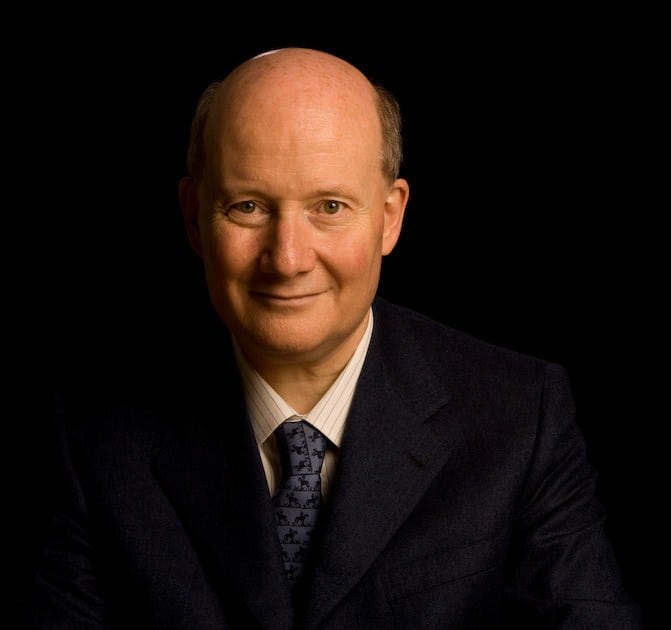
Massimo Introvigne (born June 14, 1955 in Rome) is an Italian sociologist of religions. He is the founder and managing director of the Center for Studies on New Religions (CESNUR), an international network of scholars who study new religious movements. Introvigne is the author of some 70 books and more than 100 articles in the field of sociology of religion. He was the main author of the Enciclopedia delle religioni in Italia (Encyclopedia of Religions in Italy). He is a member of the editorial board for the Interdisciplinary Journal of Research on Religion and of the executive board of University of California Press’ Nova Religio. From January 5 to December 31, 2011, he has served as the “Representative on combating racism, xenophobia and discrimination, with a special focus on discrimination against Christians and members of other religions” of the Organization for Security and Co-operation in Europe (OSCE). From 2012 to 2015 he served as chairperson of the Observatory of Religious Liberty, instituted by the Italian Ministry of Foreign Affairs in order to monitor problems of religious liberty on a worldwide scale.