The pro-democracy activist, a critic of China, died in jail shortly after arrest on February 25—for “natural causes,” police claims.
by Massimo Introvigne

Last month, Bitter Winter reported about the arrest and detention of human rights activist Baibolat Kunbolat, who was arrested after protesting in front of the Chinese consulate in Almaty against the detention of his brother in one of the dreaded transformation through education camps in Xinjiang.
Baibolat is now home, but he reports that he is continuously harassed by the police about the fact that his children are allegedly noisy and are disturbing a neighbor. There were no similar problems before Baibolat started his anti-Chinese protests. More seriously, Baibolat claims that he has been threatened by a man from the Kazakh National Security that if he will not stop protesting, he will “die in jail like Dulat Agadil.”
If true, this would confirm that the death of Dulat Agadil, on February 25, was not due to “natural causes.” The police claim that, shortly after arrest, Dulat had a fatal heart attack, perhaps because he was drunk. His friends insist Dulat did not drink alcoholics, nor did he have cardiological problems.

Dulat was arrested several times for his protests calling for democracy in Kazakhstan, and the end of what he saw as a pro-Chinese policy that made Kazakh authorities silent on the horrors vested by the CCP on ethnic Kazakhs detained in the transformation through education camps. He was also a supporter of persecuted human rights activist Serikzhan Bilash. He attended Bilash’s court hearings and was photographed with a t-shirt asking that Bilash was nominated for the Nobel Peace Prize, an ironic reference to the fact that former Kazakh President, Nursultan Nazarbayev, tried repeatedly to receive the Prize and failed.
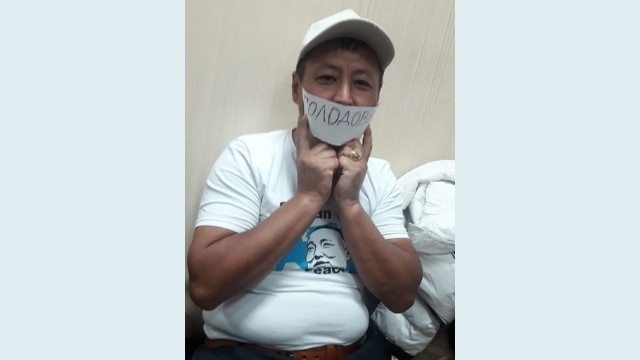
The death of Dulat Agadil has sparked protests all over Kazakhstan. Protesters call for an investigation about what really happened to Dulat, the dismissal of the Interior Minister, the dissolution of the Security Council, whose chair is former President Nazarbayev, and a different attitude towards China.

On the grave of Dulat Agadil, these words have been engraved: “For me the only Mother, the only Father, is the Homeland. Be ready to burn for your country! The expansion of the CCP is not allowed in Kazakhstan!”
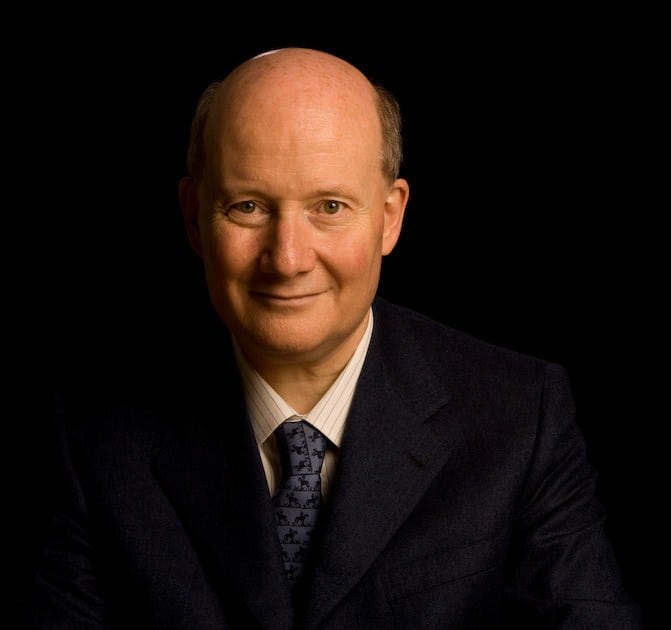
Massimo Introvigne (born June 14, 1955 in Rome) is an Italian sociologist of religions. He is the founder and managing director of the Center for Studies on New Religions (CESNUR), an international network of scholars who study new religious movements. Introvigne is the author of some 70 books and more than 100 articles in the field of sociology of religion. He was the main author of the Enciclopedia delle religioni in Italia (Encyclopedia of Religions in Italy). He is a member of the editorial board for the Interdisciplinary Journal of Research on Religion and of the executive board of University of California Press’ Nova Religio. From January 5 to December 31, 2011, he has served as the “Representative on combating racism, xenophobia and discrimination, with a special focus on discrimination against Christians and members of other religions” of the Organization for Security and Co-operation in Europe (OSCE). From 2012 to 2015 he served as chairperson of the Observatory of Religious Liberty, instituted by the Italian Ministry of Foreign Affairs in order to monitor problems of religious liberty on a worldwide scale.