A monumental book focuses on the American years and mystical utopianism of a reformer who has been curiously rediscovered in Xi Jinping’s China.
by Massimo Introvigne
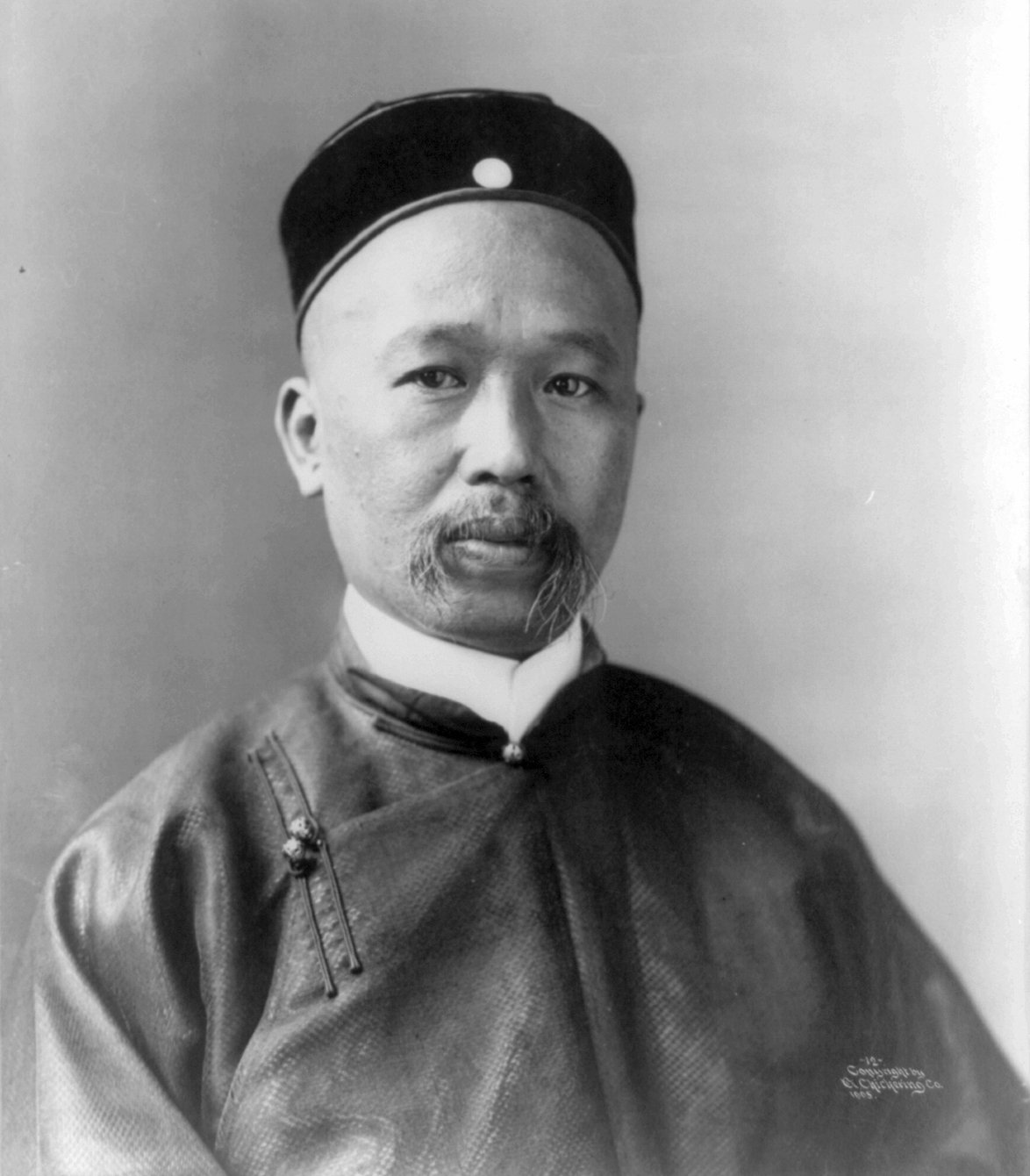
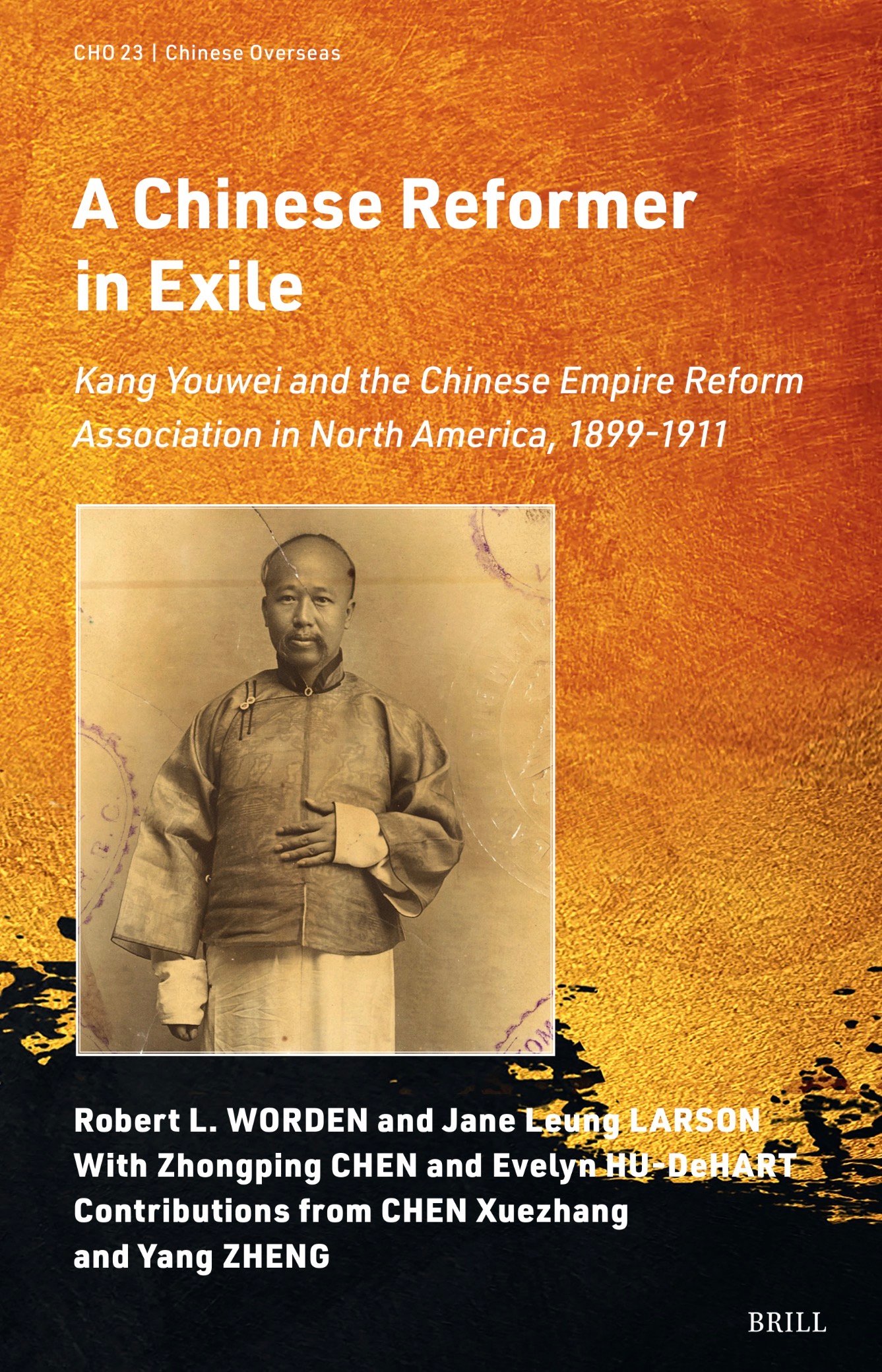
In the pantheon of Chinese reformers, Kang Youwei (1858–1927) occupies a singular niche: a Confucian visionary who sought to modernize the Qing Empire without toppling it, a monarchist who fled to the republics of North America, and a political exile who built a transnational movement from the margins. “A Chinese Reformer in Exile: Kang Youwei and the Chinese Empire Reform Association in North America, 1899–1911” (Brill, 2024) by Robert L. Worden and Jane Leung Larson—with contributions from Zhongping Chen, Evelyn Hu-DeHart, Yang Zheng, and Xuezhang Chen—delivers the definitive account of Kang’s North American years and the sprawling political machine he led: the Chinese Empire Reform Association (CERA), or Baohuanghui.
This encyclopedic volume, of more than 900 pages, part of Brill’s “Chinese Overseas” series (vol. 23), is the product of five decades of research. It began with Worden’s 1972 Georgetown dissertation. It was later enriched by Larson’s discovery of her grandfather Tom Leung’s (1875–1931) papers—a student of Kang’s in Guangzhou and his host, travel companion, and confidant in North America. The result is a rare fusion of archival depth and personal insight, mapping the rise and fall of a movement that once spanned 160 chapters across Canada, the United States, and Mexico.
The story begins in the ashes of the Hundred Days’ Reform of 1898, when Kang and his disciple Liang Qichao (1873–1929) fled China after Empress Dowager Cixi (1835–1908) crushed their reformist agenda. While Liang found refuge in Japan, Kang set his sights on the Chinese diaspora in North America—a community of merchants, laborers, and intellectuals who, despite systemic discrimination, retained strong ties to their homeland.
From 1899 to 1911, Kang transformed this diaspora into a political force. The Baohuanghui was not merely a reformist club; it was a full-fledged political organization with its own schools, newspapers, military academies, women’s associations, and fundraising arms. Its mission was to pressure the Qing court into adopting a constitutional monarchy modeled on Meiji Japan or Victorian Britain and resist the revolutionary tide led by Sun Yat-sen (1866–1925), who sought to abolish the monarchy altogether.
Kang’s vision was rooted in a radical reinterpretation of Confucianism. He saw Confucius not as a conservative sage but as a reformer and believed that a properly reformed monarchy could be the vessel for China’s modernization. His 1902 treatise “Datong Shu” (Book of Great Unity) imagined a utopian world of gender equality, global governance, and technological harmony—a vision that was both startlingly progressive and deeply hierarchical.
The book’s core chapters trace the Baohuanghui’s institutional architecture. In Vancouver, San Francisco, New York, and Havana, Kang’s followers established local branches that collected dues, published newspapers like “The China Reform Gazette,” and organized lectures and rallies. The movement’s reach extended to Chinese communities in Cuba, Peru, and Southeast Asia, making it one of the earliest examples of a genuinely global Chinese political network. Yet the Baohuanghui was not without internal tensions. Kang’s autocratic leadership style, refusal to share power, and increasingly mystical pronouncements alienated many followers.
Kang’s later writings veered into metaphysical territory: he envisioned a utopian future governed by global institutions, where Confucian ethics harmonized with technological progress. The “Datong Shu” proposed the abolition of national borders, the communal raising of children, gender equality, and even the elimination of marriage as a social institution. These ideas, radical even by today’s standards, reflected a shift from pragmatic reform to prophetic idealism—a Confucian cosmopolitanism that blurred the line between political blueprint and spiritual revelation.
Kang’s insistence on loyalty to the Qing court—even as it resisted reform—became harder to defend as the dynasty collapsed. Meanwhile, Sun Yat-sen’s revolutionary message gained traction, especially among younger activists and students.
The book details the ideological and tactical rift between Kang and Sun, culminating in a bitter rivalry in diaspora newspapers’ pages and overseas Chinese loyalties. While Kang emphasized gradual reform and Confucian values, Sun promised republicanism and revolution. The Baohuanghui’s influence peaked around 1905 but began to wane as the Qing court dithered and the revolutionary tide surged.
By 1911, the writing was on the wall. The Xinhai Revolution toppled the Qing dynasty, and the Baohuanghui — having failed to secure constitutional reform—dissolved. Kang returned to China and dreamed of restoring the monarchy, including by supporting General Zhang Xun’s 1917 coup, but he never regained political relevance. He died in Qingdao on March 31, 1927, a relic of a vanished world.
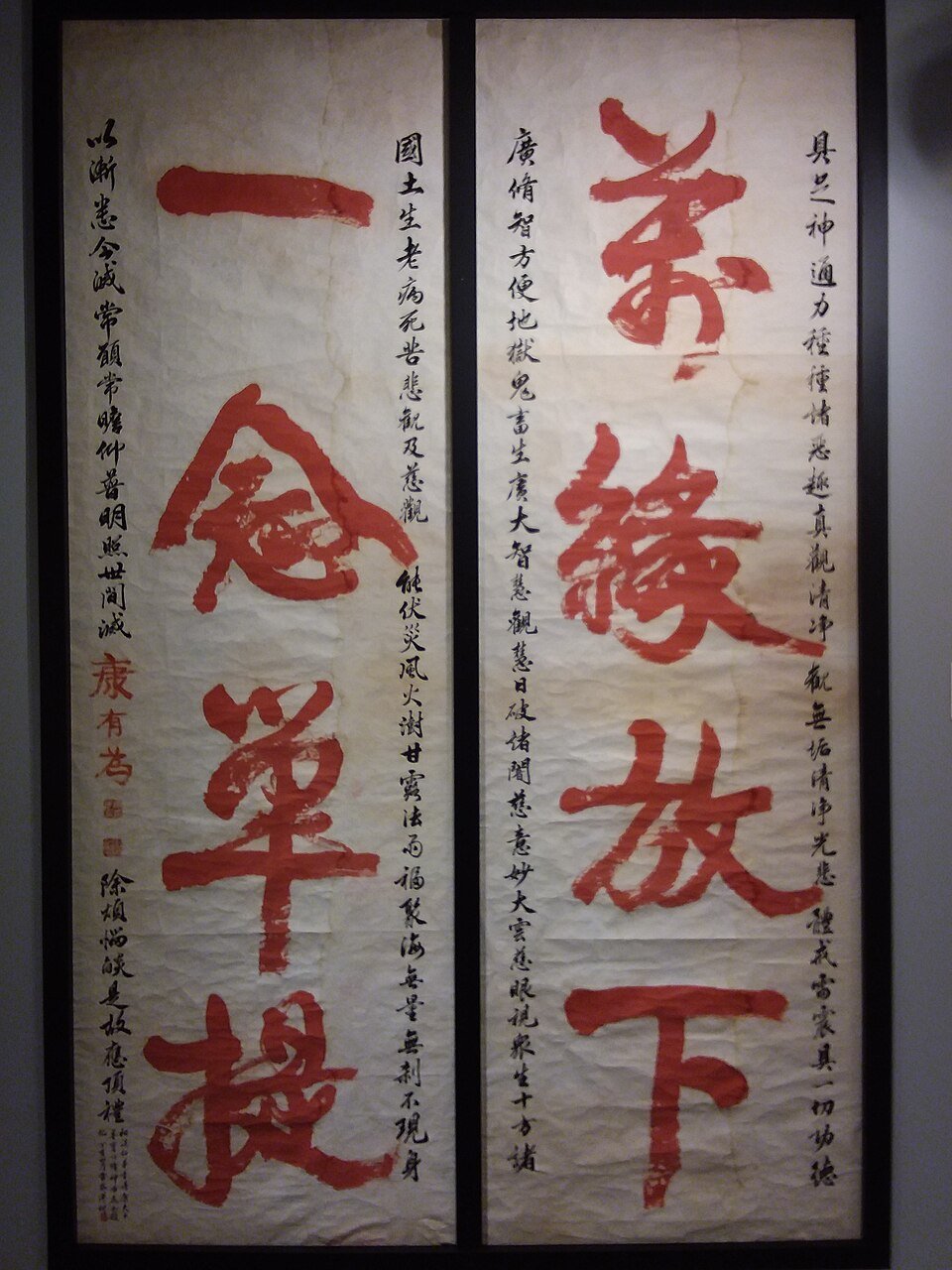
Yet his legacy endured in unexpected ways. In the 2010s, Chinese intellectuals and cultural institutions rediscovered Kang. A “Kang Fever” swept through New Confucian circles, and his life inspired docudramas, operas, and museum exhibitions. Ironically, many of his modern admirers embraced his Confucian idealism while ignoring his monarchist politics.
The book closes with a series of appendices that are themselves worth the price of admission: a detailed timeline of Kang and the Baohuanghui (1898–1978), maps of chapter locations, family trees, a glossary, and a rich bibliography of archival sources. It’s a treasure trove for historians of modern China, diaspora studies, and transnational political movements.
“A Chinese Reformer in Exile” is not a breezy read—it’s a reference work, dense with detail and documentation. But for those willing to engage, it offers a panoramic view of a forgotten chapter in Chinese and North American history. It reminds us that political exile is not exile from influence. Kang Youwei may have been cast out of China, but from the Chinatowns of Vancouver to the lecture halls of New York, he built a movement that reshaped the global Chinese imagination.
This worthy book is a monument to a man, a movement, and a moment when the fate of an empire was debated in the back rooms of San Francisco and the schoolhouses of Havana. Kang Youwei may have failed to save the Qing dynasty, but in exile he reimagined China as a moral civilization destined to lead the world into unity, equality, and peace. It is not surprising that he finds admirers in contemporary Xi Jinping’s China although whether they share or even understand the spiritual roots of his message remains unclear.
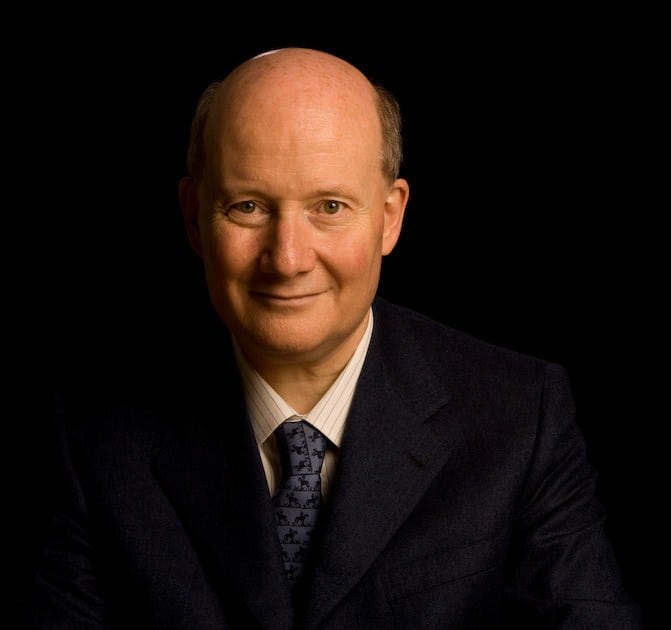
Massimo Introvigne (born June 14, 1955 in Rome) is an Italian sociologist of religions. He is the founder and managing director of the Center for Studies on New Religions (CESNUR), an international network of scholars who study new religious movements. Introvigne is the author of some 70 books and more than 100 articles in the field of sociology of religion. He was the main author of the Enciclopedia delle religioni in Italia (Encyclopedia of Religions in Italy). He is a member of the editorial board for the Interdisciplinary Journal of Research on Religion and of the executive board of University of California Press’ Nova Religio. From January 5 to December 31, 2011, he has served as the “Representative on combating racism, xenophobia and discrimination, with a special focus on discrimination against Christians and members of other religions” of the Organization for Security and Co-operation in Europe (OSCE). From 2012 to 2015 he served as chairperson of the Observatory of Religious Liberty, instituted by the Italian Ministry of Foreign Affairs in order to monitor problems of religious liberty on a worldwide scale.