Vigilante Hindu organizations, including one founded by the current Chief Minister of Uttar Pradesh, use a network of spies to prevent interfaith marriages.
by Massimo Introvigne

Earlier this month, Bitter Winter reported on a new law in the Indian State of Uttar Pradesh, aimed at making it more difficult for Muslim or Christian men to marry Hindu women. The law is the brainchild of the Chief Minister of Uttar Pradesh, a controversial Hindu holy man called Yogi Adityanath.
In 2002, Adityanath founded an organization known as Hindu Yuva Vahini (HYV), a Hindu nationalist group often involved in communal violence. HYV is very much part of the crusade against interfaith marriages. They are often brought to the attention of the courts by the parents of the Hindu girl, unhappy with her marriage to a non-Hindu. But what if the parents agree with their daughter’s choice?

It is here that HYV, and other nationalist organizations such as Bajrang Dal and Hindu Swabhiman, enter the picture. They maintain a network of spies that includes landlords, real estate agents, temple managers, court clerks, and lawyers.
Real estate agents and landlords can easily spot a “suspicious” couple looking for a home, and report it to the Hindu nationalist groups. Sometimes, interfaith marriages take place in Hindu temples—where there are temple managers acting as informants of HYV and similar organizations.
In Uttar Pradesh, the new law has made things easier for the extremists. Interfaith marriages should be announced two months in advance through a notice filed with a court of law. There, court clerks are often part of the Hindu nationalist networks of informants.
Worse enough, these notices are filed through lawyers, who sometimes inform the radical Hindu nationalist groups. But lawyers can also be themselves members of the extremist organizations. Last week, Indian media reported about one Sonu Malik, a 24-year-old Muslim who went to the court in Aligarh, Uttar Pradesh, with his Hindu fiancée to file a notice of intended marriage. He found a lawyer who, when he understood what the couple wanted from him, called some like-minded colleagues, and beat Sonu up. The court charged the lawyers for rioting and violence. But it also charged Sonu for violating the provisions of the law against interfaith marriage, and allegedly “kidnapping” his 21-year-old wife-to-be.
Clearly, laws such as the so-called Uttar Prohibition of Unlawful Conversion of Religion Ordinance 2020 fuel rather than control sectarian law, and encourage radical Hindu nationalist groups to take the law in their own hands.
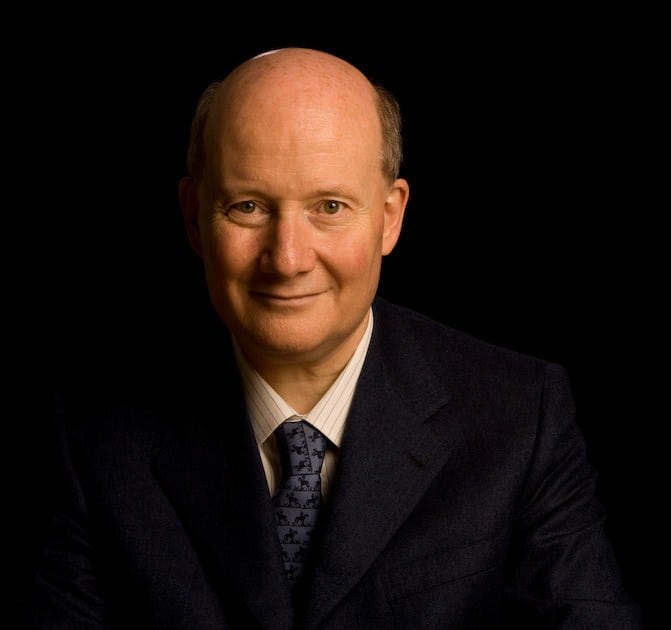
Massimo Introvigne (born June 14, 1955 in Rome) is an Italian sociologist of religions. He is the founder and managing director of the Center for Studies on New Religions (CESNUR), an international network of scholars who study new religious movements. Introvigne is the author of some 70 books and more than 100 articles in the field of sociology of religion. He was the main author of the Enciclopedia delle religioni in Italia (Encyclopedia of Religions in Italy). He is a member of the editorial board for the Interdisciplinary Journal of Research on Religion and of the executive board of University of California Press’ Nova Religio. From January 5 to December 31, 2011, he has served as the “Representative on combating racism, xenophobia and discrimination, with a special focus on discrimination against Christians and members of other religions” of the Organization for Security and Co-operation in Europe (OSCE). From 2012 to 2015 he served as chairperson of the Observatory of Religious Liberty, instituted by the Italian Ministry of Foreign Affairs in order to monitor problems of religious liberty on a worldwide scale.