The founder of Weixin Shengjiao was a leading international expert of I Ching and Feng Shui, a gifted artist, and an exceptional human being.
by Massimo Introvigne

The passing of Grand Master Hun Yuan Chanshi (1944–2026), founder of Weixin Shengjiao, marks the end of a luminous chapter in contemporary Taiwanese religious history. Yet for those who knew him—not only as a spiritual leader and artist, but as a man of profound kindness and intellectual curiosity—his presence remains indelible.
Grand Master Hun Yuan was a rare figure: a religious innovator whose teachings on Feng Shui, I Ching, and ancestor veneration were matched by a painter’s sensibility and a scholar’s appetite for dialogue. His canvases, infused with spiritual intention, were not simply works of art but living embodiments of his cosmology. His leadership of Weixin Shengjiao was never insular; he saw religion as a bridge, not a boundary. This vision led him to organize conferences that welcomed international scholars from fields far beyond his own tradition, creating spaces where ideas could circulate freely and respectfully.
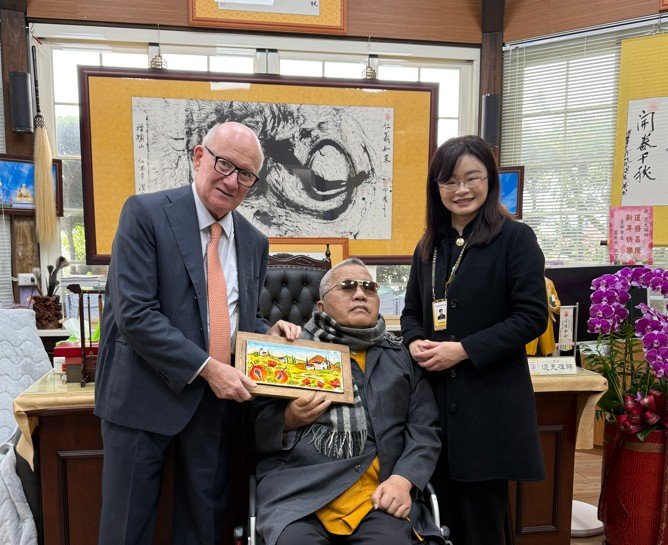
My own relationship with Grand Master began in 2016, when I met his daughter, Dr. Fiona Chang, at a CESNUR conference in Korea. Fiona—herself a distinguished scholar and now the guiding force behind Weixin College—invited me to Taiwan. In 2017, I led a delegation of international academics to meet the Grand Master. What began as a scholarly encounter soon grew into a friendship that shaped years of research, conferences, and exchanges between Weixin Shengjiao and the global academic community. Many prominent scholars who later wrote about Weixin Shengjiao did so because Grand Master opened his doors—and his heart—to them.
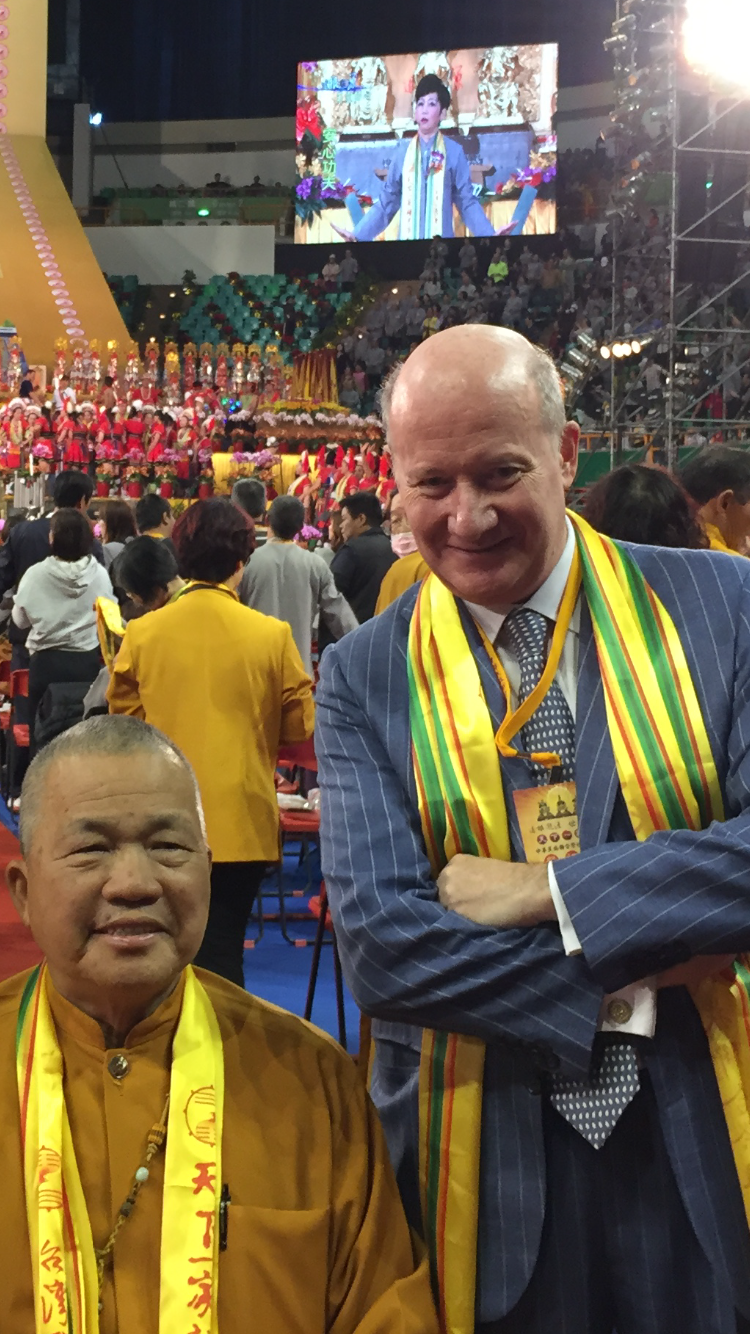
I saw him for the last time on January 2 of this year. He was physically frail, yet his determination remained unshaken. He insisted on attending a conference on ancestor worship in Taichung, where he delivered a substantial and thoughtful speech. Later, in a private meeting, I gave him a ceramic painting of San Gimignano—a place with excellent Feng Shui, I told him. He smiled, with that gentle mixture of humor and seriousness that always accompanied discussions of geomancy.
Feng Shui, in fact, is woven into some of my most cherished memories of him. When my wife Rosita and I decided to move to Italy, we sent him information about dozens of houses in Tuscany and Lithuania. He and his team studied them meticulously on a giant screen in Taiwan. One by one, he vetoed them. Our Italian realtors were exasperated that a Feng Shui master on the other side of the world was blocking their sales. Rosita fell in love with a property in Mugello, but Grand Master’s verdict was firm: no. Months later, an earthquake struck the region, badly damaging that very house. The realtors, half‑joking and half‑awed, told us they should hire Grand Master as a consultant.
Among the many gifts he offered us, one stands above the rest: a painting he created while we were living in New York. For Weixin Shengjiao, these paintings are sacred artifacts, and he treated their placement with utmost seriousness. He sent a Weixin Shengjiao master to our apartment to determine where and when it should be hung. Later, when we moved to Vilnius and then to Tuscany, he guided us remotely on where the painting should reside. Today, it hangs in our home as a living reminder of his wisdom, his generosity, and his friendship.
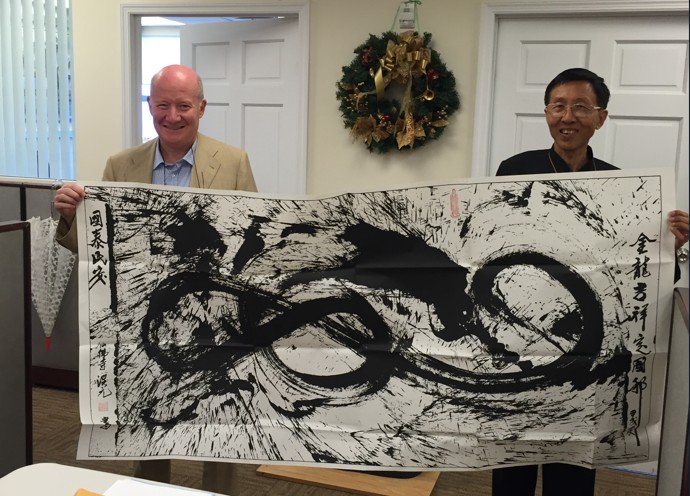
Grand Master Hun Yuan Chanshi leaves behind a thriving religious movement, an accredited institution of higher education, and a body of artistic and spiritual work that will continue to inspire. But for those of us who had the privilege to know him personally, he leaves something even more precious: the memory of a compassionate man who listened deeply, cared sincerely, and treated scholars, students, and seekers alike with the same unfailing respect.
He is gone, but his teachings, his art, and his kindness remain. And in the quiet presence of the painting he gave us—still radiating the intention he placed within it—we will continue to feel the enduring warmth of a great spiritual master and a dear friend.
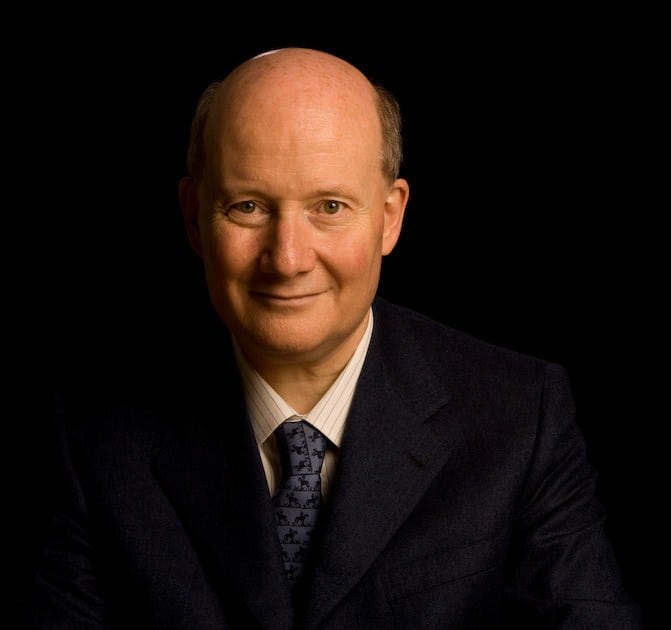
Massimo Introvigne (born June 14, 1955 in Rome) is an Italian sociologist of religions. He is the founder and managing director of the Center for Studies on New Religions (CESNUR), an international network of scholars who study new religious movements. Introvigne is the author of some 70 books and more than 100 articles in the field of sociology of religion. He was the main author of the Enciclopedia delle religioni in Italia (Encyclopedia of Religions in Italy). He is a member of the editorial board for the Interdisciplinary Journal of Research on Religion and of the executive board of University of California Press’ Nova Religio. From January 5 to December 31, 2011, he has served as the “Representative on combating racism, xenophobia and discrimination, with a special focus on discrimination against Christians and members of other religions” of the Organization for Security and Co-operation in Europe (OSCE). From 2012 to 2015 he served as chairperson of the Observatory of Religious Liberty, instituted by the Italian Ministry of Foreign Affairs in order to monitor problems of religious liberty on a worldwide scale.