The judgement of July 1 against the Women Federation for World Peace simply confirms that court decisions in Japan are about politics, not law.
by Massimo Introvigne

One has to admire the bravery of members of the Unification Church (now called the Family Federation for World Peace and Unification) and even of organizations more or less directly connected with it in Japan. They continue to fight in court for reasons of principle and as a vivid testimony to justice even if it has now become clear that it is very unlikely they can win any case. This prediction has very few to do with law, and with whether they are right or wrong. Award-winning journalist Masumi Fukuda reported in 2023 an authoritative opinion that in Japan “in civil lawsuits, there is a kind of unwritten rule, that ‘If you are a cult, you lose,’” and “claims that would not be accepted in other cases would be easily accepted if the opponent is a religion labeled a ‘cult.’” These words are not by Masumi Fukuda. She was quoting attorney Yoshiro Ito, who was a member of the anti-cult National Network of Lawyers Against Spiritual Sales.
It is thus disturbing but not at all surprising that on July 1 in a defamation case filed by the Women Federation for World Peace (WFWP) against Japanese lawyers connected with the same National Network of Lawyers Against Spiritual Sales, the Seventh Civil Division of Tokyo District Court found against the plaintiff and ordered it to pay the costs of the case.
In other countries, where the “unwritten rule” does not apply, that the anti-cult lawyers were guilty not only of defamation but also of inciting discrimination would have been acknowledged as a matter of course.
The facts of the case were basically simple. The WFWP, which enjoys the highest level of United Nations recognition as an NGO, is an organization founded by the late Reverend Sun Myung Moon and his wife Dr. Hak Ja Han Moon, the same founders of the Unification Church. As the Tokyo decision recognized, the WFWP “has an office in Tokyo, comprises national federations as members, and has a structure with a headquarters and federations as its basic units. Decisions are made by majority vote in general meetings and other gatherings.” The court gave great importance to the fact that the President of the WFWP is appointed by its surviving co-founder, i.e., Dr. Hak Ja Han Moon, who is also the religious leader of the Unification Church/Family Federation. However, this does not mean that the religious entity directs the operations of the WFWP, where as the court acknowledges “decisions are made by majority vote,” and “important matters regarding the selection and operation of officers are decided and approved by a majority of attendees at general meetings.”

The majority of the women involved in WFWP’s activities are not members of the Unification Church. They belong to all religions or to none. There is no evidence that funds collected by WFWP are used to support the Unification Church, or that its events result in proselytization efforts for the Unification Church.
One of the most well-known WFWP activities in Japan is a “Speech Contest for Female Foreign Students,” awarding prizes to those who have become most proficient in learning Japanese as a foreign language. Again, these popular contests have no religious content, nor are they proselytization activities on behalf of the Unification Church.
Yet, on June 15, 2023, the anti-cult Network issued a statement addressed to all municipalities in Japan asking them not to grant permission to WFWP to use venues for the Speech Contest. The Network claimed that the WFWP “is an organization disguised as a volunteer group to raise funds and recruit members for the former Unification Church.” In a press conference, one of the defendants, notorious anti-cult attorney Masaki Kito, claimed that for a municipality allowing WFWP to use its venues would violate the constitutional principle of separation of church and state. The lawyers’ statement went on to accuse the “religious organization” of the famous “spiritual sales,” i.e., of “engaging in anti-social activities such as ‘spiritual solicitation fraud and high donations’ by intimidating and confusing ordinary citizens with items like seals, prayer beads (rosaries), stone tablets, jars, pagodas, Buddhist stupas, and concentrated ginseng extract, claiming to release ancestral karma.”

As both “Bitter Winter” and Masumi Fukuda have demonstrated, the so-called “spiritual sales” were activities by a private company belonging to members of the Unification Church (not the church as such) and were discontinued more than fifteen years ago. More importantly, neither the WFWP nor leaders or officers of the WFWP were ever involved in these activities.
The anti-cult lawyers even tried to use to their advantage the scandalous move by the Ministry of Foreign Affairs that, after protests by the Communist Party, had withdrawn a commendation to a WFWP member for her good educational work in Mozambique because of the WFWP’s connection with the Unification Church. According to them, this “proved” that the Mozambique school was engaged in proselytization activities for the Unification Church—although not the slightest evidence of it had emerged.
The judges found that Kito’s statement about municipalities violating the principle of separation of church and state was a legal opinion that, right or wrong, a lawyer was entitled to present without becoming guilty of defamation. This argument ignored the incitement to discrimination inherent in Kito’s words.
Much more problematic is the court’s statement that although somewhat “less-than-legitimate” and “decreasing the plaintiff’s social reputation,” the statements accusing the WFWP of proselytizing for the Unification Church and being involved in its “anti-social” activities “do not exceed the scope of opinions or comments.” The court also used the formalistic argument that the anti-cult lawyers directed their most vitriolic attacks against the Unification Church/Family Federation, which was not part of the proceedings, not against the WFWP.
The court’s argument is wrong. The aim of the anti-cult lawyers was to prevent the WFWP from conducting its Speech Contest, which is not a religious activity and does not involve proselytizing or collecting funds for the Unification Church. The lawyers also tried to create the impression that the WFWP was involved in the “spiritual sales,” which is demonstrably false.
As mentioned earlier, and as the United Nations has started to denounce, what is happening in Japan is a witch hunt against “cults” and the Unification Church/Family Federation. Courts of law, which are often subservient to the government in Japan, are one of the tools used by the authorities for this campaign. Their judgements are intended to further the campaign, not to ascertain the truth or render real justice to religious minorities. The Family Federation and organizations like the WFWP know it. Why do they still engage in court cases? They do it because they believe both in human justice and in a justice higher than the human one. They also know that each unfair decision will confirm to international instances, including the United Nations, that in Japan there is an “unwritten rule” denying fair trial to groups stigmatized as “cults.”
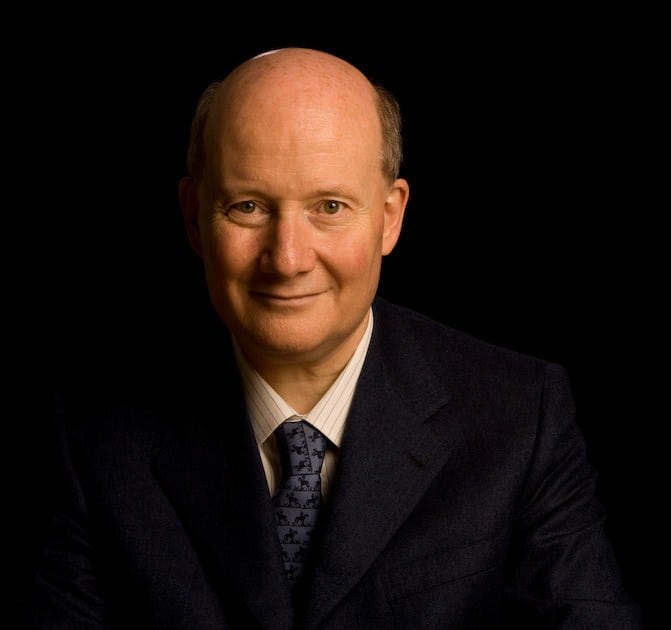
Massimo Introvigne (born June 14, 1955 in Rome) is an Italian sociologist of religions. He is the founder and managing director of the Center for Studies on New Religions (CESNUR), an international network of scholars who study new religious movements. Introvigne is the author of some 70 books and more than 100 articles in the field of sociology of religion. He was the main author of the Enciclopedia delle religioni in Italia (Encyclopedia of Religions in Italy). He is a member of the editorial board for the Interdisciplinary Journal of Research on Religion and of the executive board of University of California Press’ Nova Religio. From January 5 to December 31, 2011, he has served as the “Representative on combating racism, xenophobia and discrimination, with a special focus on discrimination against Christians and members of other religions” of the Organization for Security and Co-operation in Europe (OSCE). From 2012 to 2015 he served as chairperson of the Observatory of Religious Liberty, instituted by the Italian Ministry of Foreign Affairs in order to monitor problems of religious liberty on a worldwide scale.