Two fascinating examples of how spiritual ideas, the expectations of different groups, and individual choices intertwine.
by Karolina Maria Kotkowska*
*A paper presented at the webinar “The Tai Ji Men Case: Tragedy and Triumph,” co-organized by CESNUR and Human Rights Without Frontiers for the 18th anniversary of Taiwan’s 2007 Supreme Court decision in favor of Tai Ji Men, July 13, 2025.

We celebrate the 18th anniversary of Taiwan’s 2007 Supreme Court Decision in favor of Tai Ji Men. Exactly one hundred years ago, another remarkable event occurred—one connected to one of the most popular currents of alternative spirituality in the West at that time: Theosophy. It was one of the most significant and controversial moments in the history of the Theosophical movement—the announcement of the coming of the World Teacher.
In 1925, during an international gathering in Ommen, the Netherlands, it was formally declared that the long-awaited World Teacher had manifested in the person of a young Indian man, Jiddu Krishnamurti. Theosophists and members of the specially established Order of the Star in the East believed that Krishnamurti was the “vehicle” for the spiritual being known as Maitreya, a universal spiritual teacher meant to guide humanity into a new era of spiritual awakening. This announcement was the culmination of years of anticipation and preparation within Theosophical circles, which had since the late 19th century nurtured the idea of the reappearance of a great spiritual guide.
However, history took an unexpected turn. In 1929, at another Theosophical gathering in the same city of Ommen, Krishnamurti publicly rejected the role of World Teacher and dissolved the organization that had been established to support his mission. At the same time, he declared that truth is “a pathless land”: it does not depend on any organization, religion, or teacher.
This moment had profound consequences not only for the Theosophical movement but also for the development of spirituality in the 20th century, as well as for Krishnamurti himself, who became one of the most influential independent thinkers and spiritual teachers of his time. At the same time, it was of great significance for his followers—a moment of crisis and shock, which led many of them to continue their personal spiritual searches, often with Krishnamurti’s later writings playing an important role. The initial turmoil transformed the form of spirituality, but by no means marked its end.
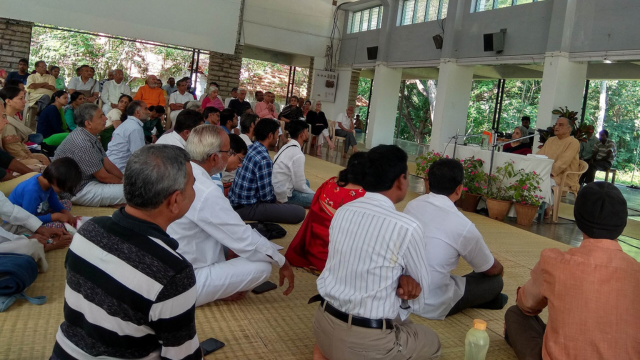
One hundred years later, this event remains a fascinating example of how spiritual ideas, collective expectations, and individual choices intertwine, shaping the fate of entire spiritual movements. What is interesting is not only what happened to the organization but also Krishnamurti’s further path, one intensely focused on the themes of peace and freedom, as well as the ongoing spiritual journeys of his followers.
Although the teachings of Jiddu Krishnamurti and Dr. Hong Tao-Tze, the Grand Master (Shifu) of Tai Ji Men, originate from entirely different cultural, spiritual, and historical contexts, it is possible to identify specific ideas and values that unite those who follow the ideas of both teachers.
The first shared value is the emphasis on individual spiritual freedom. Krishnamurti rejected all external spiritual authorities, emphasizing that truth is “a pathless land” and that each person must independently come to understand reality. Similarly, Tai Ji Men promotes self-development, self-discovery, and personal responsibility for spiritual growth and inner harmony. It is not about blindly following a master but about engaging in a practice that leads to inner awakening. This mindset has helped Tai Ji Men survive moments of crisis and remain steadfast in their convictions despite the many negative challenges they have faced and continue to face daily.
The second key element is peace and its essential component: inner and outer harmony. Krishnamurti taught that changing the world begins with changing the individual. Without the transformation of consciousness, true social peace is impossible. Tai Ji Men also emphasizes that world peace depends on the inner harmony of each person. Working with energy plays an important role, and achieving balance between body, mind, and spirit is the foundation for building a more harmonious society. An essential aspect of Tai Ji Men’s teachings is the role of conscience and the ability to listen to and follow its voice.
Another similarity is a holistic approach to the human being. Both spiritual paths view individuals as an integrated physical and spiritual whole. For Krishnamurti, it was about total self-understanding without dividing thought, emotion, and action. In Tai Ji Men, the practice involves working with life energy (qi) and ethical and spiritual development.
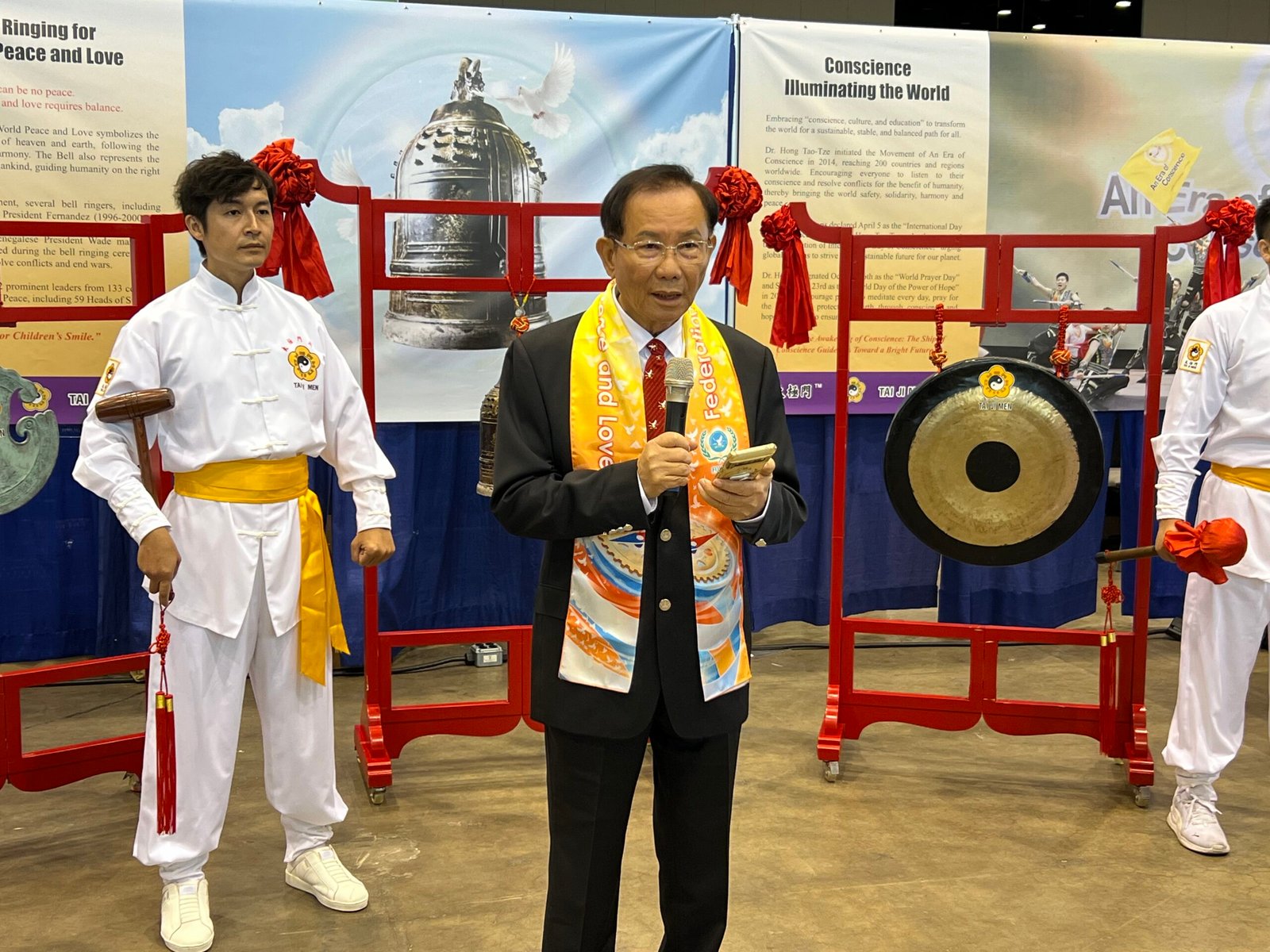
The fourth essential common element is the rejection of dogmatism. Krishnamurti distanced himself from religious organizations, rigid structures, and dogmas. Similarly, although rooted in Chinese culture and martial arts traditions, Tai Ji Men strongly emphasizes spiritual freedom and independence. It has not created a new religious institution and welcomes disciples of all religions. The persecution of Tai Ji Men in Taiwan confirms that those in power do not always welcome this kind of spiritual independence.
Another parallel is the emphasis on education as a path to personal and collective transformation. Krishnamurti founded schools where education was not merely about transmitting knowledge but about teaching how to live mindfully, freely, and responsibly. Tai Ji Men also strongly focuses on education, not only in teaching Qi Gong techniques or martial arts but also in cultivating values such as kindness, peace, respect, and harmony in human relationships. Today, there are more than twenty Tai Ji Men Academies worldwide, the most recent one established in Toronto.
When we look back at the dissolution of Krishnamurti’s organization caused by his own decision, we can see an interesting parallel with the crisis faced by Tai Ji Men, though it was of a completely different nature. In Krishnamurti’s case, the decision came from a spiritual leader guided by the values of freedom and truth. In contrast, the Tai Ji Men crisis was triggered by the decision of a politically motivated prosecutor whose attitude was entirely different and whose actions had far more negative consequences. This decision led to a witch hunt against members of the Tai Ji Men community, media attacks, violence, and serious violations of human rights. The natural response to those events was deep shock.
After decades of struggling with this injustice, it seemed for a moment that the story would finally have a favorable resolution. We are gathered here today to mark the 18th anniversary of Taiwan’s 2007 Supreme Court Decision in favor of Tai Ji Men, issued on July 13, 2007. Sadly, this victory was not definitive, because despite the court’s decision, violations of Tai Ji Men’s rights have continued for many years.

Returning to the topic of individual choices in the spirit of freedom, it is essential to note that Tai Ji Men’s dizi (disciples) have continuously made crucial decisions throughout this period. They have chosen, day after day, to continue walking their path despite adversity and obstacles.
In both Krishnamurti’s and Tai Ji Men’s stories, we see that individual decisions not only shape the fate of entire organizations but also determine whether a path continues, even when everything seems to oppose it. This, I believe, is the essence of inner freedom, which lies at the heart of both Krishnamurti’s teachings and those of Dr. Hong Tao-Tze.

Karolina Maria Kotkowska is an Assistant Professor in the Centre for Comparative Studies of Civilizations, Jagiellonian University, Kraków, Poland. She holds PhD in Philosophy and works on her PhD in Sociology. She specializes in New Religious Movements and Western Esotericism in Central and Eastern Europe.