Hindus woke up on July 15 to see Mari Mata Mandir demolished. Mayor Murtaza Wahab tried to deny the facts until Sindh Provincial Government confirmed them.
by Massimo Introvigne

It takes a notable degree of effrontery to deny that a demolished building has been destroyed. Yet, this is what the controversial Mayor of Karachi, Murtaza Wahab Siddiqui, whose June 2023 election was tainted by accusations of fraud, had the impudence of stating after the demolition of Mari Mata Mandir, a historic 150-old Hindu temple in Soldier Bazaar in Karachi.
The demolition had been reported not only by the Hindu community through its organizations and Twitter accounts, but also by “Dawn,” Pakistan’s newspaper of records and the most important English-language daily in the country.
Mayor Murtaza Wahab decided to pick up a fight with “Dawn” and claimed on Twitter and television that the temple had not been destroyed. It was all Hindu propaganda and fake news, he said.

The mayor’s claim was false. Netizens posted images of bulldozers and cranes destroying the temple in the night between July 14 and 15. When they woke up, local Hindus found the external wall with the gate intact but the internal inside structure demolished. They also claimed police cars were there to protect the destruction work.
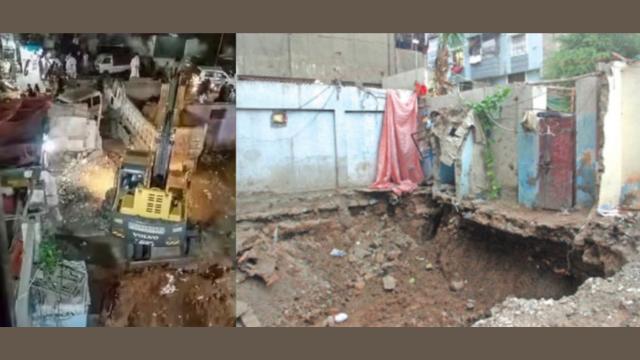
The images Mayor Murtaza Wahab posted to argue that the temple had not been demolished are of a nearby home where a devotee had taken some of the statues while parts of the temple were being renovated.
Finally, the Mayor’s lies were exposed when on July 18 the matter was debated in the Sindh Provincial Assembly. Responding to written and oral questions by Assembly members during Question Hour, Minority Affairs Minister Giyan Chand Essarani confirmed that Mari Mata Mandir had been demolished. He blamed “a builder who wanted to construct a plaza there” and did not answer questions on whether the local police protected the operation.
The Minister assured Assembly representatives that the government will reconstruct the temple at its own expenses. The Hindu community remains vigilant as in the past in Pakistan similar promises have been made but not kept.

Massimo Introvigne (born June 14, 1955 in Rome) is an Italian sociologist of religions. He is the founder and managing director of the Center for Studies on New Religions (CESNUR), an international network of scholars who study new religious movements. Introvigne is the author of some 70 books and more than 100 articles in the field of sociology of religion. He was the main author of the Enciclopedia delle religioni in Italia (Encyclopedia of Religions in Italy). He is a member of the editorial board for the Interdisciplinary Journal of Research on Religion and of the executive board of University of California Press’ Nova Religio. From January 5 to December 31, 2011, he has served as the “Representative on combating racism, xenophobia and discrimination, with a special focus on discrimination against Christians and members of other religions” of the Organization for Security and Co-operation in Europe (OSCE). From 2012 to 2015 he served as chairperson of the Observatory of Religious Liberty, instituted by the Italian Ministry of Foreign Affairs in order to monitor problems of religious liberty on a worldwide scale.