The fates of two old shrines in Ahmed Pur Lamma, Punjab, confirms the disrespect towards religious minorities’ places of worship.
Massimo Introvigne

Ahmed Pur Lamma is a town in Punjab, Pakistan, located some thirteen kilometers from the city of Sadiqabad, in the Rahim Yar Khan District.
In a few days, the sad fates of two old Hindu temples there has been disclosed by netizens. The news have been confirmed by local media and have sparked outrage among Hindus.
First, evidence surfaced that a Krishna temple had been converted into a mosque. Although the local Muslim caretaker claims that the conversion happened some seventy years ago, local Hindus suspect that the repurposing took place much more recently.
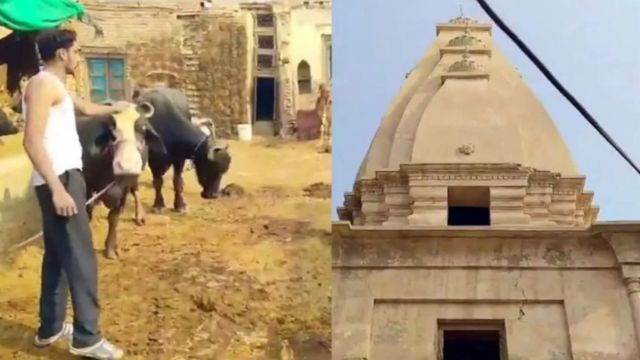
Second, another temple in the same area, 400-year old, has been transformed into a cattle farm. Images were posted on X on December 4 and generated a lively discussion. Here again, it is unclear when the conversion happened but local Hindus report that animals appeared in what was once a venerated place of worship only recently.
Obviously, these incidents are differently interpreted within the context of widespread sectarian controversy. But they confirm that places of worship of religious minorities are not treated in Pakistan with the respect they deserve.

Massimo Introvigne (born June 14, 1955 in Rome) is an Italian sociologist of religions. He is the founder and managing director of the Center for Studies on New Religions (CESNUR), an international network of scholars who study new religious movements. Introvigne is the author of some 70 books and more than 100 articles in the field of sociology of religion. He was the main author of the Enciclopedia delle religioni in Italia (Encyclopedia of Religions in Italy). He is a member of the editorial board for the Interdisciplinary Journal of Research on Religion and of the executive board of University of California Press’ Nova Religio. From January 5 to December 31, 2011, he has served as the “Representative on combating racism, xenophobia and discrimination, with a special focus on discrimination against Christians and members of other religions” of the Organization for Security and Co-operation in Europe (OSCE). From 2012 to 2015 he served as chairperson of the Observatory of Religious Liberty, instituted by the Italian Ministry of Foreign Affairs in order to monitor problems of religious liberty on a worldwide scale.